In the dynamic world of financial markets, understanding trading volume is paramount for making informed decisions. This article delves into the significance of volume, exploring how it helps active traders gauge market interest and money flow. We will examine essential strategies and tools, such as On-Balance Volume (OBV) and Volume by Price indicators, to enhance your analytical capabilities and refine your trading approaches. By integrating these methods, you can uncover hidden trends and critical price levels, ultimately improving your trading outcomes.
Unlocking Market Insights: The Power of Trading Volume
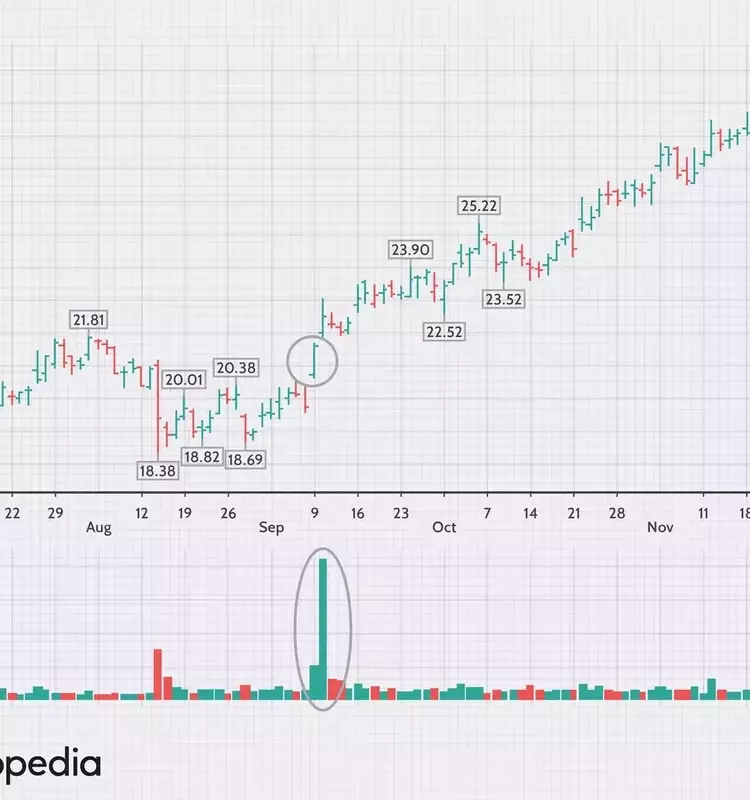
On September 10, 2013, a significant event unfolded in the stock market concerning Delta Air Lines, Inc. (DAL). Following the announcement that the company would be included in the prestigious S&P 500 stock market index, Delta’s shares experienced an extraordinary surge in trading volume. This spike, coupled with a notable rise in its stock price, signaled a renewed investor interest and marked the genesis of a robust upward trend. This scenario underscores a fundamental principle in trading: aligning substantial volume increases with shifts in a company's core financial health. The inclusion in the S&P 500 meant that major index funds and mutual funds would be compelled to acquire Delta’s stock, thereby creating a sustained demand that propelled its price higher. For astute traders, screening for such volume spikes would have provided a timely alert to this emerging opportunity.
Another invaluable tool in technical analysis is the On-Balance Volume (OBV) indicator. This indicator is particularly useful for identifying stocks that exhibit significant volume increases without a corresponding drastic change in price. The OBV is calculated by progressively adding or subtracting volume based on whether the closing price is higher or lower than the previous day's close. A key insight for institutional investors, whose goal is often to accumulate shares without inflating the price, is that rising OBV during a period of sideways price movement can indicate stealth accumulation. For instance, between late 2013 and early 2014, Microsoft Corporation (MSFT) saw its price oscillate between $34.80 and $37.00. However, during this same period, the OBV indicator trended sharply upward. This divergence suggested a growing bullish sentiment among traders, offering an early signal that allowed active traders to position themselves before the stock’s eventual climb to $41.11.
Furthermore, analyzing Volume by Price offers another strategic dimension. Unlike traditional volume charts that plot activity on the horizontal axis, Volume by Price displays trading activity along the vertical axis at specific price points. This visualization helps traders pinpoint price levels where substantial trading has occurred, indicating areas of strong support or resistance. These high-volume price zones often reveal where significant institutional money has taken a position. When combined with other technical indicators, these critical price points can generate powerful buying or selling signals. For example, a chart of AmerisourceBergen Corporation (ABC) in 2014 demonstrated that the majority of its trading volume concentrated between $71.50 and $73. This concentration suggested that in the event of a market downturn, the stock would likely find strong support near the $73 level. Conversely, the noticeable lack of volume between $74 and $76, marked by a price gap, indicated that there would be minimal buyer support in that range during a pullback, making it a vulnerable area. This detailed analysis of trading volume empowers traders to make more precise and confident decisions in their pursuit of market opportunities.
The ebb and flow of trading volume serve as a vital pulse within financial markets, offering profound insights into the collective actions of market participants. For traders, interpreting these movements effectively can be the difference between capitalizing on opportunities and missing them. By mastering tools like On-Balance Volume and Volume by Price, and critically evaluating their signals in conjunction with a company’s fundamental health, one can build a robust framework for making astute trading decisions.
From a journalist's perspective, this article highlights the nuanced world of stock market analysis, where seemingly simple metrics like trading volume conceal layers of strategic information. The case studies of Delta Air Lines, Microsoft, and AmerisourceBergen vividly demonstrate how quantitative data, when correctly interpreted, can predict significant market shifts. This analytical depth emphasizes that successful trading is not merely about reacting to price movements but about understanding the underlying forces of supply and demand that drive them. It serves as a reminder that continuous learning and adaptation to sophisticated analytical tools are essential for anyone navigating the complexities of financial trading.
