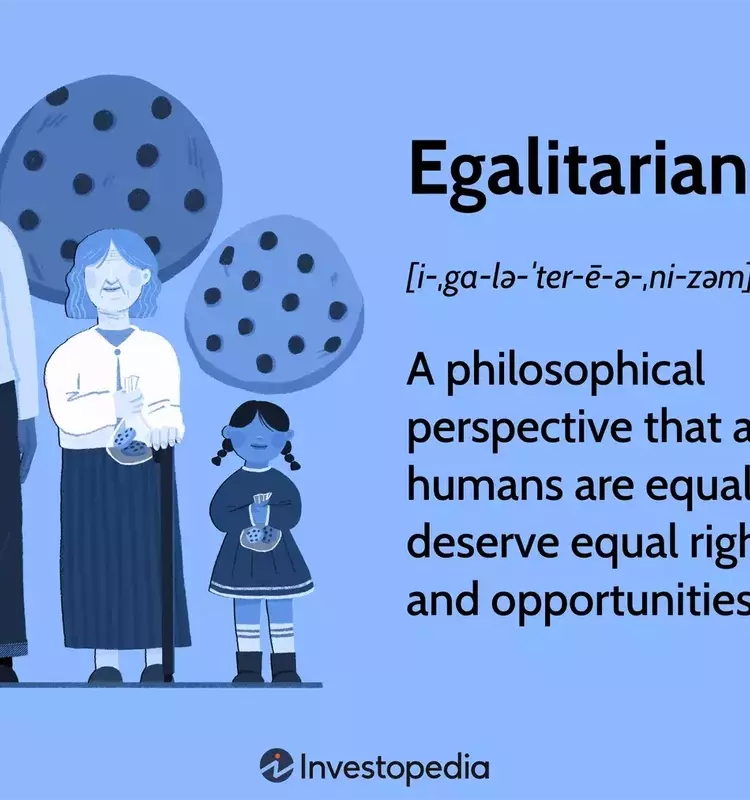
Egalitarianism, a philosophical concept grounded in the fundamental belief of human equality, advocates for equal rights, opportunities, and treatment for all individuals, irrespective of their background or societal position. This principle transcends various aspects of society, from economic structures to legal frameworks, moral considerations, and political systems. It promotes a world where inherent fairness and equal access are paramount, striving to eliminate disparities and ensure every person's inherent worth and dignity are recognized.
The philosophy manifests in different forms, addressing specific areas of inequality. Economic egalitarianism, for instance, focuses on equitable distribution of wealth and resources, laying the groundwork for theories like Marxism and socialism. Legal egalitarianism ensures that all individuals are subject to the same laws, upholding the principle of justice for everyone. Moral egalitarianism champions universal respect and concern for all humanity, emphasizing human rights. Furthermore, political egalitarianism seeks equal influence in governance, while racial and gender egalitarianism champion equality across race and gender, respectively. These diverse applications collectively aim to build societies where equality is not just an ideal but a lived reality.
The Foundational Principles of Equality
Egalitarianism, as a guiding philosophy, champions the idea that all individuals are inherently equal and thus deserve uniform treatment, opportunities, and access across society. This fundamental tenet underpins a broad spectrum of social, economic, and political ideologies, advocating for a world where personal characteristics like gender, religion, or economic status do not dictate an individual's worth or prospects. The philosophy extends its influence to address systemic disparities, striving to create a level playing field where everyone can thrive. It asserts that justice and fairness are not privileges but birthrights, deeply embedding the concept of universal human dignity within its core. By emphasizing the intrinsic equality of all people, egalitarianism seeks to dismantle barriers that perpetuate unequal outcomes and promote a collective commitment to mutual respect and shared prosperity.
This philosophical stance can be analyzed through two primary lenses: social and political. Social egalitarianism investigates methods to diminish economic disparities and foster equitable access to resources, influencing discussions on wealth distribution and social mobility. Political egalitarianism, conversely, is concerned with ensuring that all individuals possess equal rights and fair treatment under the law, irrespective of their background. This aspect addresses governance structures and legal frameworks, advocating for systems that prevent favoritism or discrimination. Both perspectives are integral to the broader egalitarian vision, aiming to construct societies where equality is not merely an abstract ideal but a tangible reality woven into the fabric of daily life. The enduring appeal of egalitarianism lies in its promise of a just and equitable world for all.
Diverse Applications of Egalitarian Thought
Egalitarianism manifests in various specialized forms, each addressing specific dimensions of equality within society. Economic egalitarianism, also referred to as material egalitarianism, posits that everyone should have equitable opportunities to accumulate wealth and earn income, thereby advocating for comparable levels of financial prosperity across the population. This perspective critically examines wealth distribution and income disparities, serving as a foundational concept for economic systems such as Marxism and socialism. It highlights that while free markets offer opportunities for entrepreneurship and investment, factors like wealth concentration, inflation, and employment rates can restrict genuine economic equality for many. The core belief is that economic structures should actively support equal access to prosperity for all members of society.
Beyond economics, egalitarian principles extend to legal, moral, political, racial, and gender spheres. Legal egalitarianism asserts that all individuals are subject to the same laws, ensuring no group receives preferential treatment or special protections. Moral egalitarianism underscores the necessity of equal respect and concern for every human being, advocating for universal human rights and a collective recognition of shared humanity. Political egalitarianism champions democratic ideals, insisting that every individual holds equal standing and influence in governmental processes, fostering an environment where power is not concentrated but distributed. Lastly, racial and gender egalitarianism demand equal respect and treatment regardless of race or gender, challenging discriminatory practices and promoting equitable roles and responsibilities in all facets of life. These diverse forms collectively strive to realize a comprehensive vision of equality, ensuring that dignity and fairness are afforded to all.
