The Vanguard FTSE Pacific ETF (VPL) provides investors with a cost-effective route to gain exposure to developed Asia Pacific stock markets, with a notable emphasis on Japanese equities. This ETF, which meticulously follows the FTSE Developed Asia Pacific All Cap Index, offers a comprehensive portfolio spanning over 2,300 companies across six key nations: Australia, Hong Kong, Japan, South Korea, New Zealand, and Singapore. Its design caters to investors seeking broad market access within this dynamic region, featuring a minimal expense ratio of 0.07%. VPL's portfolio is distinctly characterized by its substantial allocation to technology and Japanese stocks, which constitute more than a quarter and over half of its holdings, respectively. This structure positions it favorably for growth-at-a-reasonable-price (GARP) investors, given its appealing earnings multiple and robust long-term earnings growth potential. However, potential investors should consider the inherent risks, including above-average volatility, tracking discrepancies, and heightened sensitivity to geopolitical events and energy market shifts, along with significant currency exposure.
Despite its broad market coverage, VPL faces challenges such as a high concentration in Japanese assets, making it susceptible to Japan-specific economic factors like an aging population and energy import dependency. The ETF's exposure to the cyclical semiconductor industry through major holdings in South Korean companies further adds to its risk profile. When compared to similar offerings like the iShares Core MSCI Pacific ETF (IPAC) and iShares MSCI Pacific ex Japan ETF (EPP), VPL distinguishes itself through its superior cost efficiency and broader inclusion of South Korean developed market stocks, as classified by FTSE. While IPAC offers a more concentrated Japanese exposure and EPP focuses heavily on Australia, VPL strikes a balance, providing diversified yet strategically weighted access to the Asia Pacific developed markets, appealing to those who value both growth and stability in their international investment strategies.
Understanding the Vanguard FTSE Pacific ETF (VPL)
The Vanguard FTSE Pacific ETF, identified by its ticker VPL, presents a compelling investment vehicle for those aiming to tap into the equity markets of developed Asia Pacific nations. Launched on March 4, 2005, this ETF has amassed significant assets under management (AUM) totaling $8.6 billion. Its fundamental objective is to replicate the performance of the FTSE Developed Asia Pacific All Cap Index through a full replication strategy. This means VPL endeavors to hold all the securities within its benchmark index in the same proportions, minimizing tracking error. The index itself is managed by FTSE Russell, a subsidiary of the London Stock Exchange Group, and encompasses over 2,300 stocks across various market capitalizations in Australia, Hong Kong, Japan, South Korea, New Zealand, and Singapore. With an exceptionally low expense ratio of 0.07%, VPL stands out for its cost efficiency, making it an attractive option for investors seeking broad, low-cost exposure to this economically diverse region.
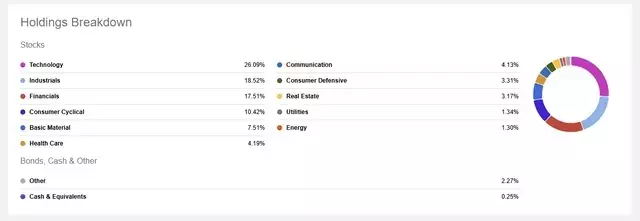
VPL's portfolio composition reveals several key characteristics. Geographically, it is heavily weighted towards Japan, with Japanese stocks accounting for over 50% of its total holdings, reflecting Japan's significant presence in the FTSE Developed Asia Pacific All Cap Index. Other notable country exposures include Australia, Hong Kong, and South Korea, while New Zealand and Singapore represent smaller proportions. Sector-wise, the ETF is diversified across 11 sectors, but with a pronounced tilt towards technology, which comprises more than 26% of the portfolio. Industrials, financials, and consumer discretionary sectors also hold double-digit stakes. In terms of market capitalization, VPL leans towards giant-cap stocks, which make up roughly half of its portfolio, aligning with its market-cap weighted index tracking methodology. From a style perspective, VPL demonstrates a balanced allocation between growth and blended stocks, offering a mix of companies with strong growth prospects and those with appealing value characteristics like robust payouts and reasonable valuations. This strategic diversification across countries, sectors, and market caps, combined with its low cost, underpins VPL's appeal as a core holding for accessing developed Asia Pacific equities.
Navigating VPL's Risks and Investment Suitability
While the Vanguard FTSE Pacific ETF (VPL) offers a strategic entry into developed Asia Pacific markets, investors must be cognizant of the associated risks and its suitability for specific investment profiles. One significant risk stems from currency exposure; VPL invests in non-USD denominated assets, and its Net Asset Value (NAV) is reported in USD. Consequently, any appreciation in the US dollar relative to the local currencies of its holdings can negatively impact VPL's returns, irrespective of the underlying asset performance in local terms. Furthermore, VPL exhibits a higher-than-average volatility profile, with its annualized volatility significantly wider than that of a typical ETF. This suggests that VPL's returns can experience considerable fluctuations, which might not align with investors seeking stable and linear investment growth. Despite employing a full replication strategy, VPL has shown above-median tracking errors, indicating that it does not perfectly mirror the performance of its benchmark index, the FTSE Developed Asia Pacific All Cap Index.
VPL's substantial concentration in Japanese equities, accounting for over half of its portfolio, introduces specific regional risks. These include demographic challenges in Japan, such as a shrinking and aging workforce that could dampen domestic demand and lead to labor shortages, potentially squeezing corporate margins. The transition of Japan's monetary policy from negative rates to a normalized environment could also increase borrowing costs for Japanese businesses. Additionally, Japan's high dependence on energy imports (nearly 90%) makes VPL susceptible to global energy price shocks and geopolitical instabilities. The ETF also carries a degree of top-heaviness, with two South Korean semiconductor giants, SK Hynix and Samsung Electronics, collectively making up over 15% of the portfolio. This exposure to the highly cyclical semiconductor memory market can lead to boom-and-bust cycles, introducing further volatility. Despite these risks, VPL appeals to "Growth At A Reasonable Price" (GARP) investors due to its attractive earnings multiple (less than 14x, a 20% discount to global stocks) and robust long-term earnings growth potential (over 15%, 400bps higher than global stocks). This valuation-to-growth trade-off, coupled with its broad coverage of over 2,300 stocks and low annual portfolio turnover (around 7%), makes VPL a suitable long-term option for value-conscious investors who appreciate diversified portfolios and the potential for mean reversion in market cycles. Comparatively, VPL maintains its edge in cost-efficiency against peers like the iShares Core MSCI Pacific ETF (IPAC) and the iShares MSCI Pacific ex Japan ETF (EPP), which, despite having lower AUM, exhibit higher expense ratios and different geographic focuses (IPAC with higher Japanese concentration, EPP heavily Australian-focused, and both excluding South Korea due to MSCI's classification).
