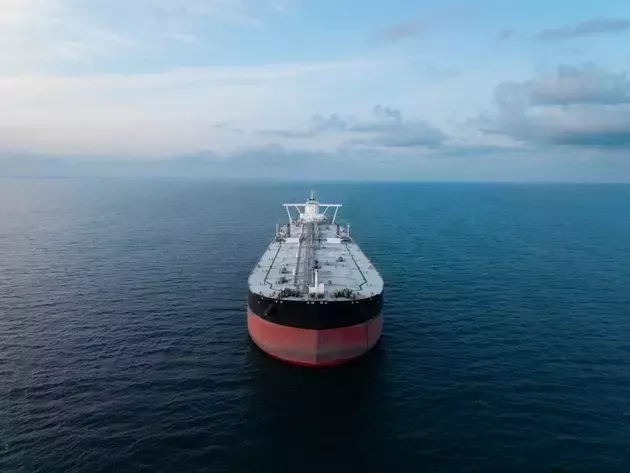
International Seaways (INSW), a prominent player in the tanker industry, currently presents a complex investment profile. The company boasts a robust financial foundation, a diverse fleet of vessels, and experienced leadership. However, its stock now trades at a significant premium to its Net Asset Value (NAV), reflecting a recent surge in its market price. This article delves into the various facets influencing INSW's current standing, from its impressive year-to-date performance to the inherent volatility of its operational environment.
International Seaways stands as a formidable entity within the global tanker market. Historically, the company has demonstrated resilience and strategic acumen, navigating the cyclical nature of the shipping industry. Its diversified fleet, encompassing various tanker classes, allows for flexibility and adaptability in response to shifting market demands. Management's consistent focus on maintaining a strong balance sheet has further solidified its position, providing a buffer against economic downturns and market fluctuations.
The company's share price has experienced a remarkable ascent, climbing over 100% since the beginning of the year. This impressive rally has placed INSW at a valuation reflecting a 22% premium over its Net Asset Value. While this indicates strong investor confidence and a positive outlook, it also introduces a degree of risk. The valuation is notably sensitive to the fluctuating dynamics of spot tanker rates, which are inherently unpredictable and can swing dramatically based on global supply and demand for crude oil transportation. A current price-to-earnings (P/E) ratio of 6x for projected 2026 earnings might appear attractive, but this too hinges on the sustained strength of these spot rates.
A key attraction for investors in International Seaways has been its generous shareholder return policy. The company commits to an 85% earnings payout, which translates to a projected 15% dividend yield for 2026. This high yield is a compelling factor for income-focused investors. However, this dividend stream is directly tied to the company's profitability, which, as mentioned, is highly susceptible to the vagaries of tanker rates. Should these rates soften, a decline in dividends would be a logical consequence, potentially impacting investor returns.
Considering the current market landscape, characterized by INSW's elevated valuation and its susceptibility to tanker rate volatility, a cautious approach is warranted. While the company's fundamental strengths are undeniable, the premium valuation suggests that much of the positive news may already be priced into the stock. Investors contemplating an entry or expansion of their position might find it prudent to await potential price corrections. A more opportune moment for investment could arise during periods of market weakness, allowing for a more favorable entry point and a better risk-reward balance. This strategy aligns with a value-oriented investment philosophy, prioritizing a margin of safety.
The company's strong operational foundation and commitment to shareholder returns are noteworthy. However, the current market pricing reflects a high level of optimism, largely fueled by elevated spot tanker rates. Given the inherent cyclicality of the shipping industry, a degree of caution is advised. While INSW has proven its ability to navigate challenging environments, the present valuation points to a need for careful consideration before making significant investment decisions.
