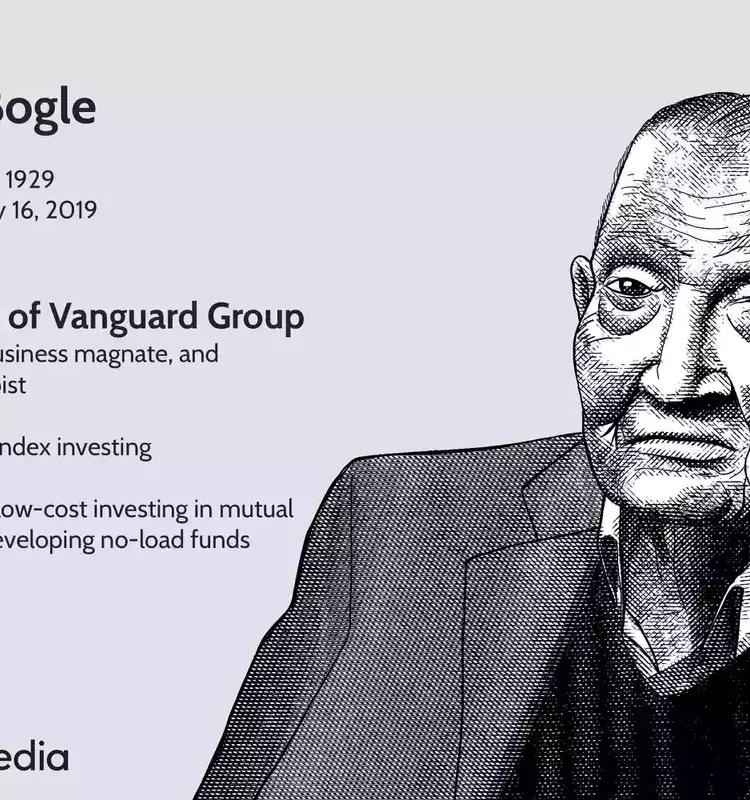
John Bogle, widely recognized as "Jack," was a transformative figure in the financial world. He established the Vanguard Group, introducing innovative investment strategies that made market participation simpler and more affordable for the general public. Bogle's pioneering efforts centered on the creation of index funds, which allowed investors to mirror broad market performance without incurring high fees. His vision significantly reshaped how individuals approach investment, emphasizing long-term gains through diversified, low-cost approaches rather than speculative active management.
Born on May 8, 1929, in Montclair, New Jersey, John Bogle's early life was marked by financial hardship, with his family losing much of its fortune in the 1929 stock market crash. Despite these challenges, he pursued higher education, attending Blair Academy thanks to his uncle's support, and later Princeton University, where he delved into economics. His academic journey laid the groundwork for his future contributions to finance, cultivating a deep understanding of market dynamics and investment principles.
Bogle's career began at Wellington Management in 1951. There, he advocated for a shift from a single investment fund focus to a more diverse portfolio approach. Although he eventually rose to become chairman, a critical merger decision led to his departure. Undeterred, Bogle founded the Vanguard Group in 1974, embarking on a mission to democratize investing.
At Vanguard, Bogle introduced a groundbreaking ownership structure where the mutual fund shareholders themselves became the collective owners of the funds. This innovative model meant that any profits generated by the firm were reinvested into its operational framework, effectively reducing investment costs for the fund's participants. This direct alignment of interests between the fund manager and investors was revolutionary, setting Vanguard apart from its competitors and cementing Bogle's reputation as a champion for the individual investor.
A landmark achievement for Bogle was the introduction of the Vanguard 500 fund in 1976. This fund was designed to track the performance of the S&P 500 index and was the first index fund made available to retail investors. Initially, it garnered modest interest, raising only $11 million in its first offering. However, its long-term success was undeniable; by July 28, 2022, the fund managed over $709 billion in assets. Bogle's emphasis on no-load mutual funds, which waive sales commissions, further lowered barriers to entry for everyday investors, aligning with his philosophy of cost-effective investing.
Bogle retired as CEO and chair of Vanguard in 1999, the same year he penned "Common Sense on Mutual Funds: New Imperatives for the Intelligent Investor." This influential work has since become a staple in investment literature, solidifying his legacy. His advocacy for passive investing—the belief that consistently beating the market is difficult and costly, making broad market index tracking a superior strategy—has profoundly impacted how millions manage their finances. Unlike active management, which relies on fund managers to pick stocks and time the market, passive investing, through vehicles like index funds, offers diversification, lower fees, and tax efficiency, all of which Bogle championed as essential for long-term financial success.
John Bogle's pioneering work with the Vanguard Group redefined the investment landscape, making accessible, low-cost index investing a mainstream option. His commitment to empowering individual investors through transparent, efficient, and diversified funds continues to influence financial strategies globally.
