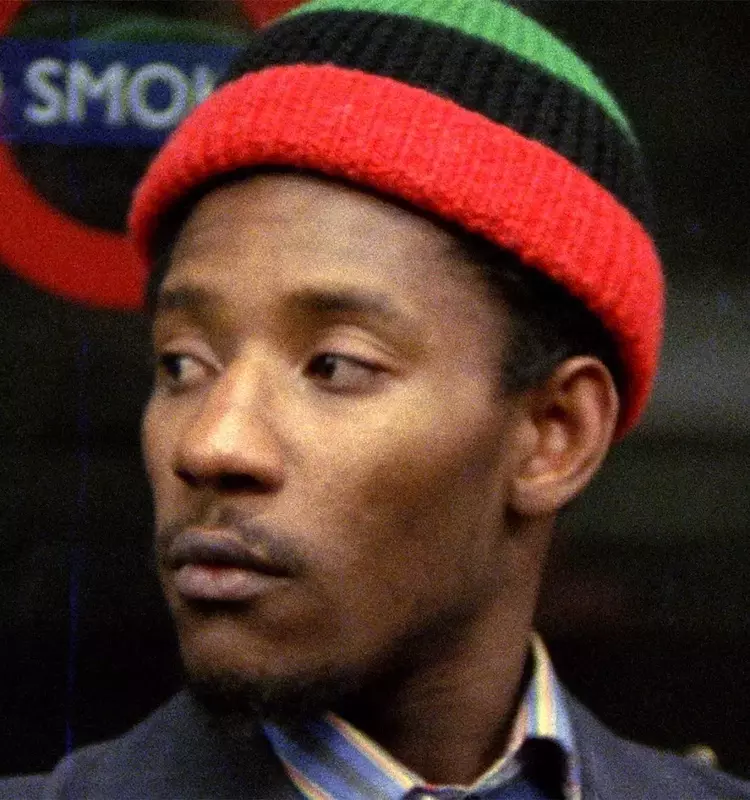
The Rhythmic Return: Celebrating a Dub Poet's Enduring Legacy
The Unwavering Voice of Dub Poetry
Tracing the profound lineage of hip-hop reveals Linton Kwesi Johnson as a foundational and enduring pillar. Born in Jamaica and raised in Britain, Johnson stands as the acclaimed father of dub poetry. Through his groundbreaking recordings of the 1970s and 1980s, Johnson masterfully wove together spoken word in Jamaican patois with biting critiques of systemic racism and the profound alienation experienced by Black British youth. For many years, Johnson's focus has primarily been on writing and advocacy; however, this autumn marks his much-anticipated return to live performance, almost two decades since his last stage appearance, aligning with the newly restored version of a rarely seen film about his life.
Resurfacing a Cinematic Time Capsule: Dread Beat an Blood
Originally unveiled in 1979, the film 'Dread Beat an Blood,' helmed by Italian director Franco Rosso, immerses viewers in Johnson's creative process within the recording studio and navigates the vibrant streets of Brixton. To amplify its historical context, Johnson's compelling spoken-word performances are skillfully interwoven with archival footage capturing the intense confrontations between police and Caribbean youth during the 1976 Notting Hill Carnival. Despite a limited theatrical run in the U.S. in the early 1980s, 'Dread Beat an Blood' has since been largely absent from public screenings. However, on September 20, a meticulously restored print of this seminal documentary is scheduled for its North American premiere at the Brooklyn Academy of Music, preceding Johnson's eagerly awaited stage comeback—his first theatrical performance in nearly two decades.
The Genesis of a Revolutionary Art Form: Dub Poetry's Roots
As a Jamaican immigrant residing in Britain during the 1960s and 1970s, Johnson directly confronted pervasive racial oppression by actively engaging with the Youth League of the British Black Panthers. During his academic pursuits as a sociology student, he began composing poetry, eventually collaborating with a drumming ensemble to provide a percussive backdrop to his verses. Johnson also drew inspiration from the pioneering DJs who overlaid spoken commentary onto reggae rhythms; the term 'dub poetry' originated with him and played a pivotal role in shaping the very essence of hip-hop as an art form.
A Lyrical Legacy: Albums That Defined a Movement
'Dread Beat an Blood' derives its name from a poem Johnson penned in 1975, and also from a 1979 album created in collaboration with reggae musician and producer Dennis Bovell, initially credited to Poet and the Roots. Across this album and subsequent influential works such as 'Forces of Victory,' 'Bass Culture,' and 'Making History,' Johnson, already an acclaimed poet, solidified his reputation as an exceptionally outspoken chronicler of the disaffection gripping Black British youth. As he vividly expressed in 'Sonny's Lettah (Anti-Sus Poem)' from 'Forces of Victory': \"Jim start to wriggle/The police start to giggle/Mama, make I tell you what dem do to Jim/Dem thump him in him belly, an’ it turn to jelly.”
Authenticity in Expression: A Poet's Artistic Philosophy
In a 2020 interview with The Guardian, Johnson reflected on his artistic vision, stating, \"I was striving to forge a connection between formal English and spoken Jamaican Creole. Much of the poetry of that era sounded like Caribbean artists attempting to mimic American accents, somewhat akin to those Mick Jagger songs where he tries to emulate a Southern American singing style. For me, the paramount concern was the genuine authenticity of my voice. I had no desire to imitate anyone else. I wanted it to resonate with my true self.”
The Provocative Power of Poetry and its Consequences
Johnson's reputation for fiercely political commentary directly influenced the reception of Rosso's film. Initially supported by the British Arts Council, 'Dread Beat an Blood' ignited controversy immediately upon its completion; the film was deemed so inflammatory that the BBC cancelled its scheduled broadcast. Nevertheless, Johnson's music career briefly flourished, as he secured opening slots for prominent acts like Public Image Ltd. and Ian Dury and the Blockheads.
A Lifelong Dedication to Art and Activism
After a brief retirement from performing in the mid-1980s, Johnson resumed recording in the early 1990s and has since continued his prolific career as a distinguished writer and activist. His 2002 poetry collection, 'Mi Revalueshanary Fren: Selected Poems,' earned him the distinction of being the sole Black poet included in Penguin Books' Modern Classics series at the time. His most recent literary endeavor, 'Time Come: Selected Prose,' was released in 2023.
The Cultural Dimension of Struggle: Activism Through Art
When questioned in 2022 about the profound impact of poetry in confronting injustice, Johnson articulated, “It does not serve as a replacement for tangible political action or for participating in protests. I have been deeply involved as a political activist since my late teenage years, engaging with movements ranging from the Black Panther Movement to the Black Parents Movement, the Race Today Collective, and the New Cross Massacre Action Committee. While all our struggles possess a cultural facet, art is not a substitute for taking to the streets when it becomes necessary to amplify one's voice.”