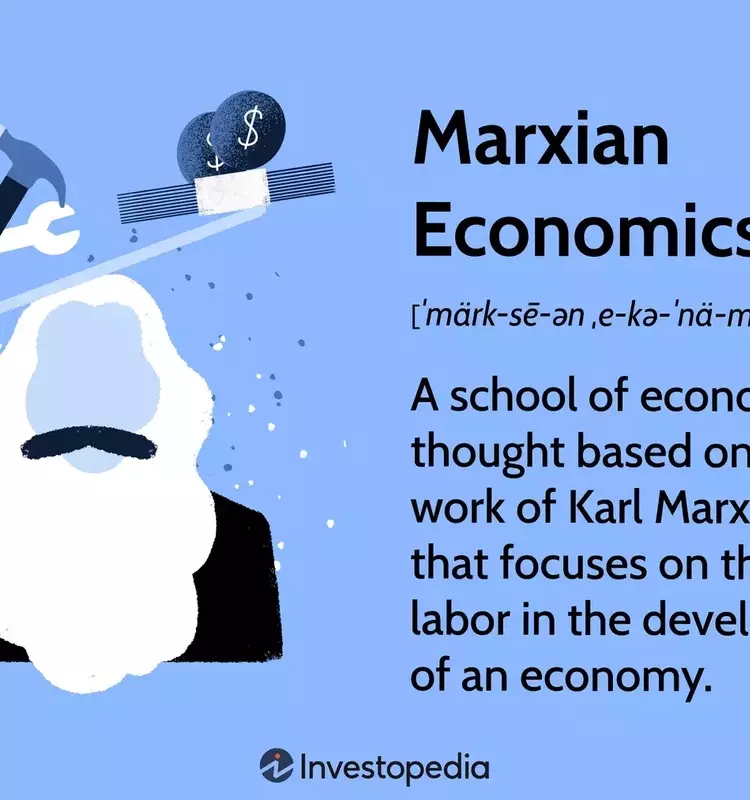
Marxian economics, rooted in the ideas of Karl Marx, offers a profound critique of capitalism's inherent flaws, particularly its chaotic market dynamics and the systematic exploitation of labor. This school of thought contends that the presence of surplus labor actively depresses wages, obscuring the true value and cost of workers' contributions. It argues that capitalism's pursuit of profit inevitably leads to significant wealth disparities and social unrest. Historically, while Marxist political ideologies saw widespread adoption in the mid-20th century, many nations later shifted away from these state-controlled systems towards market-based economies, highlighting the complex and often contentious debate surrounding Marxian economic principles.
The Core Tenets of Marxian Economic Thought
Originating from the extensive writings of Karl Marx, particularly his monumental work "Das Kapital," Marxian economics presents a fundamental challenge to traditional capitalist models. Marx's central argument revolves around the concept of "surplus value," asserting that under capitalism, labor is treated as a mere commodity. Employers compel workers to labor beyond the time required to earn their basic sustenance, appropriating the surplus product generated by this additional effort. This appropriation, Marx argued, is the foundation of capitalist profit, not merely the efficient pricing of goods. He believed that this system inherently undervalues labor, leading to an ever-widening gap between the capitalist class and the working class.
Unlike classical economists such as Adam Smith, who championed the unregulated free market as a benevolent force guided by supply and demand, Marx viewed capitalism as inherently self-destructive. He contended that the free market, rather than benefiting all, consistently serves the interests of a privileged few. This ruling class accrues wealth by extracting value from the cheap labor of the working population. Consequently, Marxian economics advocates for significant government oversight and intervention in economic affairs, moving away from consumer- and producer-driven decisions towards a state-managed system designed to ensure universal benefit and equitable distribution of resources. Marx famously predicted that the inherent contradictions and escalating exploitation within capitalism would ultimately lead to its downfall, replaced by a system where the state controls the means of production.
Reflections on Marxian Economics and Contemporary Society
The insights offered by Marxian economics remain highly pertinent in today's globalized world, prompting critical examination of labor practices, income inequality, and the role of government in economic regulation. While the utopian visions of Marxism, a broader political and social philosophy, largely failed to materialize in many nations, the economic theories articulated by Marx continue to resonate with those concerned about social justice and economic disparities. The discussions around minimum wage, worker rights, wealth taxes, and regulations on corporate power often draw parallels to Marx's fundamental criticisms of capitalism. Understanding Marxian economics encourages a deeper inquiry into the underlying structures of our economic systems, urging us to consider whether current models adequately compensate labor, mitigate market chaos, and ensure a fair distribution of wealth. It compels us to question whether economic growth should always take precedence over social equity and environmental sustainability, offering a lens through which to envision alternative, more equitable economic futures.
