Mastering Competitive Pricing Strategies for Market Advantage
Finance

Mastering Competitive Pricing Strategies for Market Advantage

authorBy Michele Ferrero
DateMay 05, 2026
Read time3 min

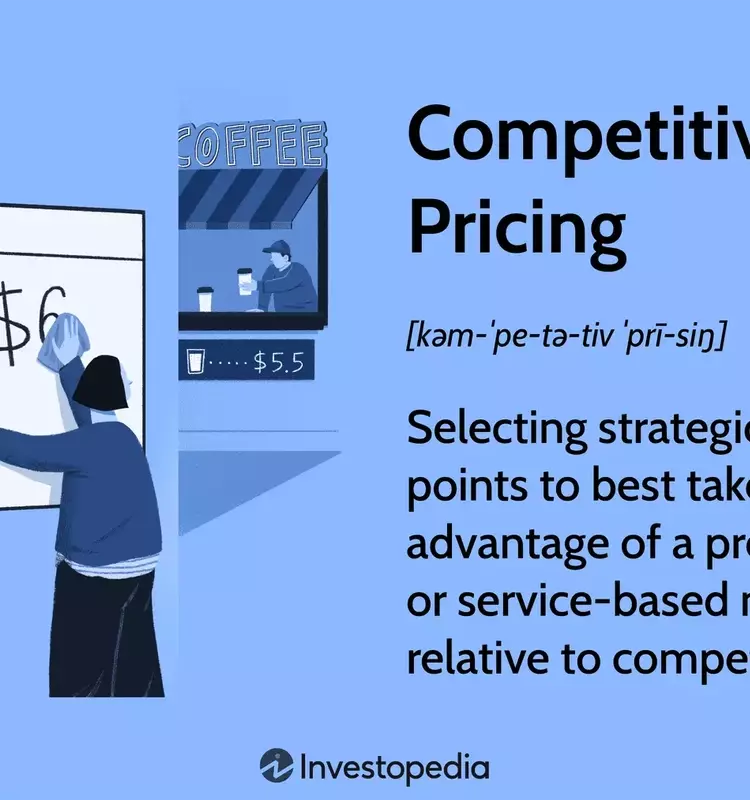
Competitive pricing is a strategic approach where businesses determine product or service prices by considering what rivals charge, aiming to attract customers and secure a market advantage. This method is frequently employed by companies offering similar products, especially after a product has become established with numerous alternatives in the marketplace. Tactics can involve setting prices higher than, equal to, or lower than competitors, each with distinct goals, ranging from premium positioning based on superior quality to loss leader schemes designed to draw customers to more profitable items.

Businesses can adopt three main pricing stances relative to their competitors: setting prices higher, at the same level, or lower. Choosing to price above the competition necessitates providing additional value, such as enhanced payment options or unique features. For premium pricing to be effective, a business must emphasize product quality and innovation rather than cost-cutting. This approach demands not only improving the product or service itself but also effectively communicating these differentiators to customers through robust marketing and branding efforts.

Conversely, pricing below the market can involve accepting an initial loss, with the expectation that customers, drawn in by the low prices, will subsequently purchase other profitable products. This strategy, known as a 'loss leader,' aims to increase foot traffic and encourage cross-purchasing of items with higher margins. Loss leaders are particularly useful for attracting new customers and liquidating stagnant inventory. However, certain legal restrictions, such as minimum advertised price policies and state regulations, can limit the public advertisement of such low prices.

When direct price adjustments to match competitors are not feasible, companies can implement price matching offers. This allows retailers to align with competitor prices without altering their established point-of-sale systems. A notable example occurred in November 2014, when Amazon projected significant price changes across millions of items for the holiday season. In response, major retailers like Walmart and Best Buy introduced price-matching programs, enabling them to retain customers who might otherwise have switched to Amazon solely based on price. This tactic proved crucial in preventing customer attrition and maintaining market relevance during a highly competitive period.

Strategic pricing based on competitor actions enables businesses to effectively position themselves in the market. Companies have the flexibility to price their offerings either below, at par with, or above their rivals, with each choice carrying specific implications. Employing a premium pricing model necessitates clear product differentiation to justify higher costs, whereas leveraging loss leaders can draw in customers who may then explore other, more profitable products. A thorough grasp of these diverse strategies empowers businesses to customize their pricing approaches to suit current market dynamics, thereby securing a competitive edge and fostering strong customer loyalty.

More Articles
Finance
Understanding Tangible Common Equity: A Key Metric for Financial Stability
Tangible Common Equity (TCE) is a vital metric that gauges a financial institution's ability to withstand losses. It represents the company's physical capital, excluding intangible assets and preferred equity. Analyzing TCE is particularly important for banks and other financial firms, especially during economic downturns or stress tests. This measure helps evaluate a firm's solvency and overall financial health, offering a conservative view of its stability and resilience.
By Nouriel RoubiniMay 05, 2026
Finance
Microsoft: A Generational Compounding Opportunity At 21x P/E
Microsoft continues to be a robust investment, highlighted by strong Q3 financial results and an attractive valuation, despite minor weaknesses in some sectors. The third quarter saw an 18% year-over-year revenue increase to $83 billion, with operating income climbing 20%, driven by its powerful cloud and productivity divisions. The shift to a 'seats-plus-consumption' model and an expanded OpenAI partnership are set to mitigate risks and unlock further growth. Trading at 24x FY26 and 21x FY27 earnings, Microsoft promises sustained double-digit growth and significant long-term returns.
By David RubensteinMay 05, 2026
Finance
California Water Service: Expansion, Dividends, and Challenges
California Water Service (CWT) is a regulated water utility that is actively expanding into new states such as Texas, Nevada, and Oregon through mergers and acquisitions. The company offers a competitive dividend yield, a long history of dividend growth, and maintains a strong financial position. Despite these strengths, CWT faces challenges including inconsistent earnings, rising debt, and population shifts in its core California market, which have impacted its recent performance. This analysis suggests a 'hold' rating due to these factors.
By Nouriel RoubiniMay 05, 2026
Finance
Understanding the Dynamics of a Nation's Terms of Trade
Terms of Trade (TOT) is a key economic metric that assesses the relationship between a country's export and import prices. A favorable TOT implies greater earnings from exports compared to import expenditures, leading to enhanced economic stability. This measure helps policymakers and investors understand capital flows and a nation's economic standing, influencing strategic decisions in international trade.
By Fareed ZakariaMay 05, 2026
Finance
Kinder Morgan's Strategic Adaptations Amidst Evolving Energy Landscape
Kinder Morgan's President, Dax Sanders, reveals that U.S. energy producers are maintaining production discipline despite global geopolitical shifts. He highlights how ongoing geopolitical developments are influencing the demand for U.S. liquefied natural gas (LNG) and pipeline infrastructure. Sanders also detailed Kinder Morgan's current projects and future expansion plans, emphasizing the company's crucial role in North American energy security and infrastructure development.
By Fareed ZakariaMay 05, 2026