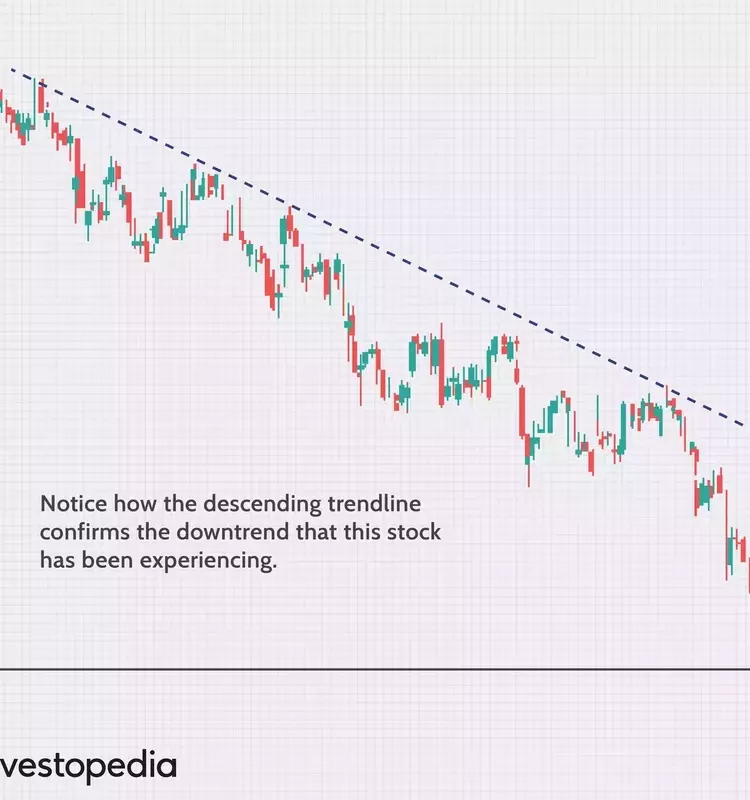
Trendlines are indispensable tools for traders, offering a clear visual representation of an investment’s price trajectory by linking a series of price points on a chart. This method provides vital insights into the market’s underlying forces, enabling traders to align their strategies with the prevailing direction of asset values. Understanding these directional cues significantly enhances the potential for successful trades by working in harmony with broader market dynamics. By employing trendlines, market participants can better gauge market sentiment, where upward-sloping lines suggest strong demand and downward-sloping lines indicate an abundance of supply.
Moreover, trendlines serve as critical indicators for identifying key support and resistance levels, which are pivotal for making informed trading decisions. These levels help traders determine optimal times to enter or exit positions, and to strategically place stop-loss orders to manage risk effectively. The predictive power of trendlines is strengthened when an asset's price frequently interacts with these lines, confirming their influence on market behavior. Ultimately, incorporating trendlines into a trading strategy equips investors with a robust framework for anticipating market shifts and optimizing their investment outcomes.
The Strategic Utility of Trendlines in Financial Markets
Trendlines are foundational tools in technical analysis, primarily used by traders to discern the direction of an asset's price movement. These lines are drawn directly onto price charts, connecting a sequence of significant price points to illustrate prevailing market trends. The core utility of trendlines lies in their ability to provide a visual narrative of market sentiment, indicating whether buyers or sellers are dominating the market. An upward-sloping trendline typically signifies a bullish market, where demand exceeds supply, suggesting prices are likely to continue rising. Conversely, a downward-sloping trendline points to a bearish market, characterized by an excess of supply over demand, which implies a continuation of price declines.
Beyond merely identifying trend direction, trendlines are critical for establishing potential support and resistance zones. These zones represent price levels where an asset's movement tends to pause or reverse, providing traders with strategic insights for decision-making. When prices approach a trendline, traders closely observe for either a rebound, indicating the trend's continuation, or a breach, signaling a potential trend reversal or weakening. The reliability of a trendline as a support or resistance level is often directly proportional to how many times the price has touched or reacted to it. More frequent interactions generally mean a more robust and significant trendline, offering greater confidence in its predictive power. This makes trendlines invaluable for technical analysts seeking to enhance their trading strategies and manage risk more effectively.
Implementing Trendlines for Enhanced Trading Outcomes
Drawing effective trendlines involves a degree of subjectivity, as traders must select which price points – such as opening, closing, high, or low prices – to connect. While there isn't a universally agreed-upon method, the consistency and relevance of the chosen points are paramount. Generally, upward trendlines are constructed by connecting a series of ascending low prices, acting as dynamic support levels. Conversely, downward trendlines are formed by linking descending high prices, serving as dynamic resistance levels. The more data points a trendline connects, and the more times the price tests these lines without breaking through, the stronger and more credible the trendline becomes, bolstering its predictive value in market analysis.
For instance, observing a stock like AutoDesk Inc. (ADSK) between August 2004 and December 2005 reveals how an ascending trendline, drawn connecting successive low points, can indicate a sustained uptrend. Traders typically interpret subsequent touches of this trendline as confirmation of its validity, providing opportune moments for entering long positions. Once a position is established near a confirmed trendline, traders often adjust their stop-loss orders dynamically, moving them higher as the trendline ascends. This risk management technique allows traders to safeguard profits while giving the asset sufficient room to fluctuate without prematurely exiting a potentially profitable trade. By skillfully using trendlines to identify entry points and manage stop-loss levels, traders can capitalize on prevailing market directions, significantly improving their overall trading performance and maximizing gains.
