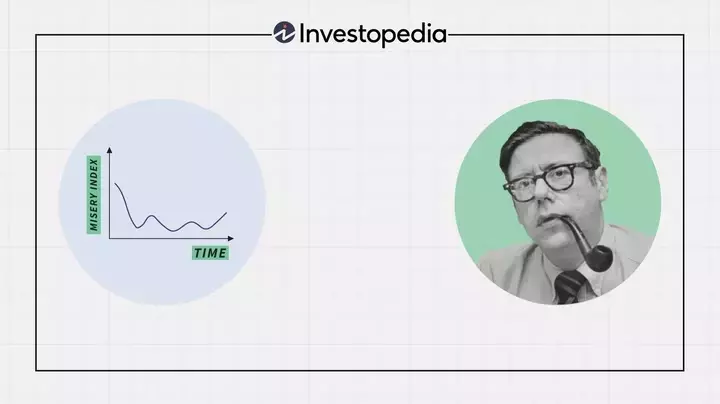
The Misery Index, an economic tool combining unemployment and inflation rates, offers a straightforward yet potent measure of the financial hardship faced by ordinary citizens. Conceived by Arthur Okun in the 1970s, it gained prominence during an era marked by simultaneous high inflation and unemployment, a phenomenon known as stagflation. This index serves as a quick snapshot of a nation's economic well-being; a higher score suggests greater public discontent. However, its simplicity is also its weakness, as it doesn't fully capture the intricacies of economic growth or the varying impacts of its two core components. Consequently, several economists have proposed updated versions to provide a more nuanced understanding of economic realities.
The Misery Index: Unpacking Economic Discomfort
The Misery Index, initially conceptualized by economist Arthur Okun, emerged in the 1970s as a critical tool for evaluating the economic discomfort experienced by the populace. At its core, this index is a straightforward summation of a nation's seasonally adjusted unemployment rate and its annual inflation rate. This simple formula provides a concise indicator of the dual challenges faced by citizens: the risk of job loss and the erosion of purchasing power. A higher index value directly correlates with increased economic hardship, making it a valuable, albeit simplified, gauge of a country's financial climate.
The historical context of the Misery Index is deeply rooted in the economic turbulences of the 1970s, a period marked by unprecedented stagflation in the United States. Following President Nixon's decisive actions to delink the U.S. dollar from gold, the nation grappled with a perplexing combination of surging inflation and high unemployment. This era defied conventional macroeconomic theories, particularly the Phillips curve, which posited an inverse relationship between inflation and unemployment. Okun's index offered a new lens through which to understand this novel economic predicament, highlighting the simultaneous squeeze on American households—struggling with job scarcity and a rapidly diminishing dollar value.
The index quickly found its way into the political arena, becoming a potent rhetorical weapon during U.S. presidential campaigns. In 1976, Jimmy Carter wielded the index to critique the economic policies of the incumbent Gerald Ford, pointing to a then-high index of 12.7%. Four years later, Ronald Reagan famously used the same metric to challenge Carter's economic stewardship, as the index had further climbed. These instances underscore the index's influence as a public barometer of presidential economic performance.
However, the Misery Index is not without its critics and limitations. Economists argue that its simplicity can be misleading. The unemployment rate, for example, only captures those actively seeking work, overlooking discouraged workers who have ceased their job search. Similarly, a low inflation rate, while seemingly positive, can mask underlying economic stagnation, which can lead to other forms of misery such as falling asset values. Furthermore, the index assigns equal weight to unemployment and inflation, despite arguments that a 1% increase in joblessness may inflict greater hardship than a 1% rise in prices. Critics also note its inconsistent application, primarily used during economic downturns rather than periods of stability.
Recognizing these shortcomings, several economists have proposed more sophisticated variations. Robert Barro of Harvard expanded the index in 1999 to include consumer lending interest rates and the gap between actual and potential GDP growth, offering a broader perspective on presidential economic performance. Later, in 2011, Johns Hopkins economist Steve Hanke further modified Barro's version into a cross-country index, adding bank lending rates and subtracting the change in real GDP per capita. Hanke's annual rankings highlight countries with the highest and lowest economic misery, with recent reports identifying Argentina, Venezuela, and Lebanon among the most distressed, and countries like Thailand, Singapore, and Japan among the most content. Even asset classes have seen their own misery indices, such as Tom Lee's Bitcoin Misery Index, which assesses investor sentiment based on trading success rates and volatility.
As of December 2024, the U.S. Misery Index stood at 6.99, a figure derived from a 4.1% unemployment rate and a 2.89% inflation rate. While appearing moderate, this number underscores the ongoing economic realities faced by Americans. The most extreme periods of misery in U.S. history include the Great Depression, where the index soared to 25.7% in 1933, and periods under Presidents Nixon and Carter, which saw figures as high as 20% and 22% respectively. Conversely, significant reductions were observed under Ronald Reagan and during parts of the Trump presidency, though the COVID-19 pandemic caused a temporary surge to 15%.
The Misery Index, despite its inherent limitations and various adaptations, remains a compelling concept. It prompts us to consider the human dimension of economic statistics, reminding us that behind every percentage point are individuals and families navigating their daily lives. While it may not offer a complete picture, it serves as a powerful reminder of the importance of stable employment and manageable living costs for societal well-being.
Reflections on the Human Cost of Economic Data
The Misery Index, an economic construct derived from the cold hard numbers of unemployment and inflation, offers a profound lens through which to view the very real human experiences of economic hardship. While economists may debate its statistical precision or its comprehensive scope, its fundamental premise—that high joblessness and soaring prices inflict genuine suffering—resonates deeply. It challenges us to look beyond abstract percentages and consider the daily struggles of individuals and families caught in economic crosscurrents. The index serves as a powerful reminder that economic policy decisions are not merely about fiscal targets or market stability, but about the tangible quality of life for millions. It underscores the critical need for leaders to craft policies that foster both employment opportunities and price stability, acknowledging that these factors are not just economic variables, but pillars of societal well-being and personal dignity. In an increasingly complex global economy, simplified metrics like the Misery Index, despite their flaws, retain their value as poignant indicators of the human cost embedded within macroeconomic data.
