Music as a Bridge: How Singing Builds Community and Fosters Equity
Music

Music as a Bridge: How Singing Builds Community and Fosters Equity

authorBy hmyworldfix
DateApr 29, 2025
Read time3 min

In the heart of Portland, Coty Raven Morris has emerged as a transformative figure in music education, blending choral performance with social justice. A professor at Portland State University, Morris's innovative approach to teaching and community engagement is reshaping how people perceive singing. Through her workshops and community sings, she brings together diverse groups, transcending cultural and societal barriers. Her philosophy centers on using music not merely as an art form but as a tool for fostering understanding and equity. This vision has inspired many, including Apollo Fernweh, who redirected his career path after hearing Morris speak. Ethan Sperry, head of the choral program at Portland State, emphasizes the profound impact Morris has had on both students and the broader community, noting that choir members exhibit higher graduation rates and deeper empathy.

Morris's journey began in New Orleans, where music was inseparable from everyday life. "Everything was sung," she recalls, describing how songs and play became vehicles for learning history and culture. As she matured, this holistic view persisted, influencing her studies in choral conducting and music theory. Dissatisfied with traditional equity workshops, which she found disengaged and guilt-driven, Morris developed her own method. By facilitating open conversations about identity and background, she encourages participants to connect deeply before addressing broader societal issues. This approach aligns with her belief that singing together can dismantle insecurities and build genuine rapport.

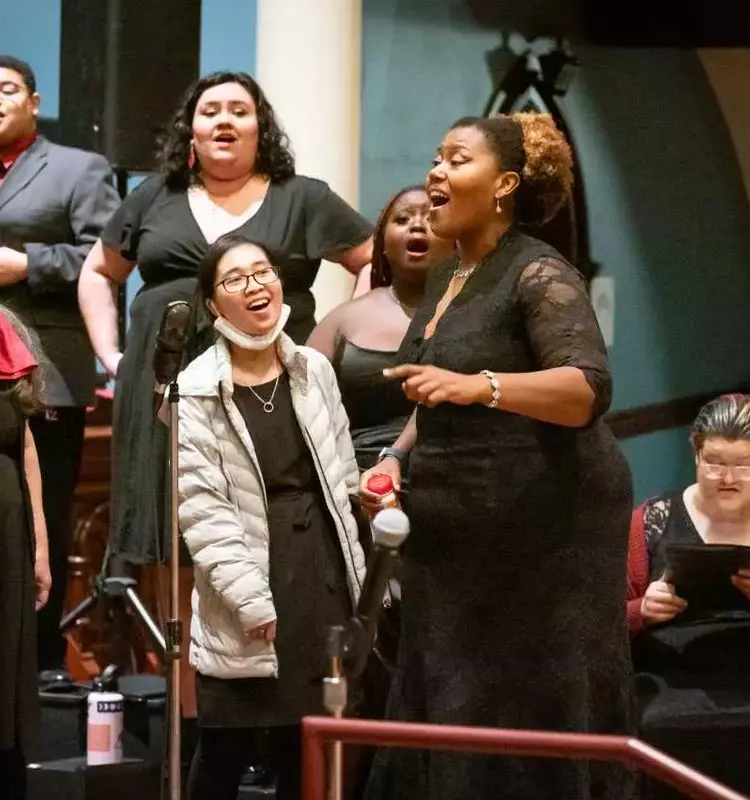
In her role at Portland State University, Morris organizes regular community sings, inviting choruses and the public to participate. These events attract individuals ranging from seasoned performers to those convinced they cannot sing. Morris challenges such self-doubt, asserting that everyone possesses a healing voice. One memorable event took place at a downtown church, drawing hundreds of attendees. Among them was Fernweh, leading the Blueprint Ensemble Arts Youth Choir. It marked his first time conducting such a large group, successfully guiding them through a harmonious performance. Sperry highlights the importance of these gatherings in preparing students to leverage choirs for community-building in underserved areas.

Rich Hanson, a retired biology teacher, exemplifies the diverse audience drawn to these events. Once torn between science and music, Hanson now cherishes the opportunity to sing alongside his granddaughter in the youth choir. He marvels at the eclectic mix of participants, observing a vibrant tapestry of humanity united by song. Toward the concert's conclusion, a multigenerational ensemble performed "We Are One." Featuring college students, international families, and even a woman with mobility aids, the performance embodied Morris's mission—bridging differences through shared melodies.

Beyond mere entertainment, these musical experiences foster profound connections. By weaving together voices from various walks of life, Morris creates spaces where laughter, tears, and harmony converge, reinforcing the message that "we are one." Her work continues to inspire and transform communities, proving that music can be a powerful force for unity and change.

More Articles
Samara Joy: The Rising Jazz Star Bridging Generations
Samara Joy, a 25-year-old jazz singer from the Bronx, has achieved remarkable success, winning five Grammys in four years. Her musical journey began in a family rich with musical heritage; her grandparents founded The Savettes, and her father is a bassist. Initially resistant to social media, Joy embraced TikTok, becoming a JazzTok star and introducing jazz to younger audiences. Her third album, *Portrait*, reflects her growth and newfound creative power. Performing alongside her family, including her 94-year-old grandfather, highlights the legacy of music in her life. Inspired by legends like Ella Fitzgerald, Joy aims to continue pushing boundaries in her career. Her early memories of singing include church performances and discovering jazz during college, which reshaped her musical identity.
By hmyworldfixApr 29, 2025
David Foster's Musical Journey: Crafting the Soundtrack for Betty Boop
David Foster, renowned for crafting showstoppers for legendary divas like Whitney Houston and Céline Dion, ventured into uncharted territory with "Boop! The Musical." Despite his extensive experience, adapting to Betty Boop's vibrant world proved challenging. Foster immersed himself in 1930s cartoons and drew inspiration from childhood memories of playing stride piano, alongside guidance from Broadway legends like Andrew Lloyd Webber and Stephen Sondheim. He aimed to create a score defying time periods, blending jazz and Broadway styles. After composing around 50 songs, only 20 made the final cut, including pieces like "Ordinary Day" and "Something to Shout About," showcasing his ambition and versatility. This project marks a bold step outside Foster’s comfort zone, resulting in one of the season's most unique musicals.
By hmyworldfixApr 29, 2025
New Sonic Creation Unveiled by John Scalzi
In this post from April 28, 2025, John Scalzi shares a new experimental music piece he created. The composition features drones, heavy drums, and feedback-laden noise in an unconventional 11/16 time signature. Acknowledging its niche appeal, Scalzi humorously notes it may not suit everyone's taste, but invites those who appreciate avant-garde sounds to enjoy it. This brief update is sandwiched between links to other works, "Moon Shot" and "The Big Idea: Renan Bernardo."
By hmyworldfixApr 29, 2025
Reviving Cleveland's Musical Heritage: The Rise of Globe Iron
Globe Iron, a newly revitalized music venue in Cleveland under AEG Presents, breathes life into the historic Globe Iron building. With a capacity for 1,200 attendees and modern upgrades while preserving historical elements, it joins other local venues like Jacobs Pavilion and The Agora. This expansion of Cleveland's music scene raises questions about market saturation but also presents opportunities for artist development. AEG’s strategy involves nurturing artists from smaller stages to larger ones, enhancing Cleveland's reputation as a music hub. Despite concerns over funding and audience distribution amidst increasing venue numbers, AEG remains optimistic, aiming to collaborate with independent venues and attract diverse concerts. This growth reflects Cleveland's evolving role in the live music industry, continuing traditions rooted in its rich musical history.
By hmyworldfixApr 29, 2025
Mongolian Jazz Singer Blends Tradition and Modernity
Enkhjargal Erkhembayar, known as Enji, grew up in Ulaanbaatar, Mongolia, where singing was a daily family tradition. At 33, she has brought Mongolian folk music to international stages by blending it with acoustic jazz improvisation. Her unique style incorporates the circular-breathing technique of Mongolian long song, producing tender and emotive performances. Having toured Europe and China, her audiences connect deeply with her music despite language barriers. Erkhembayar’s fourth album, *Sonor*, showcases her versatility, featuring confessional lyrics and diverse musical influences. Initially trained as a kindergarten teacher, she discovered her singing talent and later embraced jazz through a Munich-based education program. Now based in Germany, her music reflects her bicultural identity, expressing themes of belonging and yearning for home.
By hmyworldfixApr 29, 2025