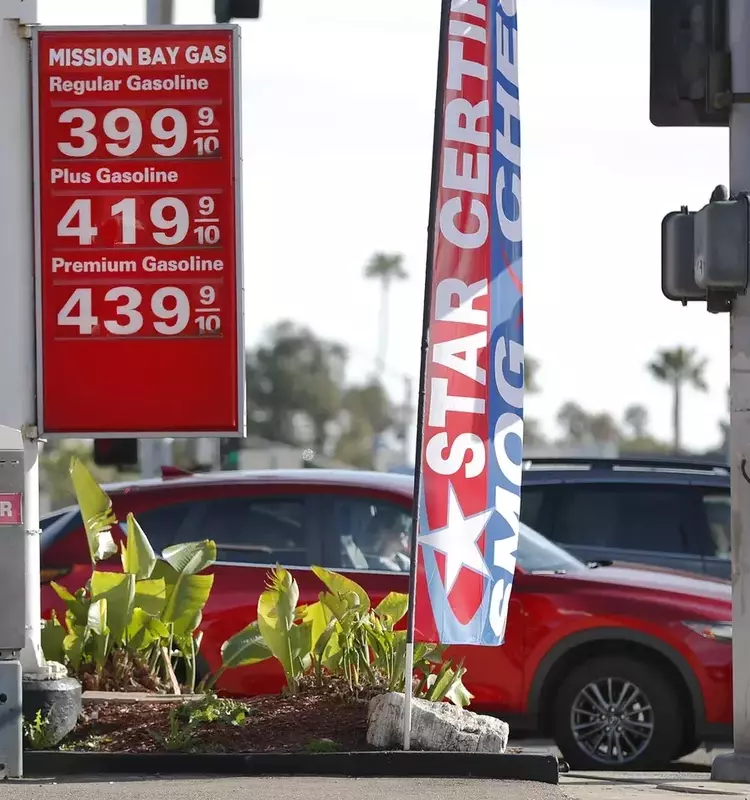
Gasoline prices across the nation have reached their highest point in almost four years, experiencing an unbroken ascent for fifteen consecutive days. This persistent upward trend is largely fueled by geopolitical events, particularly the unrest linked to Iran, which continues to exert pressure on global oil markets. The variations in pricing consumers encounter at the pump are not solely dictated by international crude oil rates but also by a complex interplay of local taxes, supply logistics, and state-specific environmental mandates.
Soaring Fuel Costs: An Unfolding Economic Narrative
In a striking development on May 7, 2026, the national average price for a gallon of regular gasoline escalated to a formidable $4.56. This significant leap represents a $0.54 increase since April 22, according to data from AAA, signaling an end to a period of relative stability in fuel costs. For the first time in nearly four years, the American consumer is confronting such elevated prices. The primary catalyst for this surge is the lingering uncertainty and supply disruptions stemming from the Iran conflict, which has propelled oil prices to higher echelons.
Remarkably, amidst this nationwide upsurge, Oklahoma emerged as the solitary state where the average gasoline price remained below the $4 mark, barely clinging to $3.99 per gallon. States such as Mississippi and Louisiana, which had previously maintained prices under this threshold, have now seen their averages climb past $4. On the other end of the spectrum, states like California are grappling with exceptionally high costs, with its average reaching $6.17 per gallon. Other Pacific states, including Washington, Hawaii, Oregon, Nevada, and Alaska, also report prices ranging from $5.21 to $5.76. Furthermore, Illinois recently joined the ranks of states exceeding $5 per gallon. The stark contrast is evident in the $2.18 difference between California's and Oklahoma's average fuel prices.
The divergence in gasoline prices across the United States can be attributed to several critical factors. State and federal fuel taxes constitute a substantial portion of the pump price, accounting for over 14% of the total in 2023, with considerable differences from one state to another. Moreover, the proximity to major refineries and pipeline networks plays a crucial role; regions with easier access often benefit from reduced transportation costs. Conversely, isolated markets face tighter supply and consequently higher prices. Regulatory frameworks also contribute to these disparities, as exemplified by California's requirement for a specialized, cleaner-burning gasoline blend, which fewer refineries can produce, thus driving up local prices.
The Ripple Effect of Geopolitics on Local Economies
The current landscape of rising gas prices vividly illustrates how global geopolitical tensions can directly impact the daily lives of citizens. The Iran conflict's influence on oil prices reverberates through the American economy, squeezing household budgets and posing challenges for various industries. While there are glimmers of hope for price moderation, contingent on potential diplomatic resolutions, the immediate reality for drivers is one of elevated costs. This situation underscores the intricate connections between international relations, commodity markets, and domestic economic stability. It serves as a potent reminder of the fragility of supply chains and the profound effect external shocks can have on consumer spending and regional economic health. For individuals, this means a continued need for prudent financial planning and an awareness of regional price fluctuations, which remain significant.
