Navigating Property Laws: The Challenges of Altering a Bricked-Up Window in a Flying Freehold Home
This report explores the unique challenges encountered by homeowners in properties with 'flying freeholds,' specifically focusing on the legal and practical hurdles of making structural modifications like reopening a bricked-up window. It highlights the intricate nature of property boundaries and shared responsibilities, drawing insights from legal experts on resolving such complex situations. The narrative underscores the importance of legal consultation and amicable neighborly agreements when navigating property alterations that extend beyond one's immediate plot.
Understanding Property Boundaries: A Homeowner's Quest to Reopen a Historic Window
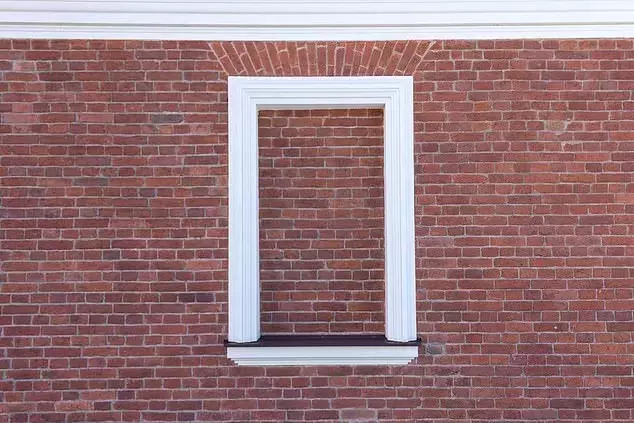
In a charming, historic semi-detached residence, originally part of a grand seventeenth-century farmhouse, a homeowner found herself contemplating a significant renovation. Her spacious main bedroom, despite its size, remained perpetually dim due to a long-bricked-up window. Her desire was simple: to restore this window to its former glory, allowing natural light to flood the room. However, this seemingly straightforward task was complicated by a peculiar architectural feature: the exterior of her bricked-up window protruded onto her neighbor's property, creating what is legally known as a 'flying freehold.'
This unique property arrangement, common in older buildings, means a portion of one property extends or overhangs an adjacent one. Examples include basements extending under a neighbor's land, balconies projecting over their space, or, as in this case, a room situated above a shared passage. Such configurations can lead to legal ambiguities regarding ownership, maintenance, and access rights. Property expert Jane Denton from This is Money notes that while these arrangements are not insurmountable, they often deter mortgage lenders and can instigate disputes between neighbors.
Legal professionals emphasize the necessity of meticulous due diligence in such scenarios. Jessica Barnes, a solicitor at SO Legal in Brighton, clarifies that while the interior space of the bedroom belongs to the homeowner, the external wall of the window, forming part of the neighbor's property, falls into a legal 'grey area.' Reinstating the window without proper legal entitlements or the neighbor's explicit consent could lead to significant legal disputes.
The initial step, according to legal counsel, involves thoroughly examining the property deeds for any existing agreements concerning the window or the flying freehold area. Often, these deeds might lack specific clauses for support, repair, or access. While indemnity insurance can offer a temporary solution during property sales, it doesn't address the underlying issue for long-term alterations.
The optimal path involves open communication with the neighbor and obtaining a formal 'deed of mutual covenant and grant.' This legal document outlines the rights and obligations of each property owner regarding shared structures, covering aspects like maintenance, support, and protection. Registering this deed with HM Land Registry ensures its enforceability for future owners.
Furthermore, given the property's venerable age, obtaining planning permission and adhering to building regulations are critical. Jessica Barnes highlights that external alterations demand compliance with building controls, and if the property is listed or located within a conservation area, additional restrictions apply. Particularly for a seventeenth-century house, the likelihood of it being a listed building is high, making local authority consent indispensable before any work commences.
David Lewis, a partner at Laytons in London, echoes these sentiments, underscoring that the absence of clear rights for support and entry to perform repairs can pose significant challenges, particularly for mortgage acquisition. He advises exploring specialist indemnity insurance or negotiating a mutual rights deed between property owners to address these concerns. Such a deed typically grants rights of support and permits repairs with prior notice. Lewis also points out that a new window might need to be a sash window to avoid encroaching on the neighbor's airspace if it opens outwards.
In essence, while restoring the bricked-up window is potentially achievable, it necessitates careful planning, legal expertise, and collaborative engagement with the neighboring property owner.
The Intricacies of Shared Property: A Timeless Lesson in Coexistence
This situation serves as a profound reminder of the complexities embedded within property ownership, especially when structures intertwine. It highlights that a property line on a map doesn't always define the extent of shared responsibility. The concept of a 'flying freehold' beautifully illustrates how historical construction practices can create enduring legal and relational challenges in modern times. This case underscores the vital role of meticulous legal counsel, not just for navigating present dilemmas but for safeguarding future harmony between neighbors. It teaches us that beyond legal documents and consents, mutual respect and open dialogue are indispensable in resolving shared property issues. Ultimately, achieving a brighter, more functional living space often depends on successfully illuminating the path to cooperative solutions with those next door.