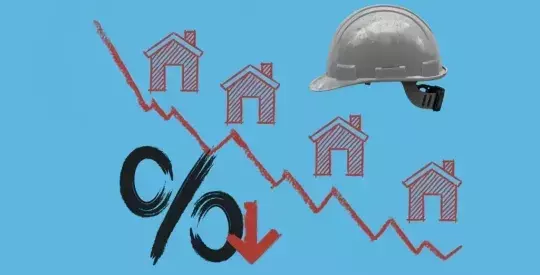
Recent economic indicators paint a picture of a decelerating labor market in the United States. The latest figures show a marked reduction in new employment, leading many experts to believe that the economy is entering a period of cooling. This trend has significant implications for monetary policy, with a growing consensus that the central bank may soon adjust interest rates in response to these changing conditions. The ripple effects of a softer job market are anticipated to extend across various sectors, including the crucial housing and mortgage industries.
Sustained Slowdown in U.S. Employment Figures
In a significant development for the U.S. economy, the month of August witnessed a dramatic drop in job creation, with the official statistics from the U.S. Bureau of Labor Statistics (BLS) reporting a mere 22,000 new non-farm payroll positions. This figure stands in stark contrast to expectations and follows substantial downward revisions for May and June, indicating a persistent deceleration in the labor market's momentum. Concurrently, the national unemployment rate experienced a slight uptick, reaching 4.3%, the highest since October 2021, with 7.4 million individuals actively seeking employment.
Economists from prominent financial institutions, such as Sam Williamson, a senior economist at First American, have highlighted this trend, noting that the three-month average for job growth has fallen to 29,000, a clear signal of slowing expansion compared to earlier in the year. While the healthcare sector saw a notable gain of 31,000 jobs in August, this positive contribution was largely offset by declines in other key areas, including a 15,000 job reduction in the federal government, 6,000 in mining and oil extraction, and 12,000 in wholesale trade employment.
Moreover, the manufacturing sector continued its contraction, shedding 12,000 jobs in August, contributing to a total loss of 78,000 jobs year-to-date. This downturn is potentially linked to the ongoing impact of trade tariffs. The construction industry also experienced a setback, losing 7,000 jobs, with residential building and specialty trade contractors seeing significant reductions. Conversely, heavy and civil engineering construction recorded a modest gain of 2,300 jobs, and the real estate and rental and leasing sectors collectively added 1,600 jobs, with real estate specifically gaining 2,900 roles.
Mike Fratantoni, the chief economist at the Mortgage Bankers Association, underscored the challenges faced by those seeking employment, observing that while layoffs have somewhat increased, the rate of hiring remains low. This makes it increasingly difficult for both new entrants and laid-off workers to secure positions. In light of these softer employment figures and stable inflation, economic analysts widely anticipate that the Federal Reserve will consider a rate cut at its upcoming meeting later this month. Sam Williamson suggests this could be an opportunity for the Fed to recalibrate its policy towards a more neutral stance, potentially leading to lower long-term yields and providing some much-needed relief for prospective homebuyers facing elevated mortgage rates.
However, Lisa Sturtevant, the chief economist at Bright MLS, advises consumers to closely monitor the bond market's reaction. While weaker labor market conditions might typically lead to a fall in bond yields and, consequently, mortgage rates, persistent high inflation expectations could keep yields elevated, even with a Federal Reserve rate adjustment. Sturtevant cautions against attempting to time the market based on rate changes alone, emphasizing that the Fed's decision might not immediately or significantly alter mortgage rates in the short term for those involved in the housing market.
The emerging economic landscape, characterized by diminishing job growth and an uptick in unemployment, presents both challenges and opportunities. For policymakers, the clear slowdown in the labor market underscores the need for careful consideration of monetary policy, with the prospect of interest rate adjustments now firmly on the table. For individuals and businesses, particularly within the housing sector, these shifts necessitate a pragmatic approach. While lower interest rates could provide a much-needed boost, it's equally important to consider the broader economic context and not solely rely on central bank actions to dictate market movements. The current environment demands adaptability and an understanding that the path to economic recovery, or recalibration, is complex and multifaceted.