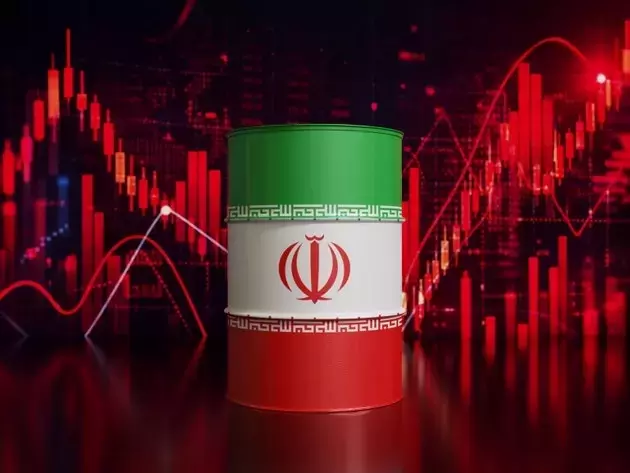
Oil Prices Exceed $100 Amidst Escalating Middle East Tensions
Finance

Oil Prices Exceed $100 Amidst Escalating Middle East Tensions

authorBy Fareed Zakaria
DateJul 24, 2026
Read time2 min
This report analyzes the recent surge in crude oil prices, particularly Brent, surpassing $100 per barrel, driven by escalating tensions in the Middle East. It examines the implications for global energy markets, inflation, and monetary policy, offering insights into the current market dynamics and future outlook.

Geopolitical Storm Brews: Oil Soars Amidst Regional Unrest

Crude Oil's Ascent: A New Benchmark

Yesterday marked a significant turning point in global energy markets as ICE Brent crude oil surged past the $100 per barrel threshold, a level not seen since May. This dramatic increase signals growing concerns within the market regarding supply stability and geopolitical risk.

Middle East Turmoil: Fueling the Price Hike

The primary catalyst for this upward trend is the intensifying geopolitical situation in the Middle East. With no clear indications of a peaceful resolution or de-escalation, market participants anticipate continued volatility. This uncertainty is likely to propel oil prices further upward as traders react to the evolving landscape.

Inflationary Pressures and Monetary Policy Implications

The sharp rise in energy costs is not without broader economic consequences. Higher oil prices inherently fan the flames of inflation, leading to worries that inflationary pressures could persist longer than previously expected. Such a scenario might compel central banks to maintain a more restrictive monetary policy stance for an extended duration, potentially impacting global economic growth and stability.

Gold's Reaction: A Contrasting Performance

In a notable divergence, gold prices experienced a decline. Traditionally viewed as a safe-haven asset, gold's fall in response to rising energy costs highlights the market's immediate focus on inflation. The prospect of sustained high inflation and restrictive monetary policies typically makes non-yielding assets like gold less attractive, as investors seek assets that can better withstand or benefit from rising interest rates.

Market Outlook: Navigating Uncertainty

The current market environment is characterized by a precarious balance of geopolitical tensions and economic concerns. The path forward for oil prices appears to be upward, especially in the absence of any significant de-escalation in the Middle East. Investors and policymakers alike will need to closely monitor these developments to anticipate their far-reaching effects on global commodity markets and the wider economy.

More Articles
Finance
Invesco RAFI Strategic US ETF: A Potential Outperformer in a Volatile Market
The Invesco RAFI Strategic US ETF (IUS) offers exposure to large-cap US stocks through a strategic index that employs a quality screen and fundamental weighting. This approach aims to mitigate the mega-cap bias often found in market-cap weighted indexes, making IUS a potentially resilient option in a market characterized by high concentration and vulnerability.
By Nouriel RoubiniJul 23, 2026
Finance
Understanding Bond Duration: A Comprehensive Guide for Investors
Bond duration is a critical metric for investors, indicating how sensitive a bond's price is to changes in interest rates. It measures the weighted average time to receive a bond's cash flows and helps assess interest rate risk. Higher duration implies greater price volatility with interest rate shifts. Key types include Macaulay duration, which measures the average time to receive cash flows, and modified duration, which estimates price change for a 1% interest rate shift. Understanding these concepts allows investors to align bond choices with their risk tolerance and financial objectives.
By Suze OrmanJul 23, 2026
Finance
Understanding the Golden Cross in Financial Markets
The golden cross is a technical analysis pattern indicating a potential major market rally. It occurs when a short-term moving average crosses above a longer-term moving average, signaling a bullish trend. This pattern is often accompanied by high trading volumes and is used by traders to identify upward market momentum. While it suggests a positive shift in market sentiment, it's crucial to use it with other indicators and risk management tools due to its lagging nature.
By Morgan HouselJul 23, 2026
Finance
Identifying Value in Dividend King Stocks: A Strategic Approach
This article explores the landscape of Dividend Kings, companies with over 50 consecutive years of dividend increases, from a strategic investment perspective. It differentiates between high-yield and dividend growth investment styles, emphasizing the importance of a nuanced approach to these historically strong performers. The piece outlines a methodology for identifying which Dividend Kings represent strong buying opportunities versus those better suited for holding, based on current valuations and underlying financial health. It aims to guide investors in leveraging the stability of Dividend Kings for long-term portfolio growth while making informed decisions on entry points.
By Lisa JingJul 23, 2026
Finance
Accessing Your 401(k) for a Home Down Payment: Withdrawal vs. Loan
Considering using your 401(k) for a home down payment? This article explores two main methods: direct withdrawals and loans. While both options provide access to funds, they come with significant financial implications, including potential taxes, penalties, and lost investment growth. Understanding these drawbacks is crucial to making an informed decision about your retirement savings and future financial well-being.
By Fareed ZakariaJul 23, 2026