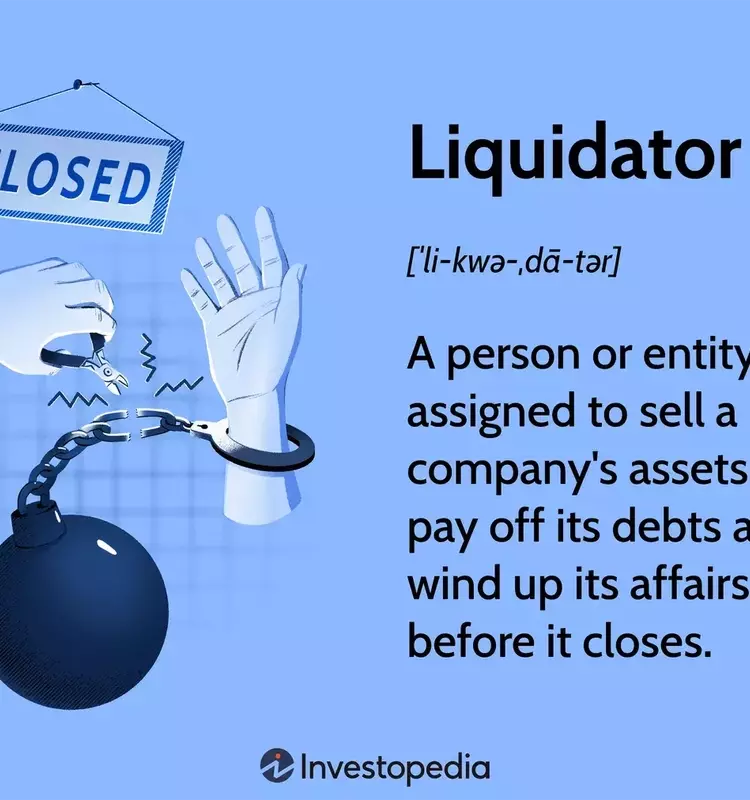
A liquidator is a professional who oversees the orderly closure of a business, ensuring assets are sold to pay off debts and resolve obligations.
When a business faces the end of its operations, either due to insolvency or strategic restructuring, a critical figure known as a liquidator steps in. This individual or entity is tasked with the complex process of winding down the company's affairs. Their primary responsibility involves taking control of all company assets, converting them into cash through sales, and then distributing these funds among creditors and other stakeholders according to legal priorities. Beyond asset management, liquidators also navigate the legal landscape, representing the company in court, defending against claims, and ensuring all statutory obligations are met. Their role is multifaceted, demanding a blend of financial acumen, legal understanding, and ethical conduct to ensure a fair and efficient resolution for all parties involved in the company's dissolution.
Liquidators play a crucial role in facilitating a smooth and legally compliant conclusion to a company's life cycle. Their involvement ensures that the assets are managed transparently and distributed equitably, protecting the interests of creditors, shareholders, and the broader economic system. The process of liquidation, while often associated with distress, is a structured mechanism for addressing financial obligations and reallocating resources, allowing for the natural evolution of the business landscape.
The Core Functions and Responsibilities of a Liquidator
A liquidator is a specially appointed professional, often by a court, creditors, or shareholders, to manage the intricate process of closing a company, particularly during bankruptcy. Their fundamental duty is to convert company assets into liquid funds, primarily to satisfy outstanding financial obligations. This encompasses a broad spectrum of tasks, including the collection of receivables, settlement of debts, and representation of the company in legal proceedings, such as lawsuits. These professionals assume comprehensive authority over all company matters, ensuring that assets are appropriately valued and disbursed, and that all involved parties are kept informed through regular communication and meetings.
The authority and scope of a liquidator's actions are strictly defined by relevant legal frameworks. While some liquidators operate with extensive discretion, others may be subject to continuous court oversight. Regardless of the specific legal context, a liquidator is bound by stringent legal and fiduciary duties to the company, the courts, and all creditors. This requires them to act with unwavering ethics and responsibility, ensuring strict adherence to regulations and the fair treatment of all stakeholders throughout the liquidation process. This ethical obligation extends to safeguarding company assets and managing their distribution with integrity.
Navigating the Liquidation Process: Liquidators in Action
The management of a company's dissolution by a liquidator involves a structured approach to asset disposition and debt resolution. For instance, when retailers face financial difficulties leading to bankruptcy, a liquidator steps in to evaluate the business and its holdings. This assessment guides decisions on when and how to sell off assets, including existing inventory, fixtures, and real estate. New stock shipments are typically halted, and the liquidator orchestrates sales to maximize recovery from the current goods. The generated proceeds are meticulously managed and distributed to creditors according to established legal hierarchies.
Liquidators are not exclusively engaged by struggling retail enterprises; their expertise is also sought by other businesses undergoing significant changes, such as mergers and acquisitions. In such scenarios, a liquidator might be appointed to resolve issues arising from redundancy, like managing the disposal or reallocation of IT department assets when one company integrates with another. Their role is to ensure that the process of asset division or sale is conducted efficiently and fairly, preventing disputes and ensuring a clear transition, even when the company itself is not facing bankruptcy. This adaptability highlights the diverse applications of a liquidator's specialized skills.
