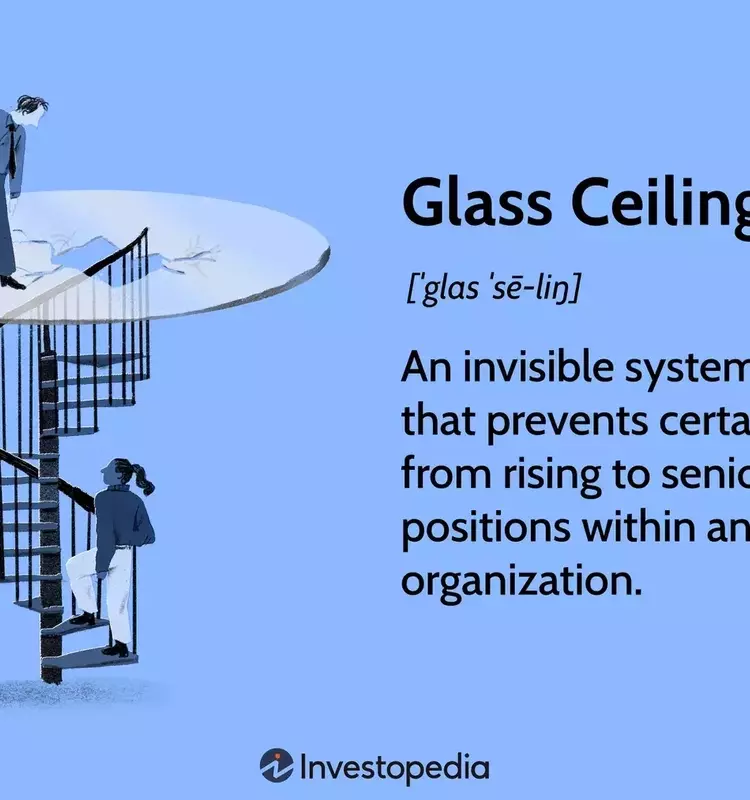
The "glass ceiling" is a metaphorical invisible barrier that hinders the career progression of women and minorities into senior leadership roles within organizations. This concept, often unwritten and driven by implicit biases, prevents individuals from advancing beyond a certain level, particularly in male-dominated corporate environments. Despite increased awareness and initiatives to promote diversity, the glass ceiling persists, as evidenced by the underrepresentation of women and minorities in top executive positions. Addressing this barrier is crucial for fostering equitable workplaces and leveraging the full potential of a diverse talent pool.
The term "glass ceiling" was popularized by Marilyn Loden in 1978 during the Women's Exposition in New York. Initially, it described the unspoken obstacles that prevented women from reaching the highest ranks in corporate settings. Over time, its definition expanded to encompass similar challenges faced by minority groups. This barrier operates subtly, often through accepted norms and unconscious biases rather than explicit corporate policies. For instance, in 2023, women constituted a significant portion of the U.S. labor force (46.9%) but held a disproportionately small share of chief executive positions (30.6%), with a vast majority (85.8%) of these roles occupied by White individuals, according to data from the Bureau of Labor Statistics.
In response to growing concerns, the U.S. Department of Labor established the Glass Ceiling Commission in 1991. The commission's mandate was to identify existing barriers and recommend strategies for companies to enhance diversity in managerial and executive roles. Their findings highlighted that qualified women and minorities were consistently denied opportunities for decision-making positions due to stereotypes and negative perceptions. Breaking through this invisible barrier not only signifies personal achievement but also paves the way for others facing similar challenges. For example, Kamala Harris's historic ascent as the first female, Black, and South Asian Vice President of the U.S. exemplifies shattering this ceiling at the highest political level. Similarly, Janet Yellen's career, marked by her becoming the first female Treasury Secretary and Federal Reserve Chair, demonstrates significant breakthroughs in economic leadership.
A related concept, the "glass cliff," describes a situation where women are often promoted to leadership roles during periods of crisis, making them more susceptible to failure. This phenomenon, identified by professors Michelle K. Ryan and Alexander Haslam in 2004, suggests that even when women overcome the glass ceiling, they might be placed in precarious positions, increasing the likelihood of their professional downfall. Research indicates that diverse teams tend to make better decisions, suggesting that dismantling the glass ceiling can positively impact a company's financial performance by fostering a more inclusive and effective leadership.
The "glass ceiling" represents an unseen obstacle impeding the career progression of marginalized groups, including women and minorities. Despite increased focus on diversity and inclusion, these barriers persist, particularly in top corporate roles that continue to be predominantly held by men from privileged backgrounds. While notable strides have been made by pioneering individuals, persistent inequality underscores the ongoing need for systemic change to ensure equitable opportunities for all, ultimately benefiting organizations through varied perspectives and enhanced decision-making.
