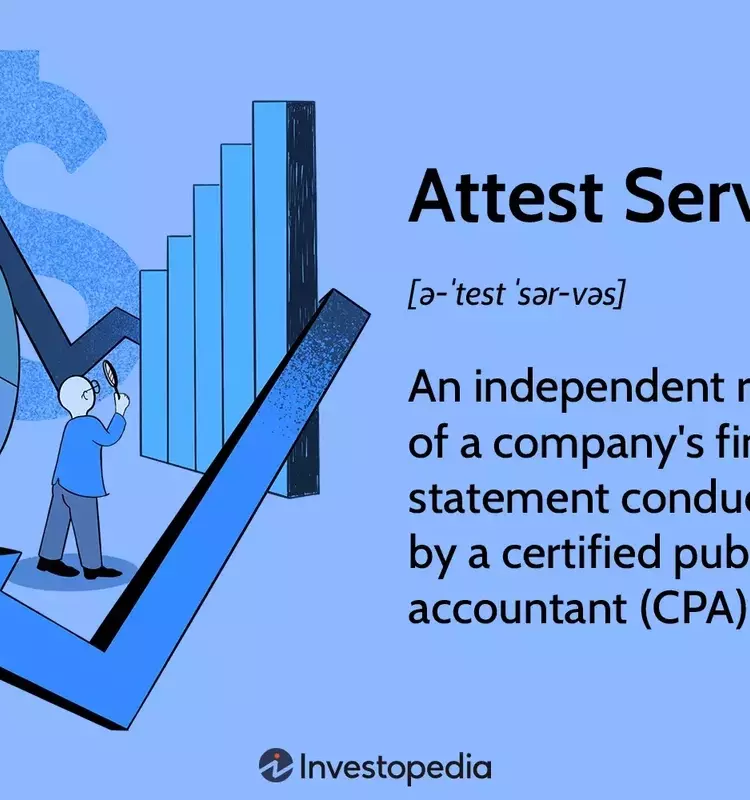
Attestation services, performed by independent Certified Public Accountants (CPAs), are fundamental to establishing the credibility of a company's financial records. These services involve a rigorous examination of an organization's statements, culminating in a report that offers conclusions on data reliability. The standards guiding these attestations are meticulously developed and periodically updated by the American Institute of Certified Public Accountants (AICPA), ensuring that they remain relevant and comprehensive in an evolving business landscape. This process is vital for stakeholders who rely on accurate and trustworthy information.
In the legal sphere, an attestation signifies a witness's confirmation that a document was properly signed and is therefore valid, much like the role of a notary public. In the realm of finance, this concept is applied to a CPA's declaration regarding the accuracy and dependability of financial figures. This external verification by an impartial party lends significant credibility to the financial information prepared by a company's internal accounting team.
The scope of attestation services encompasses various forms. A comprehensive examination, for instance, leads to a CPA's professional opinion on the overall accuracy and integrity of a company's financial statement, akin to a full financial audit. Another type, a review, serves as a secondary evaluation, corroborating the findings of a prior audit or identifying any previously overlooked issues. Additionally, partial examinations concentrate on specific segments of a company’s accounting practices, providing targeted assurance.
All these forms of attestation must align with the stringent standards established by the AICPA, covering audit methodologies, the independence of the CPA, and the articulation of their professional opinion. Over time, the role of attest services has broadened significantly. Initially focused on financial statements, CPAs are increasingly engaged to perform attestations on non-financial documents. These expanded services often address compliance with complex governmental regulations and requirements, including reports on security procedures, privacy controls, and greenhouse gas emissions, reflecting a growing need for assurance across diverse operational aspects.
The evolution of attestation standards underscores their importance. In 2011, Statement on Standards for Attestation Engagements (SSAE) No. 16 superseded Statements on Auditing Standards (SAS) No. 70, refining the objectives of attestation and expanding its definition. This shift accommodated the increasing demand for attest services on non-financial procedures, particularly those related to regulatory compliance. Subsequent updates, such as SSAE 18 in May 2017, further extended the application of attestation to service organizations, ensuring that controls relevant to the internal controls over financial reporting of user organizations are also subject to scrutiny. Recent amendments in 2024 have further refined the language and aligned attestation processes with contemporary quality management and auditing standards.
The role of attest services continues to expand, addressing the complex demands of modern business. These services are crucial for maintaining transparency and accountability, offering stakeholders reliable insights into a company's operational integrity and regulatory adherence. The ongoing refinements in attestation standards reflect a commitment to ensuring that these services remain robust and relevant in an ever-changing global environment.
