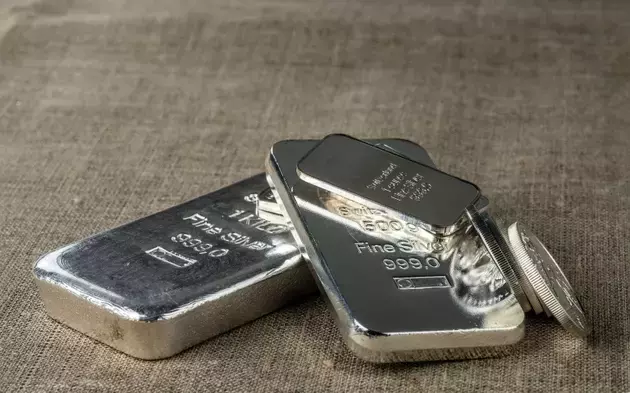
The U.S. national debt has now surpassed the significant threshold of $40 trillion. In this context, I view silver as one of the most underestimated and strategically important assets globally. While nations are heavily investing in electric vehicles, solar energy, and artificial intelligence, the very metal fundamental to these advanced technologies is largely overlooked in terms of its market valuation.
Despite a noticeable increase in both industrial and monetary demand, the total global supply of silver has remained relatively stable since 2010, hovering around 1.0 billion ounces. I believe that the price surge that culminated last January, with silver reaching approximately $120 per ounce, merely represented the initial phase of what is poised to become a sustained, long-term bull market. Consequently, I recently expanded my silver investments in late June when prices briefly dipped below $60. I would readily consider further purchases if prices decline into the low $50s.
The Growing Disparity: Silver's Role in Modern Technology vs. Its Market Value
In an era where global economies are rapidly transitioning towards sustainable and advanced technologies, the indispensable role of silver is often overshadowed by its market valuation. As the United States grapples with a national debt exceeding $40 trillion, the perceived stability and inherent value of assets like silver become increasingly pertinent. This metal is a critical component in the manufacturing of electric vehicles, efficient solar panels, and cutting-edge artificial intelligence systems. Yet, despite this foundational importance, silver's market price does not reflect its strategic utility. This creates a significant disparity, positioning silver as a profoundly undervalued asset that is ripe for re-evaluation in the current economic climate.
The current market dynamics present a unique paradox: while global demand for silver from various sectors continues to climb, its supply has largely stagnated over the past decade. Since 2010, the total annual silver supply has barely moved beyond 1.0 billion ounces, failing to keep pace with the accelerating consumption driven by industrial innovation and increasing investment interest. This imbalance between limited supply and burgeoning demand forms a compelling argument for a substantial upward correction in silver's price. The previous rally, which saw prices reach $120 per ounce last January, is merely a precursor to what I anticipate will be a generational bull market. Recognizing this potential, I proactively increased my silver holdings when prices were below $60 in late June, and I remain prepared to further expand my position if the market offers opportunities in the low $50s.
Anticipating a Generational Bull Market: Strategic Accumulation of Silver Holdings
The confluence of escalating national debt, particularly the U.S. debt crossing the $40 trillion mark, and silver's critical, yet overlooked, role in emerging technologies points towards an impending, significant market shift. As the world becomes increasingly reliant on electric vehicles, solar power, and artificial intelligence, the fundamental metals that enable these advancements, such as silver, are poised for a revaluation. This anticipation is fueled by the stark contrast between silver's intrinsic value in modern industry and its current market price, suggesting it is a profoundly undervalued strategic asset. The groundwork is being laid for a substantial market repricing that will better align silver's economic importance with its trading value, ushering in a new era for this precious and industrial metal.
My strategic decisions are rooted in the conviction that the silver market is on the cusp of a generational bull run, a belief solidified by the evident supply-demand imbalance. With total silver supply remaining largely flat since 2010, at approximately 1.0 billion ounces, the rising tide of industrial and monetary demand is creating an unsustainable equilibrium. The peak rally observed last January, reaching $120 per ounce, is considered by me as just the initial impulse of a much larger, sustained uptrend. Acting on this conviction, I have already fortified my silver portfolio, acquiring additional ounces when prices dipped below $60 towards the end of June. My readiness to further accumulate silver in the low $50s underscores my confidence in its long-term growth trajectory and my commitment to leveraging what I perceive as a nascent but powerful market cycle.
