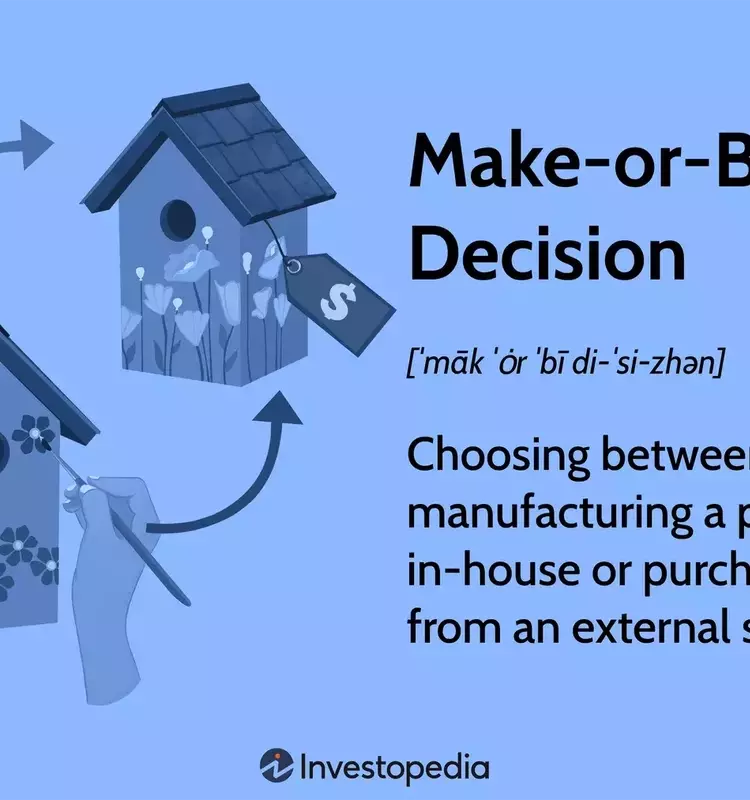
In the dynamic landscape of modern commerce, companies frequently grapple with a fundamental strategic question: should we manufacture a product or perform a service ourselves, or should we acquire it from an external vendor? This crucial determination, known as a make-or-buy decision, is central to a company's operational efficiency and its overarching business goals. It necessitates a thorough evaluation of various factors, both financial and strategic, to ensure the chosen path aligns with the organization's long-term vision and competitive advantage. The decision-making process is fluid, requiring periodic reassessment as market conditions, technological advancements, and supplier relationships evolve.
Strategic Choices: Navigating the Make-or-Buy Landscape
Businesses, regardless of their size or industry, are perpetually confronted with the make-or-buy conundrum. This strategic crossroad demands a meticulous analysis of whether to leverage internal capabilities for production or to engage external suppliers for necessary goods and services. For instance, a company evaluating in-house manufacturing must meticulously account for all expenditures associated with acquiring and maintaining new machinery, the cost of raw materials, and the full spectrum of labor costs, including wages and employee benefits. Furthermore, considerations such as storage, holding costs for inventory, and the disposal of production waste also fall under the umbrella of internal production expenses. A critical internal assessment involves determining whether the company possesses the capacity and expertise to meet required production levels efficiently.
Conversely, the option of external procurement, often referred to as outsourcing, involves its own set of financial implications. These include the direct purchase price of the product or service, shipping charges, potential import duties, and sales taxes. Additionally, businesses must factor in the costs associated with receiving and storing incoming products, as well as the administrative efforts involved in managing supplier relationships. Long-term contracts with suppliers can offer price stability, which can be advantageous or disadvantageous depending on future market fluctuations. In larger corporate structures, the expertise of a chief procurement officer frequently plays a pivotal role in navigating these complex decisions.
Beyond the quantitative analysis, qualitative considerations are equally important. For example, a company might lean towards purchasing externally if it lacks specialized in-house expertise, has low volume requirements for a particular component, seeks to diversify its sourcing, or if the item in question is not central to its core strategy or differentiation. A track record of successful collaborations with external providers can also sway a company towards buying. Conversely, factors like existing unused production capacity, the potential for superior quality control, or the need to safeguard proprietary technology might compel a company to manufacture in-house. Concerns regarding supplier reliability, especially for mission-critical components, can also heavily influence the decision to produce internally.
The landscape of make-or-buy decisions is not static; it requires continuous evaluation. Significant shifts in market dynamics, such as the discontinuation of a reliable supplier or fluctuating product demand, can trigger a reevaluation of prior choices. New opportunities or competitive pressures may also necessitate a change in approach. At such junctures, management must weigh the advantages of shifting between internal production and external procurement, extending beyond mere cost-benefit analyses to explore potential avenues for cost savings, new product development, or fundamental changes in business strategy. This adaptability is essential for maintaining a strong market position and fostering long-term growth.
The strategic choice between internal production and external procurement is a cornerstone of effective business management. It transcends simple cost comparisons, encompassing a holistic view of operational capabilities, market conditions, and strategic objectives. By diligently weighing the quantitative and qualitative factors, and remaining agile in their decision-making, businesses can optimize their resource allocation, enhance efficiency, and sustain a competitive edge in an ever-evolving global marketplace. The journey from make-to-buy, or vice versa, is a testament to a company's commitment to continuous improvement and strategic alignment.
