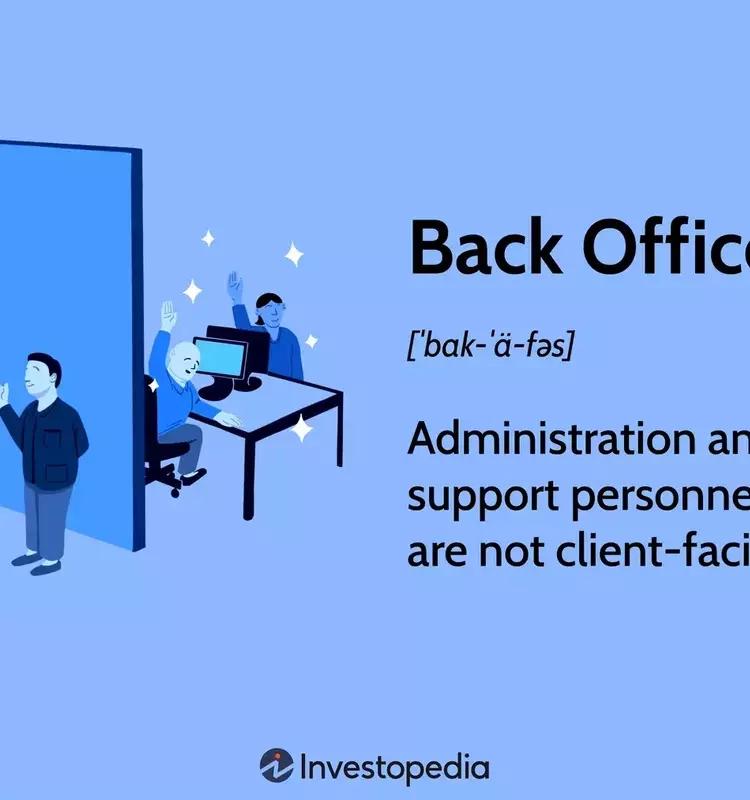
In contemporary business, the 'back office' refers to the vital administrative and support divisions that operate behind the scenes, ensuring a company's smooth functioning without direct client engagement. These essential functions encompass diverse areas such as financial record-keeping, information technology services, adherence to regulatory standards, and transaction settlements. While not revenue-generating in a direct sense, these operations form the bedrock upon which the entire organization operates, facilitating the client-facing 'front office' activities.
The term 'back office' historically emerged from the physical layout of early companies, where client-facing staff occupied the front sections of an office, and administrative personnel worked in the rear. Today, this geographical distinction has largely dissipated. Many back-office operations are now situated in locations with lower operational costs, or they are increasingly outsourced to specialized third-party providers, often in other countries. The rise of remote work capabilities, driven by technological advancements, has further decentralized these functions, allowing companies to tap into a wider talent pool and achieve substantial cost efficiencies.
The back office acts as the operational core of any enterprise, with its roles typically falling under the umbrella of 'Operations.' These teams are indispensable, providing the necessary infrastructure and processes that empower front-office staff to effectively carry out their client-related responsibilities. Their tasks are diverse and critical, ranging from confirming and settling transactions initiated by the front office to meticulously maintaining records, managing financial accounts, and ensuring the stability and security of IT systems. Essentially, the back office ensures that every transaction conducted by the front office is accurately processed, documented, and compliant with all relevant regulations.
The strategic relocation and outsourcing of back-office functions offer significant economic advantages. By choosing locations with more favorable rental rates and labor costs, or by embracing remote work models, companies can drastically reduce their overhead. For instance, a financial firm might offer housing subsidies to skilled certified public accountants (CPAs) working remotely, realizing substantial annual savings compared to maintaining dedicated office spaces for each employee. While such arrangements might sometimes involve adjustments in compensation for employees moving from traditional front-office roles to more remote back-office positions, the overarching benefit lies in the considerable cost reductions for the company and increased access to specialized talent.
Despite their indirect interaction with external clients, back-office personnel maintain a close and dynamic working relationship with their front-office counterparts. This collaborative synergy is crucial for business success. For example, a sales professional frequently consults with back-office staff to obtain precise inventory and pricing details, while marketing teams collaborate with sales agents to develop compelling promotional materials. Similarly, IT specialists consistently work across all departments to guarantee the seamless operation of critical systems. This interdependency highlights that both front and back offices are integral parts of a cohesive team, with each supporting the other's objectives.
For individuals aspiring to client-facing roles in industries such as finance, back-office positions often serve as an invaluable entry point. These roles provide a foundational understanding of internal operations, regulatory frameworks, and system functionalities, which can be highly beneficial for career progression. This is particularly true for graduates from non-target schools, who might leverage these initial roles to gain experience and build a pathway to more visible front-office opportunities. The collaboration between these divisions is a testament to the integrated nature of modern business, where effective communication and mutual support between client-facing and operational teams are paramount for achieving organizational goals and ensuring sustained success.
