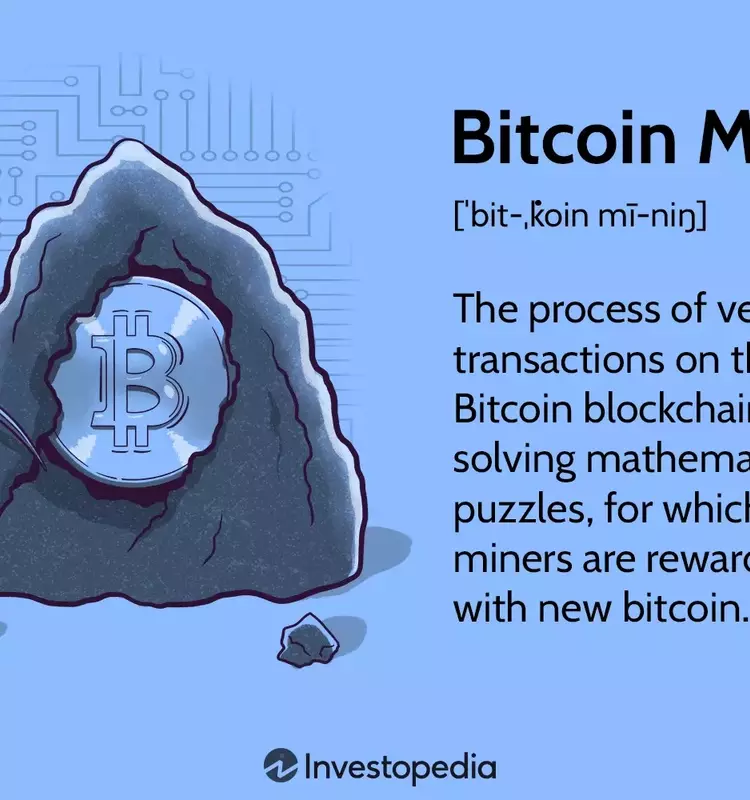
Bitcoin mining is a fundamental process that underpins the Bitcoin network, ensuring the integrity and security of its transactions. It involves a global competition among participants to solve intricate cryptographic challenges. Successfully solving these puzzles not only validates new transactions and adds them to the blockchain but also rewards the victorious miners with newly minted Bitcoins and associated transaction fees. This system acts as a powerful incentive for individuals and organizations to contribute their computational resources to maintaining the network. However, the economic viability of Bitcoin mining is increasingly complex, influenced by factors such as fluctuating Bitcoin prices, substantial electricity costs, and the high investment required for specialized mining hardware. The evolving landscape of mining technology, from early CPU-based systems to modern Application-Specific Integrated Circuit (ASIC) machines, reflects the continuous drive for efficiency and competitive advantage. Despite its vital role, Bitcoin mining faces significant challenges, including concerns about its environmental impact due to high energy consumption and scalability limitations that affect transaction processing speed.
The Core Mechanics of Bitcoin Mining
Bitcoin mining is a process integral to the operation and security of the Bitcoin network. It encompasses the verification of transactions, the addition of new blocks to the blockchain, and the distribution of Bitcoin rewards to participants who successfully solve complex cryptographic problems. This activity functions as a global computational contest where miners leverage specialized hardware to find a cryptographic solution that meets specific network-defined criteria. The first miner to discover this solution earns a reward in Bitcoin, along with transaction fees. This incentivizes continuous participation, which is vital for maintaining the decentralized ledger system that underpins Bitcoin.
The mining process fundamentally relies on cryptographic hashing. Miners continually generate hashes, which are fixed-length alphanumeric strings, by combining transaction data with a random number called a nonce. Their goal is to produce a hash that is numerically less than or equal to a target hash set by the Bitcoin network. This target dynamically adjusts to maintain a consistent block discovery rate, aiming for approximately one block every ten minutes. The immense computational power required to solve these puzzles has led to the development of highly specialized hardware, such as ASIC miners, and the formation of mining pools, where participants combine their resources to increase their chances of success. As the network matures and the supply of new Bitcoins diminishes due to halving events, transaction fees are expected to play an increasingly significant role in compensating miners, ensuring the long-term sustainability of the Bitcoin network.
Economic Factors and Environmental Considerations
The economic landscape of Bitcoin mining is complex, with profitability hinging on a delicate balance between operational costs and Bitcoin's market value. Key expenses include the substantial electricity required to power mining rigs 24/7, along with the additional energy needed for cooling systems to prevent overheating. The initial investment in high-performance mining hardware, particularly ASIC machines, can range from hundreds to tens of thousands of dollars, depending on the desired computational power and efficiency. Network infrastructure, while less impactful on costs than electricity or hardware, still plays a role, especially in maintaining low latency for efficient communication within mining pools. Miners strive to ensure that the value of the Bitcoin earned outweighs these significant operational expenditures to achieve profitability.
Beyond economic viability, Bitcoin mining has attracted considerable scrutiny due to its environmental footprint. The proof-of-work consensus mechanism, which drives the competitive mining process, demands immense computational power, translating into high energy consumption. Estimates suggest that the Bitcoin network's energy usage rivals that of some smaller nations. Historically, Bitcoin mining was concentrated in regions with access to cheap, often fossil-fuel-derived, electricity. However, regulatory crackdowns and growing environmental awareness have led to shifts in mining operations, with a significant portion now located in the United States. While efforts are being made to transition towards more sustainable energy sources, the environmental impact remains a prominent concern within the cryptocurrency community and among environmental advocates.
