Understanding Business Capital: Types, Uses, and Economic Significance
Finance

Understanding Business Capital: Types, Uses, and Economic Significance

authorBy Lisa Jing
DateMay 09, 2026
Read time2 min

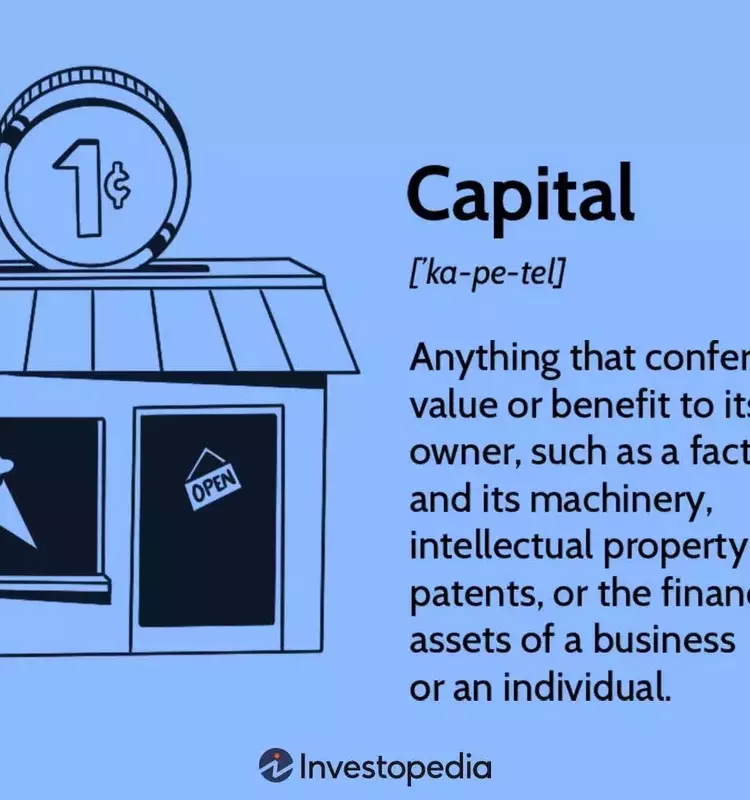
Capital, far more than just currency, signifies any resource that generates value or advantage for its proprietor. This can encompass tangible assets like factories and machinery, intangible assets such as intellectual property (e.g., patents), or the financial assets held by an enterprise or an individual. While money can be considered a form of capital, the term usually pertains to funds strategically allocated for productive endeavors or investment purposes. Ultimately, capital is indispensable for a business's daily functions and its long-term expansion objectives.

A business's capital can originate from its operational activities or be secured through debt or equity financing. When crafting budgets, businesses typically emphasize three primary categories of capital: operational capital, equity capital, and borrowed capital. Financial institutions frequently recognize trading capital as an additional crucial component. From an economic viewpoint, capital is fundamental to the functioning of any entity, whether a household, a small enterprise, a large corporation, or an entire national economy. Capital assets may appear on either the current or long-term segments of a balance sheet, including cash, cash equivalents, marketable securities, manufacturing equipment, production facilities, and storage facilities.

Businesses strategically deploy capital to facilitate the continuous production of goods and services, aiming to generate profits. Companies invest their capital in diverse areas, such as labor and facility expansions, to foster value creation. The objective behind capital investment is to yield returns that surpass its associated costs. At both national and global levels, economists meticulously analyze financial capital to understand its influence on economic growth. Various metrics, such as personal income, consumption, and capital investments detailed in GDP reports, are closely monitored to assess capital’s efficiency and impact.

Understanding and managing capital effectively is paramount for individuals and enterprises alike, enabling them to navigate economic landscapes, seize growth opportunities, and build enduring prosperity. The strategic allocation and responsible management of capital are key pillars for sustained success and positive societal contributions.

More Articles
Finance
Understanding Care, Custody, or Control (CCC) Exclusions in Liability Insurance
The "Care, Custody, or Control" (CCC) exclusion is a standard clause in liability insurance policies, denying coverage for damage to non-owned property under the insured's supervision. This exclusion primarily targets property like rented equipment or goods in transit. Due to variations in policy language and judicial interpretation, additional insurance may be necessary to bridge potential coverage gaps. Understanding the nuances of CCC exclusions is crucial for individuals and businesses to adequately protect their assets.
By Michele FerreroMay 09, 2026
Finance
Top Asian Destinations for Budget-Friendly Living
This article explores various Asian countries where individuals can significantly reduce their living expenses compared to the U.S., often by three to four times. It highlights destinations like India, Thailand, and Vietnam, where monthly costs (excluding rent) can be as low as $270 to $600. These locations offer not only affordability but also stunning natural beauty, rich cultural experiences, high safety standards, and appealing visa programs for retirees and digital nomads, making them attractive options for those seeking a higher quality of life on a smaller budget.
By Lisa JingMay 09, 2026
Finance
The Indispensable Role of Financial Controllers in Corporate Stewardship
Financial controllers are pivotal in managing a company's financial health, overseeing accounting operations, reporting accuracy, and risk management. This role, essential for maintaining fiscal integrity, demands a blend of rigorous education, extensive experience, and often, professional licensure to effectively guide an organization's financial narrative and strategic direction.
By Morgan HouselMay 09, 2026
Finance
Understanding the Peter Principle: Incompetence in Organizational Hierarchies
The Peter Principle posits that individuals in hierarchical organizations are promoted based on their success in previous roles until they reach a position for which they lack the necessary skills, leading to incompetence. This often results in diminished productivity and morale within the company.
By Michele FerreroMay 08, 2026
Finance
Freedom 100 Emerging Markets ETF: A Strategic Approach to Outperformance
The Freedom 100 Emerging Markets ETF (FRDM) utilizes a unique, freedom-weighted selection strategy, creating a focused, actively managed portfolio. This approach has led to significant outperformance compared to traditional passive emerging market ETFs, largely due to its strong allocation to the semiconductor sector and the exclusion of Chinese companies and state-owned enterprises. While this strategy offers considerable upside potential, particularly with current semiconductor industry trends, it also introduces risks should market dynamics shift. Overall, FRDM presents a compelling risk-reward profile within the emerging markets landscape.
By David RubensteinMay 08, 2026