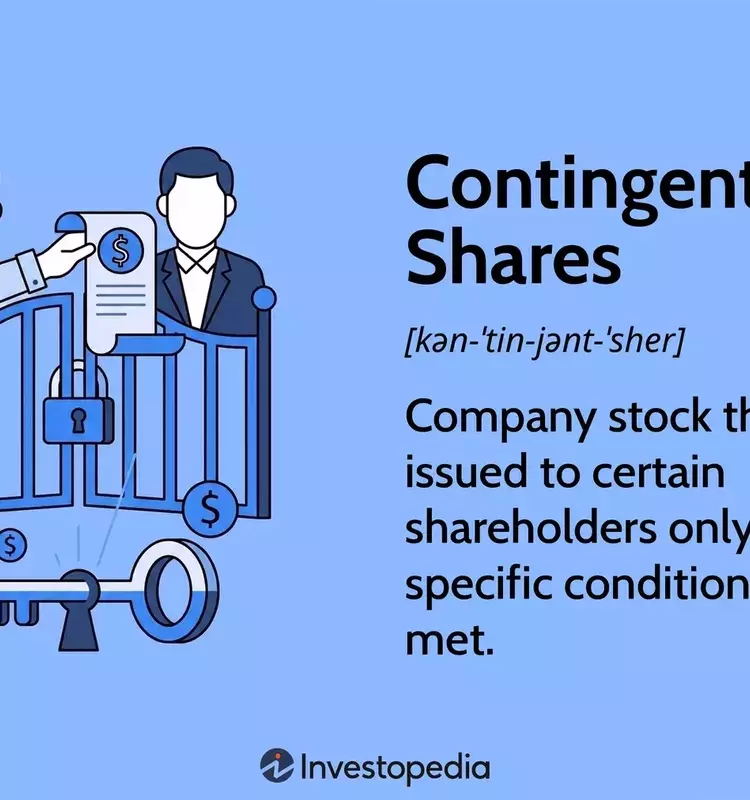
Conditional Equity: Unlocking Future Value
What Are Conditional Shares?
Conditional shares refer to equity in a company that is allocated based on the fulfillment of predefined criteria. These criteria often include achieving specific financial targets, such as profitability or revenue milestones, or completing strategic events like mergers and acquisitions (M&A). Unlike regular stock, these shares are not immediately vested but rather depend on future outcomes, which can lead to dilution of existing shareholder ownership upon issuance.
The Operational Dynamics of Conditional Shares
Shares fundamentally represent a portion of ownership in a corporation. For privately held entities, shares are typically distributed among founders, key personnel, and management. Publicly traded companies, conversely, offer shares to the broader market, with each share signifying a proportional equity stake. Conditional shares function similarly to common stock, but their transfer is predicated on the achievement of specific conditions. These conditions are diverse, ranging from hitting revenue targets to launching new products. They are particularly prevalent in M&A scenarios, serving as a mechanism to reconcile valuation discrepancies between acquiring and target companies. If the stipulated conditions are not met, these shares expire without being issued.
Critical Considerations
Mergers and acquisitions can also involve contingent value rights (CVRs), which are conditional rights often granted to shareholders of companies undergoing buyouts or restructuring. CVRs guarantee benefits, such as cash payouts, to rights holders if specific events occur, like a successful acquisition. However, if these conditions are not satisfied, CVRs become valueless. Contingent shares are analogous to other financial instruments like stock options, warrants, or convertible preferred shares, all of which derive their value from future conditions.
Advantages and Disadvantages of Conditional Shares
The primary advantage of conditional shares lies in their ability to foster desired corporate outcomes by aligning the interests of management, employees, and shareholders. For instance, tying share issuance to profit generation motivates management teams. In M&A deals, these shares act as a flexible tool to bridge valuation gaps between negotiating parties. They ensure that all stakeholders are working towards common financial or operational objectives before the equity is distributed.
A significant drawback is the potential for dilution of ownership stakes held by existing shareholders. When new conditional shares are issued, the total number of outstanding shares increases, thereby reducing the percentage of ownership of all other shareholders. This can also negatively impact earnings per share (EPS), as company profits are spread across a larger number of shares. However, if the conditions for issuance involve substantial improvements in company performance, the benefits might ultimately outweigh the dilutive effect. The decision to issue such shares requires careful consideration of both the potential for growth and the impact on current equity holders.
An Illustrative Scenario of Conditional Shares
Consider a merger transaction where a private equity firm, XYZ Partners, intends to acquire ABC Manufacturing. Emma, the owner of ABC Manufacturing, projects a 20% increase in profits for the upcoming year and seeks a higher acquisition price. To resolve this valuation dispute, XYZ Partners offers Emma an additional $1 million in conditional shares in the merged entity. These shares are contingent on ABC Manufacturing achieving at least a 20% profit increase within 12 months post-acquisition. This arrangement motivates Emma to ensure her company performs well, while allowing XYZ Partners to mitigate risk associated with future performance projections.
