Your Gateway to Global Financial Fluency
The Essence of Currency Conversion
Currency exchange involves converting one country's money into another's, a process vital for international trade and travel. Whether for personal expenses abroad or business dealings, these services enable the seamless flow of funds across borders. Understanding how these exchanges operate, including the fees and rates involved, is crucial for making informed financial decisions.
How Money Exchange Systems Operate
Currency exchange services, available through various channels like physical locations, online platforms, and peer-to-peer networks, facilitate the acquisition of foreign currency. For instance, converting US dollars to Australian dollars requires presenting your funds or bank card to an exchange provider. The amount you receive is influenced by the international spot rate, which is a daily benchmark established by a network of banks involved in currency trading.
Transaction Costs and Rate Adjustments
Beyond standard service fees, currency exchange providers often adjust their buy and sell rates to ensure profitability. For example, if the spot rate for US dollars to Australian dollars is 1.2500, an exchange service might offer 1.20, effectively incorporating a 5-cent fee per dollar. This practice means that using credit cards or ATMs overseas can sometimes offer more advantageous rates than traditional currency exchange. Travelers should carefully estimate their expenses and compare various transaction methods to identify the most cost-effective options.
Locating and Choosing Currency Exchange Providers
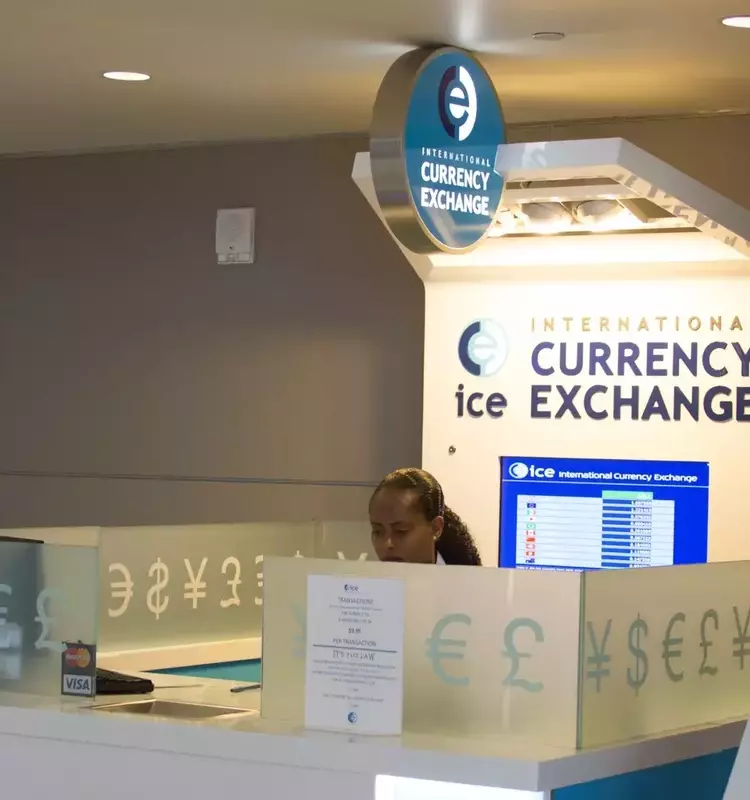
Currency exchange services are diverse, ranging from small, independent offices to booths in high-traffic areas like airports. Major international banks also typically provide these services. Airports are common locations for exchanging currency due to the constant flow of international travelers, offering convenience for last-minute conversions. However, rates at airport exchanges are often less favorable than those found at banks in city centers. Modern alternatives include cashless options such as multi-currency cards offered by banks and withdrawing funds from offshore ATMs, especially beneficial for customers of global banking institutions like HSBC, which has a widespread international presence. Online currency exchange platforms, often provided by banks or forex brokers, also offer competitive rates.
Navigating Bid-Ask Spreads
Currency exchange providers generate revenue through service fees and the bid-ask spread. The bid price is what the dealer pays for a currency, while the ask price is the rate at which they sell it. For example, if a traveler buys euros at 1.40 USD per euro and another sells euros at 1.30 USD per euro, the exchange kiosk profits from the 10-cent difference. It's important to remember that the higher quoted price is for buying currency, and the lower price is for selling it, reflecting the dealer's profit margin.
Acquiring Foreign Currency Through Banking Institutions
Yes, banks often provide foreign currency exchange services, particularly for their existing customers. For example, some banks allow account holders to order foreign currency online for same-day delivery.
Economical Methods for Foreign Currency Acquisition
To secure the most favorable rates, it's advisable to first check with local banks or credit unions, as they frequently offer competitive currency exchange services. Additionally, using credit cards at ATMs in your destination country can often be more cost-effective, especially if your card has no foreign transaction fees.
Utilizing Credit Cards for International Travel
If your credit card is widely accepted in your travel destination, you can certainly use it for purchases and payments at hotels and restaurants. However, it's crucial to inquire about potential foreign transaction fees with your bank beforehand. Despite the convenience of credit cards, it is generally prudent to carry some local currency for incidental expenses.
