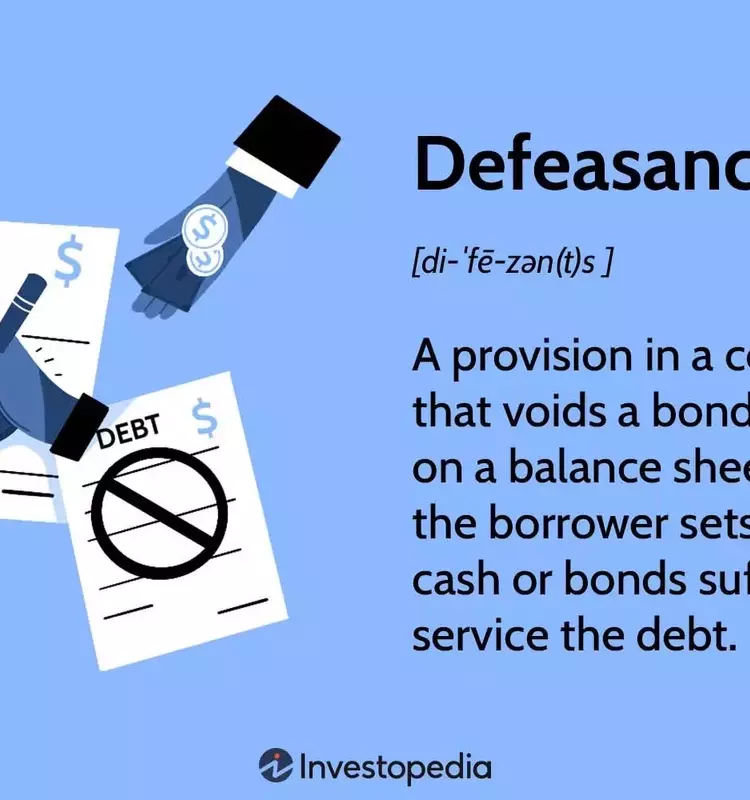
Defeasance is a powerful financial tool that enables debtors to extinguish their obligations from financial records by dedicating sufficient funds, typically composed of cash or securities. This strategy effectively sidesteps early repayment penalties, particularly prevalent in commercial property transactions, and guarantees the continued flow of interest to bondholders. Its implementation often requires specialized legal and financial advice to ensure that the designated accounts are correctly structured. Moreover, the inclusion of a defeasance clause in mortgage agreements is vital, as it ensures that property titles are transferred to the borrower once the debt is fully satisfied.
The Essence of Debt Nullification
Defeasance represents a sophisticated financial mechanism through which an existing debt is effectively cancelled or rendered void. This is achieved by setting aside a specific amount of money or a portfolio of investment-grade securities, typically bonds, sufficient to cover all future principal and interest payments of the original debt. The core purpose of this strategy is to remove the debt from the borrower's balance sheet, thereby improving their financial ratios and balance sheet health. A key benefit, especially in commercial real estate, is the avoidance of substantial prepayment penalties often stipulated in loan agreements. These penalties exist to compensate lenders for the loss of future interest income if a loan is repaid prematurely. By creating a defeasance account, the borrower can achieve a functional early payoff without incurring these penalties, as the original lender continues to receive payments from the designated assets in the defeasance account.
This method operates on the principle of essentially replacing one debt obligation with another, albeit one that is managed by an independent third party on behalf of the original creditors. The new portfolio, usually consisting of highly rated government bonds or similar low-risk instruments, is structured to precisely match the cash flow requirements of the original debt. This ensures that the bondholders or lenders receive their scheduled payments as if the original loan were still active, while the borrower is freed from the direct obligation. This is particularly valuable in commercial property scenarios where property sales or refinancings necessitate an early exit from long-term, illiquid loan structures. The meticulous construction of these defeasance accounts often requires the specialized knowledge of financial advisors and legal experts to navigate complex regulatory requirements and ensure the seamless transfer of liability and payment streams.
Defeasance in Practice: Commercial Loans and Mortgages
In the realm of commercial real estate, defeasance serves as a crucial solution for borrowers seeking to sell or refinance their properties before the maturity of their existing loans, particularly those bundled into commercial mortgage-backed securities (CMBS). Unlike typical residential mortgages, CMBS loans often carry stringent prepayment clauses designed to protect bondholders who rely on a predictable stream of interest payments. An early payoff could disrupt these expected returns, leading to significant financial penalties for the borrower. Defeasance provides an elegant workaround: the borrower creates a new portfolio, often comprising high-quality government bonds, whose income stream precisely replicates the remaining payments on the original loan. This newly established portfolio is then used to satisfy the original bondholders, effectively releasing the borrower from the initial debt while ensuring that the investors continue to receive their expected returns without interruption.
Beyond commercial real estate, the concept of defeasance is also embedded in mortgage agreements through what is known as a defeasance clause. This contractual provision explicitly states that once the borrower has fully repaid the mortgage, the lender is obligated to relinquish their claim to the property's title or deed. Until this full repayment occurs, the financial institution holds the title as collateral, protecting their investment. This principle extends to various other large-scale financed acquisitions, such as vehicle loans. Upon the complete satisfaction of the debt, the financing entity formally terminates its interest and transfers full ownership to the buyer. This clause is a fundamental safeguard for borrowers, ensuring that their ownership rights are fully recognized and transferred once their financial obligations are met, reinforcing the integrity of secured lending practices across different asset classes.
