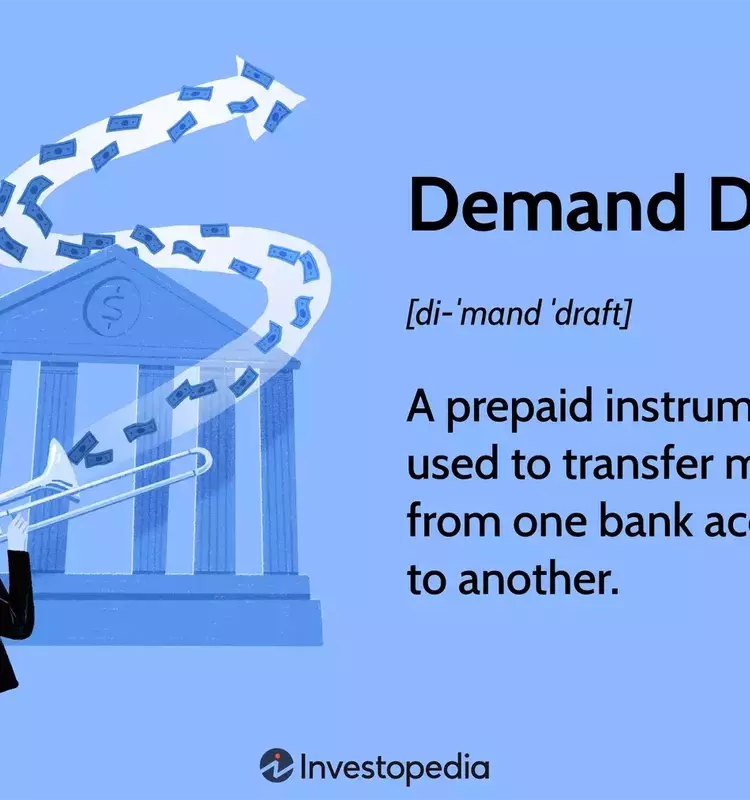
A demand draft stands as a secure, prepaid banking tool for transferring funds between accounts. Unlike traditional checks, these drafts guarantee payment as the issuing bank pre-deducts the amount, eliminating the risk of insufficient funds. This makes them particularly suited for substantial or critical payments, offering an elevated level of security compared to other common payment methods. While less adaptable than modern electronic transfers, their reliability in ensuring payment makes them a valuable option for specific financial transactions.
Demand drafts function by the issuing bank withdrawing the specified sum from the customer’s account and transferring it to another banking entity. Initially, these instruments were developed to facilitate secure withdrawals by legitimate telemarketers from customer accounts, utilizing bank account and routing numbers. This process involves three primary parties: the drawer, who initiates the request; the drawee, which is the bank responsible for payment; and the payee, who ultimately receives the funds.
For instance, consider a small business owner purchasing goods on credit. The owner might instruct their bank to dispatch a demand draft to the supplier. In this scenario, the business owner is the drawer, and their bank acts as the drawee. Upon maturity, the supplier, as the payee, presents the draft to their bank to claim the payment. A key advantage of a demand draft is its guaranteed nature: once issued, payment cannot be halted, unlike a personal check which can be stopped due to insufficient funds.
Obtaining a demand draft typically involves several steps. First, an individual must select a bank or financial institution. If not an existing account holder, identification and other necessary documents must be presented. An application form, detailing the payment amount and the payee's name, needs to be completed. Compliance with Know Your Customer (KYC) regulations requires submitting supporting documents such as proof of identity and address. After paying the applicable fees, the applicant receives a demand draft printed on security paper, featuring a unique identification number. It is crucial to verify all details on the draft before handing it over to the payee.
When comparing demand drafts with other payment methods, notable differences emerge. Unlike checks, which are written by individuals and can be issued only by account holders, demand drafts are issued by banks and guarantee payment. Furthermore, while checks can be delivered directly, demand drafts often necessitate specific delivery methods. Wire transfers, though faster and more versatile for daily transactions, also involve fees that vary based on the transfer amount and destination. Online payment systems, offering real-time transactions and often free for certain uses, provide greater flexibility for various transactions. Despite these alternatives, demand drafts retain their importance for secure, high-value transactions like educational fees or property purchases, where verifiable payment is paramount.
In summary, a demand draft is a dependable, prepaid payment option designed for bank transfers, providing a high degree of security and acceptance. Unlike personal checks, they do not require a signature to be cashed, and the payment is assured once issued. They are an ideal choice for significant transactions or situations demanding undeniable payment verification. To acquire one, individuals must complete an application, provide identification, and cover any associated charges. It is essential for users to be mindful of the processing timelines and potential costs, and to promptly report any loss or theft to the issuing bank.
