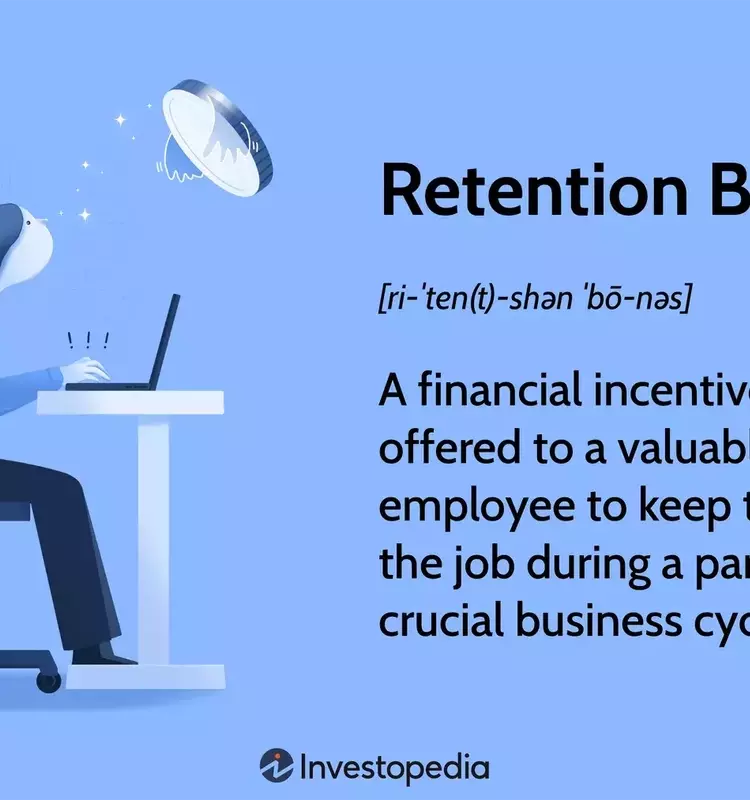
Employee retention bonuses are a strategic financial tool companies utilize to secure the continued service of key personnel during critical periods or in highly competitive talent landscapes. These incentives aim to prevent the departure of essential staff, safeguarding institutional knowledge and ensuring project continuity. While offering a clear financial benefit, employees must carefully assess these bonuses against their long-term career aspirations and personal well-being.
The Strategic Role of Retention Bonuses in Workforce Stability
In today's dynamic business environment, companies frequently face the challenge of retaining top talent, especially during significant organizational shifts such as mergers, acquisitions, or restructuring. To mitigate the risk of losing invaluable employees and their specialized expertise, many organizations implement retention bonus programs. These programs are designed to provide a one-time financial inducement, encouraging key individuals to remain with the company for a specified duration.
For instance, during a corporate merger, a company might offer a retention bonus to its senior executives and highly skilled technical staff. This proactive measure ensures a smooth transition, preserves critical operational knowledge, and maintains team morale amidst uncertainty. The bonus acts as a safeguard against competitors poaching valuable employees, which could severely disrupt business operations and incur substantial costs associated with recruitment and training new hires.
The structure of these bonuses can vary. They may be disbursed as a single lump sum upon agreement or paid in installments over the commitment period. The amount is typically determined by factors such as the employee's tenure, their role's criticality, and the prevailing market conditions for their skillset. While potentially significant, these bonuses generally represent a more cost-effective solution than continuous salary raises, offering a short-term financial commitment for a critical long-term benefit. In the robust job market of recent years, such incentives have become even more prevalent as companies vie for limited talent.
The contractual framework for these bonuses is meticulously drafted. Essential components often include the exact financial terms, whether a lump sum or equity distribution, and stringent employment status clauses, specifying the employee's required position and vesting dates. Furthermore, these agreements usually incorporate conditions regarding the company's financial health, ensuring solvency for payout. Many agreements also contain a continued employment disclaimer, clarifying that the bonus does not guarantee employment beyond the vesting period. Confidentiality is often a key element, with non-disclosure agreements preventing the sharing of sensitive company information. Additionally, clauses addressing bonus assignment in the event of a company sale or merger, and reimbursement agreements for early departures, are standard. Both parties must formally sign the document to render it legally binding.
From a taxation perspective, the Internal Revenue Service (IRS) classifies retention bonuses as supplemental wages. These are typically taxed either at a flat rate of 22% (or 37% for amounts exceeding $1 million) under the percentage method, or integrated with regular wages and taxed according to the employee’s W-4 Form under the aggregate method. Companies are generally required to withhold taxes from these bonuses.
Navigating the Retention Bonus: A Personal and Professional Calculation
For individuals, receiving a retention bonus presents a compelling financial opportunity. It not only offers a substantial financial boost, often up to 15% of annual compensation, but can also bolster an employee's professional standing by demonstrating their indispensable value to an organization. Successfully fulfilling a retention bonus agreement can enhance one's resume, signaling reliability and critical contribution during challenging times to future employers.
However, accepting a retention bonus is not merely a financial decision; it demands a thorough cost-benefit analysis. Employees must weigh the immediate financial gains against potential sacrifices, such as foregoing better salary offers or career advancement opportunities elsewhere. It also implies a commitment to the current role and work environment, which might include enduring dissatisfaction, stress, or a less-than-ideal work-life balance for the duration of the bonus period. For instance, an employee passionate about remote work might have to compromise on an in-office presence to fulfill the agreement. Ultimately, both companies and employees should align these bonuses with their long-term strategic goals to ensure mutual benefit and effectiveness.
