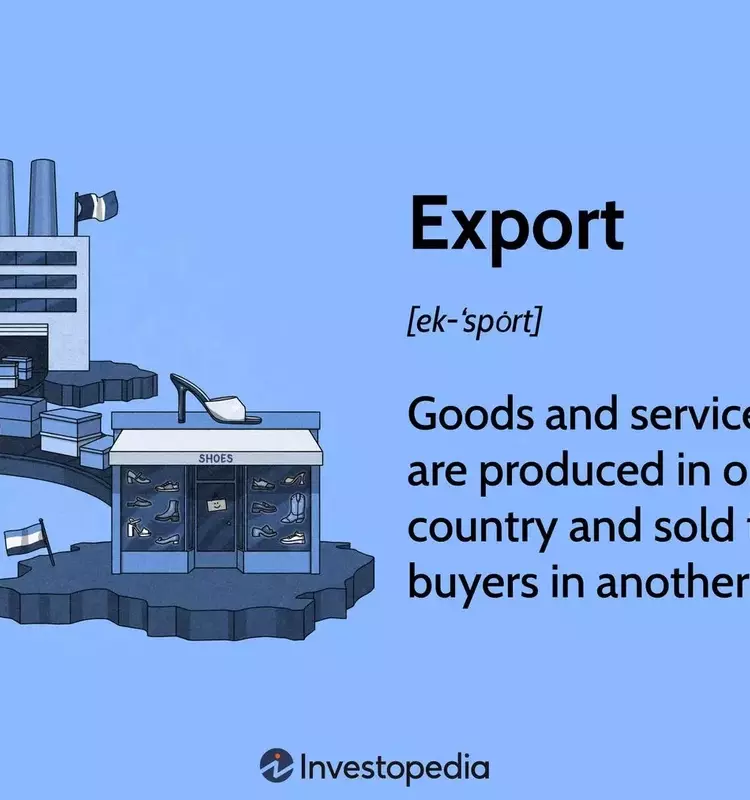
Expanding Horizons: Unlocking Global Opportunities Through Exports
Defining Exports in International Commerce
Exports refer to goods and services originating from one nation that are subsequently sold or provided to entities in another. Alongside imports, they constitute the backbone of international trade. Nations actively seek markets beyond their own borders to enhance economic prosperity and broaden commercial prospects.
The Broader Picture of Export Activities
In contemporary economies, exports are exceptionally vital. They furnish individuals and enterprises with expanded markets for their products and services. A primary objective of governmental diplomacy and foreign policy is to nurture economic exchange, thereby fostering both exports and imports for mutual benefit. Such international agreements are often strategically crafted, ensuring that countries can acquire necessary goods through imports while also generating domestic revenue via exports. Moreover, governments occasionally leverage exports as a tool in political scenarios; for instance, in response to geopolitical events, specific goods may face restrictions on both importation and exportation.
Navigating the Exportation Process
The journey of an export typically commences with a formal agreement between nations to facilitate cross-border trade. Following an order, the seller must secure authorization from their domestic government to dispatch the goods, which might involve acquiring an export license or adhering to other country-specific mandates. Prior to shipment, the buyer and exporter must resolve financial aspects, including the establishment of a letter of credit from the importer to guarantee payment, and the allocation of shipping and insurance costs. They also finalize the currency exchange rate for converting foreign currency into the exporter's local currency. With these arrangements in place, the exporter issues an invoice to complete the transaction. During preparation, essential documents such as importer permits, bills of lading, and shipping records are compiled. Upon receipt of the goods, the importer is also responsible for any applicable duties or tariffs imposed by the destination country.
Navigating Trade Obstacles and Restrictions
Trade barriers encompass governmental regulations, policies, or practices designed to safeguard domestic products from foreign competition or to artificially boost specific domestic exports. These commonly include government-imposed measures that hinder the international exchange of goods and services, such as tariffs on imported goods or restrictions on exporting sensitive technologies. Such barriers present unique difficulties, as exporters may incur additional expenses for market research and product adaptation to meet local standards. Moreover, companies engaged in exporting generally face increased financial risks. Payment collection methods, like open accounts, letters of credit, prepayment, and consignment, are inherently intricate and require more processing time compared to domestic payments.
Exploring the Advantages and Disadvantages of Global Trade
For businesses, exporting offers numerous advantages. It can significantly boost sales and revenue by opening new markets or expanding existing ones, potentially capturing a substantial share of the global market. Companies also mitigate business risk through market diversification. Engaging in foreign trade can lead to reduced per-unit costs through economies of scale and provides valuable insights into new technologies, marketing strategies, and international competitors.
Challenges Associated with Exporting
Despite the benefits, exporting carries certain drawbacks. High transportation costs and the risk of loss during transit can be significant. If ownership of goods remains with the exporter until delivery, the venture can become overly risky. Smaller businesses and governments may struggle with exporting due to logistical and economic constraints, often lacking the in-house expertise to navigate complex international trade regulations. Additionally, currency fluctuations pose a substantial risk; a depreciation in the foreign currency in which an exporter is paid can devalue their earnings, alongside potential impacts from tariffs or reduced export prices.
Illustrative Export Scenario: The Automotive Sector
The United States serves as a prime example in the global export landscape, particularly within the automotive industry. Beyond domestic sales, U.S.-manufactured vehicles are distributed worldwide. In 2024, the U.S. exported approximately $59.2 billion in vehicles globally, with Canada being a major recipient, accounting for 26% of these exports. Other significant importers included Germany, China, the United Arab Emirates, and Mexico. Conversely, the U.S. was also a leading importer of vehicles, bringing in $217 billion, primarily from Mexico, Japan, South Korea, and Canada. BMW Manufacturing, notably, stood out among domestic companies, with its South Carolina plant exporting over 225,000 vehicles valued at more than $10 billion in 202
