Understanding the Federal Poverty Line and Its Impact on Social Welfare Programs
Finance

Understanding the Federal Poverty Line and Its Impact on Social Welfare Programs

authorBy Mariana Mazzucato
DateJul 24, 2026
Read time3 min

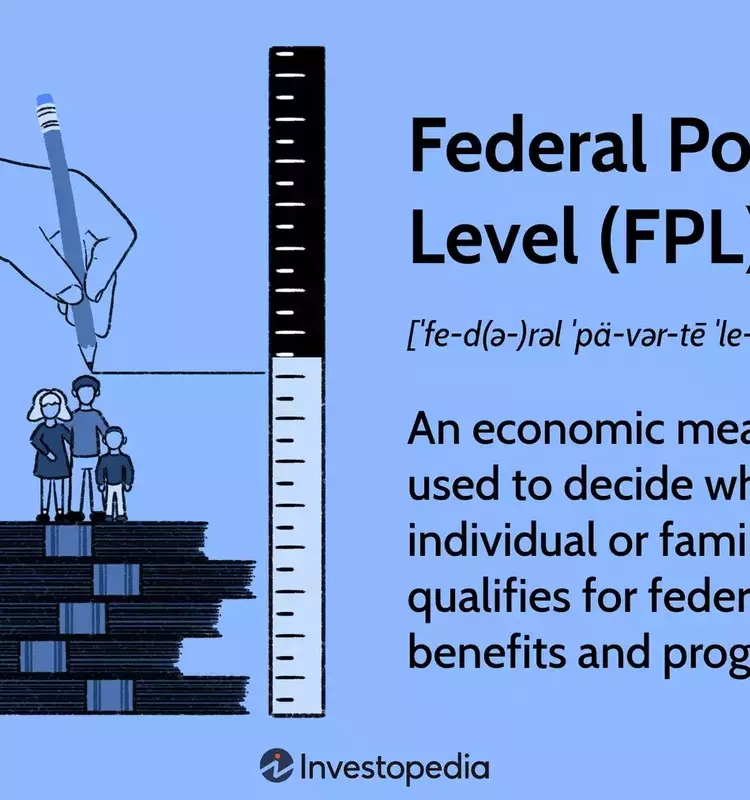
The Federal Poverty Level (FPL) is a crucial economic indicator in the United States, established by the government to determine an individual's or family's eligibility for various social assistance initiatives. The Department of Health and Human Services (HHS) updates these poverty guidelines each year, adjusting them for inflation to reflect the minimum income necessary for a family to afford basic needs such as food, clothing, housing, and transportation. It's important to distinguish the FPL from the poverty threshold, which primarily serves statistical purposes to define poverty and track the number of people living in such conditions nationwide.

Each year, the U.S. Census Bureau releases comprehensive reports on poverty levels, detailing the number and percentage of individuals living below the poverty line, and analyzing poverty distribution across various demographics. Concurrently, the Census Bureau also publishes an income report that provides insights into income levels and inequality. The FPL, typically released by HHS in January, is influenced by both household income and size, with adjustments made for regions like Alaska and Hawaii, where living costs are significantly higher. This benchmark determines access to critical federal and state programs, including Medicaid, the Children’s Health Insurance Program (CHIP), and the Supplemental Nutrition Assistance Program (SNAP), also known as food stamps. For instance, the FPL for a family of two in 2026 is set at $21,640, with an additional $5,500 for each extra family member in the contiguous United States, and higher increments for Alaska ($6,880) and Hawaii ($6,330).

Understanding the FPL is essential for grasping its role in welfare program eligibility. Government agencies utilize the FPL—sometimes based on pre-tax income, other times on after-tax income—to set income limits and criteria for households. For example, an individual whose income is less than 138% of the FPL may qualify for Medicaid. Similarly, eligibility for programs like Utility Assistance often requires an income below 150% of the FPL, while premium tax credits for health insurance marketplace plans can extend to those earning between 100% and 400% of the FPL. To illustrate, a five-person household in New Jersey earning $80,000 annually would be at approximately 207% of the FPL, making them ineligible for certain benefits but potentially still eligible for an advanced premium tax credit subsidy.

The federal poverty level stands as a fundamental economic metric, providing a standardized framework for assessing household financial need and allocating social welfare support. Its annual adjustment by the Department of Health and Human Services ensures that it remains relevant in the face of inflation, while regional variations acknowledge diverse living costs. By clearly differentiating the FPL from the poverty threshold, policymakers and the public can better understand the mechanisms governing aid distribution and the ongoing efforts to support vulnerable populations. This systematic approach is vital for fostering a society where basic necessities are accessible to all, promoting economic stability and well-being across the nation.

More Articles
Finance
Lam Research: Investment Risks and Valuation Concerns
This analysis suggests that investing in Lam Research (LRCX) currently poses significant risks, potentially leading to stagnation for investors over the next three years. The company's high forward earnings multiple of 56x indicates an inflated valuation. Furthermore, its revenue stream is heavily influenced by the semiconductor industry's cyclical nature, with aftermarket services providing insufficient insulation from equipment sales downturns. Concentrated revenue from China introduces substantial geopolitical and legislative uncertainties. Therefore, the stock is rated as a Sell due to these factors, despite its historical growth.
By Fareed ZakariaJul 24, 2026
Finance
Zegna's Market Performance and Strategic Challenges in Luxury Fashion
Ermenegildo Zegna N.V. (ZGN) reported an 11% increase in Q2 group sales, exceeding analyst expectations, driven by strong direct-to-consumer (DTC) performance and brand growth. Despite management's positive outlook for Q3, the long-term prospects for Thom Browne and Tom Ford remain uncertain, highlighting concerns about the group's multi-brand approach and diluted strategic focus. This complexity, coupled with limited valuation upside, supports a neutral rating for the company.
By Robert KiyosakiJul 24, 2026
Finance
Quest Diagnostics Upgrades EPS Outlook For 2026 After Outperforming Q2 Results
Quest Diagnostics has received a reiterated 'buy' rating following exceptional Q2 financial results, an upward revision of its full-year guidance, and sustained market momentum. The company benefits from strong demand for specialized diagnostic testing, leading return on equity among its peers, and robust year-over-year revenue growth of 10.2%. Despite potential challenges from cost pressures and payor risks, the positive outlook is supported by increased earnings forecasts, solid dividend growth, and investment-grade credit ratings. While valuation presents some opportunities, the total return forecast currently falls below the desired hurdle rate, and sector-specific regulatory risks remain a concern.
By Robert KiyosakiJul 24, 2026
Finance
Understanding the Prime Rate and its Economic Impact
The prime rate is a critical interest rate that banks use as a basis for setting lending rates for various loans and credit lines. Influenced primarily by the Federal Reserve's federal funds rate, it serves as a benchmark for determining interest rates across a wide array of financial products, including mortgages, credit cards, and business loans. This article explores how the prime rate is determined, its historical trends, and its profound effects on borrowers and the broader economy.
By Lisa JingJul 24, 2026
Finance
Federal Reserve Poised to Maintain Interest Rates Amidst Cooling Inflation
Despite recent fluctuations in oil prices that sparked speculation of a Federal Reserve rate hike, June's inflation data fell below expectations, accompanied by a softer labor market. This confluence of factors strongly suggests the Fed will hold its policy steady at the upcoming July meeting. The strength of the dollar is anticipated to persist, particularly if geopolitical tensions continue to influence energy markets, emphasizing the complex interplay between global events and domestic monetary policy.
By Strive MasiyiwaJul 24, 2026