Bridging the Gap: The Essence of Financial Spreads
Defining the Core Concept of Spreads in Finance
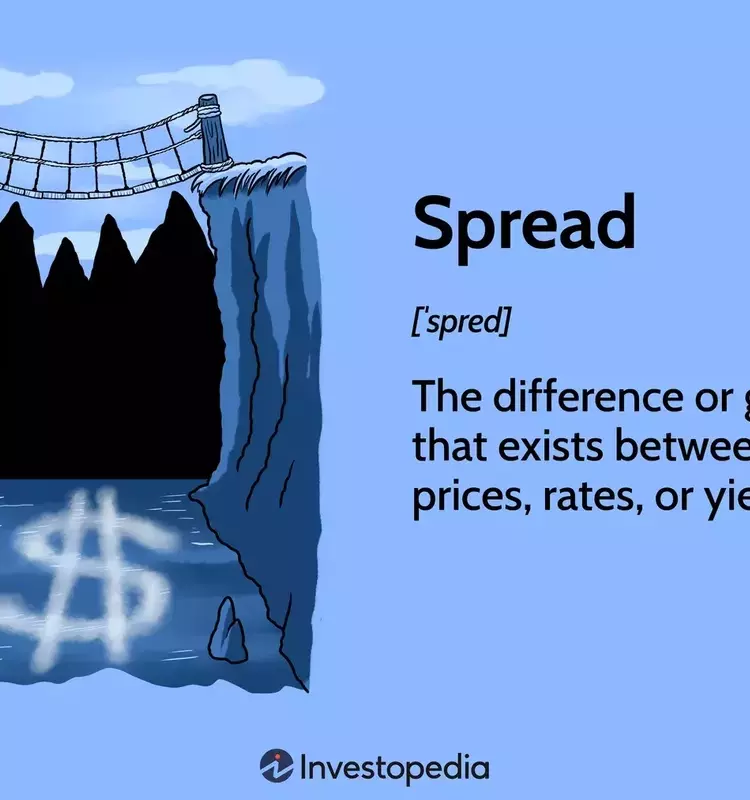
At its heart, a spread signifies the divergence between two interconnected financial figures, such as prices, interest rates, or investment returns. These discrepancies are not merely numerical differences but offer profound insights into market liquidity, inherent risks, and prevailing market sentiments. Spreads are fundamental across various financial sectors, acting as a barometer for market efficiency and investor behavior.
Dissecting the Spectrum of Financial Spreads
Financial markets thrive on these differential values, which provide immediate feedback on liquidity, risk tolerance, and overall market efficiency. Understanding the primary categories of spreads is crucial for navigating the financial landscape effectively. These categories encompass securities spreads, bond market spreads, lending spreads, options trading spreads, and foreign exchange spreads, each revealing unique aspects of market operations.
Navigating Stock Market Dynamics Through Spreads
In the stock market, spreads provide crucial insights into a security's liquidity and transaction costs. A tight bid-ask spread suggests a healthy, active market, while a wide spread can signal lower liquidity and higher risks for traders. Beyond bid-ask, price spreads between different share classes of the same company or between common and preferred stock can indicate investor preferences and market perceptions of corporate governance or dividend policies.
Unveiling the Nuances of Bond Market Spreads
Bond market spreads are indispensable for evaluating risk and economic forecasts. They denote the difference in yields between bonds, reflecting variations in creditworthiness, maturity, or market liquidity. Key types include yield spreads, which assess the divergence in interest rates between different bonds; credit spreads, highlighting the risk premium for corporate debt over government bonds; liquidity spreads, compensating for trading difficulties; swap spreads, indicating counterparty risk; and specialized Z-spreads and option-adjusted spreads (OAS), which refine risk assessment for complex bonds by factoring in embedded options.
Analyzing Profitability: The Role of Lending Spreads
Lending spreads are central to the profitability of financial institutions, representing the margin between the interest rates charged on loans and the cost of acquiring funds. These spreads, including bank lending spreads (net interest margin), mortgage spreads, and corporate loan spreads, reflect the lender's risk assessment, market competition, and economic outlook. Wider spreads typically signify greater profitability for lenders but can also indicate increased perceived risk in the borrowing environment.
Mastering Options Trading with Strategic Spreads
Options spreads are sophisticated trading techniques involving the simultaneous purchase and sale of multiple option contracts. These strategies, like call spreads (e.g., bull call spreads), put spreads (e.g., bear put spreads, bull put spreads), butterfly spreads, calendar spreads, and box spreads, allow traders to manage risk, reduce costs, and capitalize on specific market conditions, including directional movements, volatility, or time decay, by combining various strike prices and expiration dates.
Understanding the Intricacies of Call Spreads
Call spreads, such as the bull call spread, are designed for scenarios where moderate price increases are anticipated. This strategy involves buying a call option at a lower strike price and selling another at a higher strike price, both with the same expiration. This approach caps both potential profits and losses, offering a balanced risk-reward profile compared to simply buying a single call option.
Exploring the Dynamics of Put Spreads
Put spreads are tailored for bearish or moderately bullish market views. A bear put spread, for instance, profits from a stock price decline by buying a higher-strike put and selling a lower-strike put. Conversely, a bull put spread generates income from premiums when an asset is expected to remain stable or rise above a certain price. Both strategies manage risk by defining maximum profit and loss scenarios, making them adaptable for various market outlooks.
Leveraging the Long Butterfly Spread Strategy
The long butterfly spread is an options strategy used when minimal price movement in the underlying asset is expected. It involves a combination of buying and selling calls or puts at three different strike prices, all with the same expiration date. This setup aims to profit from market stability while significantly limiting potential losses, making it suitable for low-volatility environments.
Implementing Calendar Spreads for Time Decay Advantage
Calendar spreads, also known as time spreads, involve options with the same strike price but different expiration dates. Traders typically buy a longer-term option and sell a shorter-term one, aiming to profit from the faster time decay of the nearer-term option. This strategy is ideal when expecting a stable short-term price but potential long-term movement, with risks primarily tied to unexpected short-term price shifts.
Harnessing the Arbitrage Potential of Box Spreads
A box spread is an arbitrage strategy that creates a risk-free profit by combining a bull call spread and a bear put spread on the same asset. Designed to exploit pricing inefficiencies, it yields a fixed payoff at expiration, regardless of the underlying asset's price. Though complex and primarily used by institutional investors, it exemplifies how spreads can be used for guaranteed returns when market mispricings occur.
Mitigating Risks in Spread Trading
Spread trading, like all market activities, carries inherent risks. These include market risk from unfavorable price movements, liquidity risk affecting entry and exit points, and volatility risk from unpredictable changes in implied volatility. Furthermore, misunderstanding or mismanaging complex spread strategies can lead to unexpected losses. Diligent risk assessment and strategic planning are essential to navigate these challenges effectively.
Understanding Forex Spreads in Currency Trading
Forex spreads represent the difference between the bid and ask prices of a currency pair, essentially acting as the cost of a trade for currency traders. These spreads vary based on market liquidity, volatility, and the specific currency pair. Tighter spreads on major pairs indicate high liquidity and lower trading costs, while wider spreads on exotic pairs suggest less liquidity and higher costs. For active traders, managing and understanding forex spreads is critical for optimizing profitability.
The Fundamental Role of Spreads in Financial Analysis
In finance, a spread fundamentally represents the difference between two related prices, rates, or yields. The bid-ask spread, for instance, quantifies the difference between the highest price a buyer offers and the lowest price a seller accepts. Similarly, in trading, a spread can delineate the gap between long and short positions in derivative contracts. This concept extends to lending, where the interest rate spread between what banks pay depositors and what they charge borrowers directly impacts their profitability. For investors, yield spreads between varying types of bonds are crucial for assessing market risk and sentiment. Across these diverse financial contexts, spreads are indispensable tools for interpreting market conditions, evaluating risk exposures, and identifying potential profit opportunities, forming a cornerstone of comprehensive financial analysis.
