Navigate the Lifespan of Your Business with Prudent Asset Management
Defining Fixed Assets: Cornerstones of Business Operations
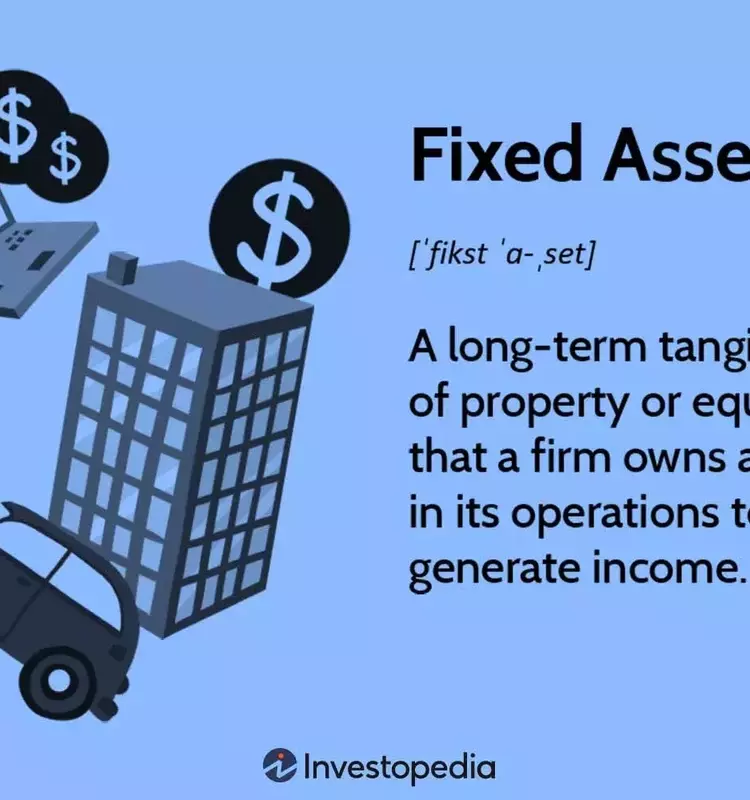
Fixed assets are long-term tangible resources that are indispensable for a company's operational continuity. These assets, which include structures, machinery, and transportation vehicles, are prominently displayed on the balance sheet under the category of property, plant, and equipment (PP&E). Unlike current assets, which are readily convertible into cash, fixed assets are illiquid and serve diverse functions such as manufacturing, facilitating core operations, or generating revenue through leasing to external parties. The systematic reduction in their book value over time, known as depreciation, is a critical element of financial reporting and analysis.
Accounting for Fixed Assets: The Balance Sheet Perspective
A company's balance sheet meticulously outlines its assets, liabilities, and shareholder equity. Assets are classified into current and noncurrent based on their expected useful life. Current assets are typically liquid and can be converted into cash within a single fiscal year, encompassing items like cash reserves, accounts receivable, inventory, and prepaid expenses. In contrast, fixed assets are classified as noncurrent because they are not readily convertible to cash. This category also includes long-term investments, deferred charges, and intangible assets. These noncurrent assets are not anticipated to be consumed or sold within the accounting period. Fixed assets possess a physical presence and are itemized as PP&E on the balance sheet. Businesses procure fixed assets to facilitate the production of goods or services, to support administrative and operational functions, or to lease them to third parties. A key distinction is that fixed assets are subject to depreciation, whereas current assets are not.
Depreciation of Fixed Assets: Essential Considerations
The value of fixed assets diminishes over time due to wear, tear, and obsolescence. Because these assets contribute to long-term revenue generation, their expensing differs from other expenditure types. Tangible assets undergo periodic depreciation, while intangible assets are subject to amortization. A portion of an asset's original cost is allocated as an expense each year. Consequently, the asset's recorded value on the company's balance sheet is progressively reduced to align with its diminishing long-term utility. Different depreciation methods can lead to disparities between an asset's book value and its current market value. It is important to note that land, although a fixed asset, is not subject to depreciation.
Acquiring and Divesting Fixed Assets: Impact on Financial Flows
Transactions involving the acquisition or disposal of fixed assets are recorded within the cash flow statement under investing activities. The procurement of fixed assets results in a cash outflow, while their sale generates a cash inflow. Should an asset's valuation fall below its net book value, an impairment write-down is necessary. This adjustment reduces its recorded value on the balance sheet to accurately reflect its market value. Upon reaching the end of its useful life, a fixed asset is frequently sold for its salvage value, which represents its estimated worth if dismantled and sold in components. In instances where an asset becomes obsolete, it may be disposed of without any monetary return. The fixed asset is subsequently removed from the balance sheet as it is no longer operational.
The Strategic Importance of Fixed Assets for Investors
For investors, information regarding a company's assets is crucial for precise financial reporting, valuations, and in-depth analysis. Both investors and creditors rely on these reports to assess a company's financial robustness, which influences their decisions to invest in shares or extend credit. Fixed assets are particularly significant for capital-intensive sectors, such as manufacturing, where substantial investments in PP&E are essential. A negative net cash flow resulting from the acquisition of fixed assets can often signal a period of expansion or strategic investment by the company.
Defining Different Categories of Noncurrent Assets
Beyond fixed assets, other categories of noncurrent assets include long-term investments and intangible assets. Intangible assets, despite lacking a physical form, possess long-term value and utility. This category encompasses items such as goodwill, copyrights, trademarks, and various forms of intellectual property.
Determining if a Vehicle Qualifies as a Fixed Asset
The classification of a vehicle as a fixed asset hinges on its intended use within a company. If a vehicle, such as a delivery truck, is integral to the company's operations and revenue generation, it is typically deemed a fixed asset. Conversely, if a vehicle is used for personal purposes, it is not considered a fixed asset and is therefore not recorded on the company's balance sheet.
The Essence of Fixed Assets in Business
A fixed asset represents a long-term, tangible property or piece of equipment owned and utilized by a company to generate income. These assets are not intended for sale or consumption within a year and are often listed on the balance sheet as property, plant, and equipment (PP&E). Fixed assets are subject to depreciation, whereas intangible assets undergo amortization. This contrasts with current assets, which are expected to be converted into cash or utilized within a single year.
