Understanding Foreign Exchange Reserves
Finance

Understanding Foreign Exchange Reserves

authorBy Morgan Housel
DateApr 30, 2026
Read time2 min

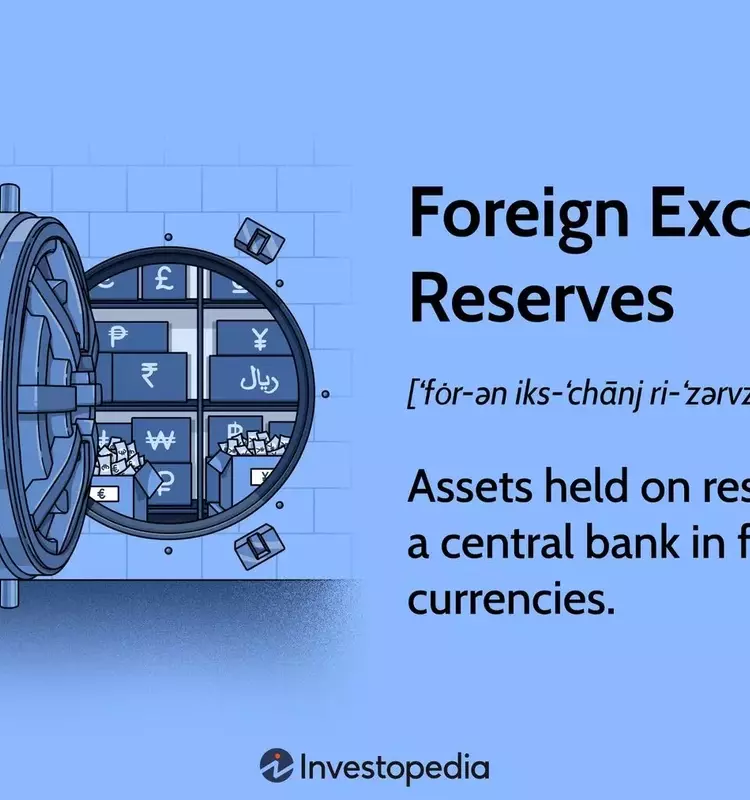
Central banks around the world maintain foreign exchange reserves, which are foreign currency-denominated assets. These reserves are vital for underpinning national liabilities and guiding monetary policy. They include various financial instruments such as foreign banknotes, deposits, bonds, and government securities, primarily serving as emergency funds for the government in case of currency depreciation or insolvency. The U.S. dollar is the most common reserve currency due to its global trade dominance, although other major currencies like the British pound, euro, Chinese yuan, and Japanese yen are also held.

The strategic management of these reserves is crucial for national economic stability. Economists often advise holding reserves in currencies not directly tied to the local currency to buffer against market downturns. However, the increasing interconnectedness of global economies and currencies makes this strategy more complex. For example, China, the world's largest holder of foreign exchange reserves, possesses over $3 trillion in foreign assets, mostly in U.S. dollars, which simplifies international trade. Similarly, oil-exporting nations like Saudi Arabia maintain substantial reserves to mitigate the economic impact of potential oil price drops.

The example of Russia illustrates the risks associated with reserve composition. Despite holding significant foreign exchange reserves, including gold, sanctions imposed in 2022 rendered a large portion of these assets inaccessible. This highlights the vulnerability of reserves to geopolitical events and the fluctuating value of commodities like gold during economic crises. As of early 2024, the total global foreign exchange reserves amounted to nearly $12.35 trillion, reflecting their essential role in global financial architecture.

Maintaining robust foreign exchange reserves is a testament to prudent economic management, allowing countries to navigate global financial complexities with greater confidence. These reserves are not merely a static store of wealth but an active tool for central banks to ensure economic stability, facilitate international transactions, and mitigate financial risks in an ever-changing global landscape. By diversifying their holdings and strategically managing these assets, nations reinforce their economic resilience and contribute to a more stable global financial system.

More Articles
Finance
Understanding Prepackaged Bankruptcy: A Swift Path to Financial Reorganization
This article explores prepackaged bankruptcy, a strategic approach where a company negotiates with creditors to restructure finances before formally filing for Chapter 11. This method aims to expedite the bankruptcy process, reduce costs, and facilitate a quicker emergence from financial distress, as evidenced by real-world examples like Neiman Marcus and J. Crew.
By Morgan HouselApr 30, 2026
Finance
Gaming and Leisure Properties: Re-evaluating Investment Outlook to Hold
This analysis shifts the recommendation for Gaming and Leisure Properties, Inc. (GLPI) from "Buy" to "Hold." While GLPI maintains a favorable investment spread and exhibits defensive characteristics like consistent rent collection and low beta, its current valuation appears fair when weighed against invested capital. Concerns regarding tenant concentration, non-investment grade exposure, and a compressed implied cap rate spread relative to Treasuries warrant a more cautious stance on future upside potential.
By Strive MasiyiwaApr 30, 2026
Finance
Rising Inflation Concerns in Bond Markets Due to Middle East Tensions
The bond market is increasingly signaling concerns about persistent inflation risks stemming from geopolitical tensions in the Middle East. Key Treasury yields are experiencing significant increases, approaching levels seen during previous periods of high inflation. This shift suggests a growing belief that the Federal Reserve's current wait-and-see monetary policy may need to be reassessed as market-implied inflation forecasts also show an upward trend.
By Fareed ZakariaApr 30, 2026
Finance
Understanding Consolidated Financial Statements: A Comprehensive Guide
Consolidated financial statements combine the financial data of a parent company and its subsidiaries into a single set of reports, offering a holistic view of the entire group's financial health. This guide delves into their functionality, key considerations, reporting requirements, and provides real-world examples, highlighting their importance for transparency and compliance in financial reporting.
By Fareed ZakariaApr 30, 2026
Finance
Understanding Liability Insurance: Safeguarding Against Financial Risks
Liability insurance is a crucial safeguard for individuals and businesses, protecting them from financial losses arising from claims of injury or damage to others. It covers legal expenses and potential payouts when the insured is deemed responsible. This type of insurance, often referred to as third-party insurance, does not extend to intentional harm or contractual obligations, focusing instead on compensating affected third parties.
By Michele FerreroApr 30, 2026