Understanding Fronting Policies: Risk Transfer in Insurance
Finance

Understanding Fronting Policies: Risk Transfer in Insurance

authorBy Michele Ferrero
DateApr 30, 2026
Read time3 min

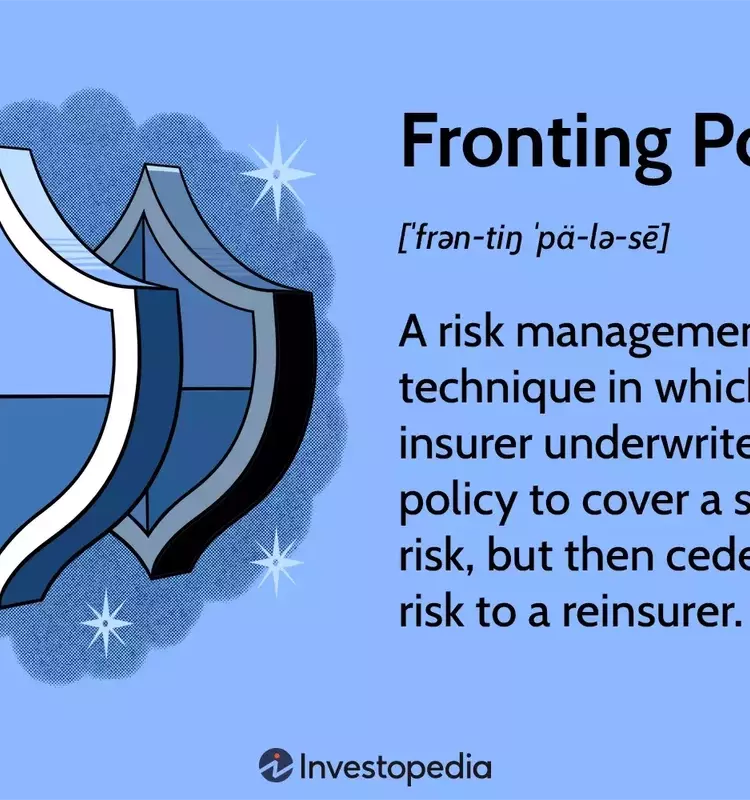
A fronting policy, a specialized risk management tool, allows an insurer to underwrite a policy while strategically shifting the associated risk to a reinsurer. This approach is frequently adopted by substantial organizations, particularly those operating across various states or regions. The reinsurer then assumes full responsibility for handling claims, with the primary insurer's role largely limited to ensuring the reinsurer's financial capacity to meet these obligations. This method enables the primary insurer to generate income from premiums without directly engaging in the claims payment process.

Fronting Policies: A Strategic Financial Maneuver in Insurance

In the intricate landscape of corporate finance, fronting policies emerge as a sophisticated risk management strategy, primarily favored by expansive organizations navigating diverse regulatory environments. At its core, a fronting policy involves a primary insurance company, often referred to as the “fronting company,” issuing an insurance policy to cover specific risks. However, the crucial distinction lies in the immediate transfer of these risks to a reinsurer. This transfer mechanism is a key component of alternative risk transfer (ART) strategies, allowing the fronting company to leverage its licensing and regulatory approvals across multiple jurisdictions.

Historically, regulatory bodies have scrutinized fronting policies due to concerns that they might serve as a conduit for unlicensed reinsurers to operate indirectly within regulated markets, thereby bypassing state-specific insurance mandates. Nevertheless, for the fronting company, this strategy offers significant advantages. It provides a consistent revenue stream through a percentage of the collected premiums, without the burden of direct claims liability. This capital inflow can be reinvested into operational enhancements, such as staffing or technological upgrades. Moreover, fronting policies offer a low-risk avenue for insurers to explore new market segments or lines of business, benefiting from the reinsurer's financial and technical expertise. Should a new venture prove unprofitable, this structure also facilitates an easier exit strategy for the fronting company.

The financial arrangement dictates that the cost of utilizing a fronting company is directly linked to a percentage of the gross premiums written. This fee compensates the fronting entity for its administrative role and the use of its licensed status, while the reinsurer shoulders the financial responsibilities of the policy and its associated claims.

The emergence of fronting policies underscores the dynamic nature of the insurance industry, where innovation in risk transfer mechanisms continues to shape how large enterprises manage their exposures. While offering clear benefits in terms of market entry, revenue generation, and risk mitigation for the primary insurer, the regulatory complexities surrounding such arrangements highlight the ongoing tension between market flexibility and oversight in financial services.

More Articles
Finance
Understanding Trailing 12 Months (TTM) in Financial Analysis
Trailing 12 Months (TTM) is a crucial financial metric used by analysts and investors to evaluate a company's performance over the most recent year, offering a more current perspective than traditional annual reports. This method smooths out seasonal variations and provides up-to-date insights into key financial indicators such as earnings, revenue, and price-to-earnings (P/E) ratios, enabling more accurate comparisons and trend analysis.
By Robert KiyosakiApr 30, 2026
Finance
Enterprise Value to Revenue Multiple (EV/R) Analysis
The Enterprise Value to Revenue (EV/R) multiple is a vital financial metric used to evaluate a company's total value relative to its annual revenue. This ratio is particularly useful for companies that may not yet be profitable, offering a straightforward way to compare valuation across similar industries. It incorporates debt and cash, providing a more holistic view of a company's worth, especially in acquisition scenarios. While powerful, EV/R should be complemented with other financial ratios like EV/EBITDA for a comprehensive financial assessment.
By Robert KiyosakiApr 30, 2026
Finance
Understanding the Dynamics of the Labor Market: A Comprehensive Analysis
The labor market functions as a complex system where the availability of workers interacts with the demand for their skills, shaping employment trends and economic vitality. This intricate balance profoundly influences both macro and microeconomic landscapes. Factors such as shifts in demographics, technological progress, and educational attainment play a significant role in determining the direction of labor supply and demand, which in turn impacts wages and job opportunities. Key economic indicators, like unemployment rates and labor productivity, offer crucial insights into the health and direction of this vital economic sector.
By Robert KiyosakiApr 30, 2026
Finance
CVR Partners Demonstrates Robust Performance with Increased Distribution
CVR Partners (UAN) reported an exceptional first quarter, nearly doubling its net income to $50 million and announcing a variable distribution of $4.00 per unit. This performance is attributed to strong fertilizer prices, high ammonia plant utilization of 103%, and significant demand driven by spring planting. The company's forward yield now exceeds 10%, reinforcing a positive outlook despite potential risks like fluctuating fertilizer prices, natural gas volatility, existing debt of $570 million, and geopolitical uncertainties. The company is positioned for continued growth.
By Morgan HouselApr 30, 2026
Finance
Berkshire Hathaway's Post-Buffett Era: Navigating Market Changes and Future Leadership
Berkshire Hathaway's upcoming shareholder meeting marks a new chapter without Warren Buffett's direct involvement. The company's stock has underperformed the S&P 500, prompting investors to seek clarity on future capital allocation and the strategic direction under new leadership. This pivotal event will shed light on how the investment giant plans to adapt to evolving market conditions.
By Michele FerreroApr 30, 2026