Understanding FSA Rollovers and Grace Periods
Finance

Understanding FSA Rollovers and Grace Periods

authorBy Fareed Zakaria
DateAug 20, 2026
Read time2 min

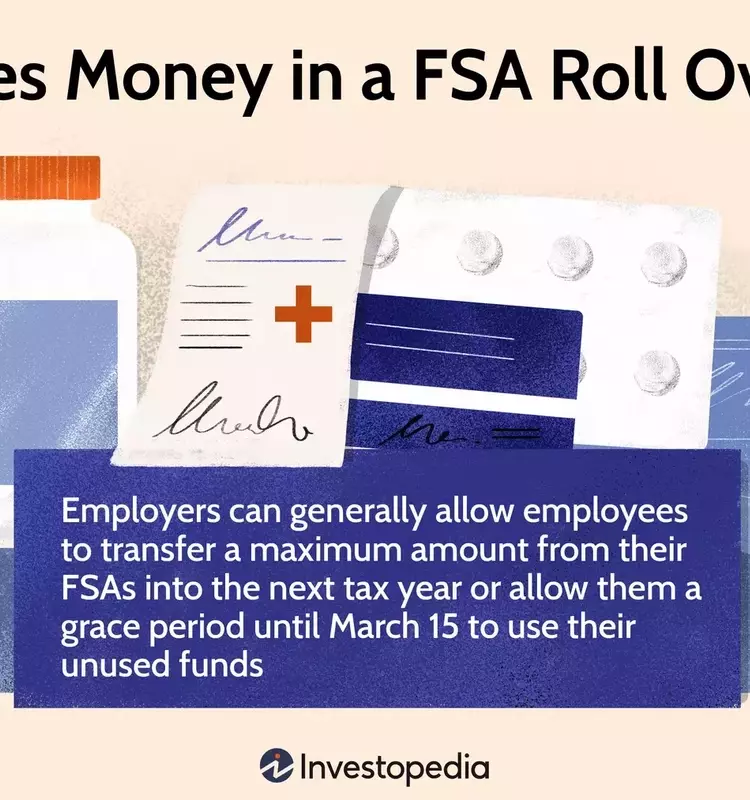
When managing healthcare expenses, a health Flexible Spending Account (FSA) can be a valuable tool, allowing individuals to set aside pre-tax income for eligible medical costs. However, a crucial aspect to understand is how unused funds are handled at the end of the plan year. The Internal Revenue Service (IRS) generally enforces a 'use-it-or-lose-it' rule, meaning any remaining balance might be forfeited. Fortunately, employers can offer options like a rollover or a grace period to mitigate this.

For the 2026 plan year, employers have the discretion to permit a rollover of up to $680 in unused health FSA funds into the subsequent year. Alternatively, a plan might provide a grace period of up to 2.5 months following the plan year's end, allowing participants extra time to utilize their remaining balance. It's important to note that employers are not obligated to provide either of these options and cannot offer both for the same health FSA. The amount rolled over does not reduce the contribution limit for the new plan year. These rollover provisions can extend for multiple years, contingent on the employer’s plan terms and the prevailing carryover limits.

There are significant distinctions between FSAs and Health Savings Accounts (HSAs). FSAs are exclusively employer-sponsored, rendering them inaccessible to the unemployed or self-employed. In contrast, HSAs are individually owned accounts available through qualified financial institutions to those meeting specific eligibility criteria. While both can receive employer contributions, FSAs are not portable upon leaving a job, unlike HSAs, which remain accessible to the individual. Contribution limits also vary: the 2026 health FSA limit is $3,400, whereas HSA limits are $4,400 for self-only coverage and $8,750 for family coverage. Eligibility for HSAs typically requires enrollment in a high-deductible health plan (HDHP), which for 2026 generally means a deductible of at least $1,700 for self-only or $3,400 for family coverage, with annual out-of-pocket expenses not exceeding $8,500 for self-only or $17,000 for family coverage. Conversely, participation in a health FSA does not necessitate an HDHP.

Navigating the rules of your FSA, particularly regarding rollovers, grace periods, and run-out periods, is essential as the plan year concludes. Any funds not used or carried over by the specified deadlines risk forfeiture. By understanding these mechanisms, individuals can maximize their healthcare savings and minimize financial loss.

More Articles
Finance
Understanding Bond Futures: A Comprehensive Guide to Trading and Hedging Government Securities
Bond futures are financial contracts that set the price of a government bond for a future transaction, offering protection against interest rate fluctuations. These contracts are traded on futures exchanges and can be used by speculators to bet on price movements, or by hedgers to safeguard their bond holdings. They also serve as an indirect tool for managing or trading based on interest rate changes.
By Suze OrmanAug 20, 2026
Finance
S&P 500's Path to 8000: AI and Liquidity Driving Market Momentum
The S&P 500 Index is projected to reach 8000, propelled by robust AI fundamentals, including accelerated capital expenditure, rising compute prices, and strong enterprise adoption. Recent liquidity injections from Treasury buybacks have provided immediate relief to long-term bond yields. While short-term liquidity is supported by debt-funded AI capital expenditure, persistent US deficits and rising Treasury yields pose long-term risks. Significant capital has been deployed in high-conviction AI names, with further deployment planned at key technical levels.
By Fareed ZakariaAug 20, 2026
Finance
Understanding Risk-On/Risk-Off Dynamics in Investment
This article explores the 'risk-on/risk-off' investment framework, detailing how investor sentiment shifts between embracing higher-risk assets during periods of market optimism and seeking refuge in lower-risk assets during times of uncertainty. It highlights the factors influencing these shifts, such as economic data and central bank policies, and offers insights into navigating these market conditions to make informed investment decisions.
By Fareed ZakariaAug 20, 2026
Finance
Strategic Stock Selling: Optimizing Your Investment Exits
Mastering the art of selling stocks is as crucial as intelligent buying. This guide explores key strategies for investors to make informed decisions on when to exit a position, emphasizing avoiding common pitfalls like chasing 'hot stocks' and holding onto underperforming assets. It delves into the importance of setting clear target prices and responding strategically to market news and personal financial goals, ensuring optimal portfolio management and wealth accumulation.
By Fareed ZakariaAug 20, 2026
Finance
The Enduring Role of Pensions in Retirement: A Shifting Landscape
Pensions, once a staple of retirement security, are becoming less common for today's workforce. While a significant portion of current retirees still benefit from defined benefit plans, younger generations have limited access, relying more on personal savings and defined contribution plans. This shift highlights a growing need for individual financial planning to ensure retirement stability.
By Morgan HouselAug 20, 2026