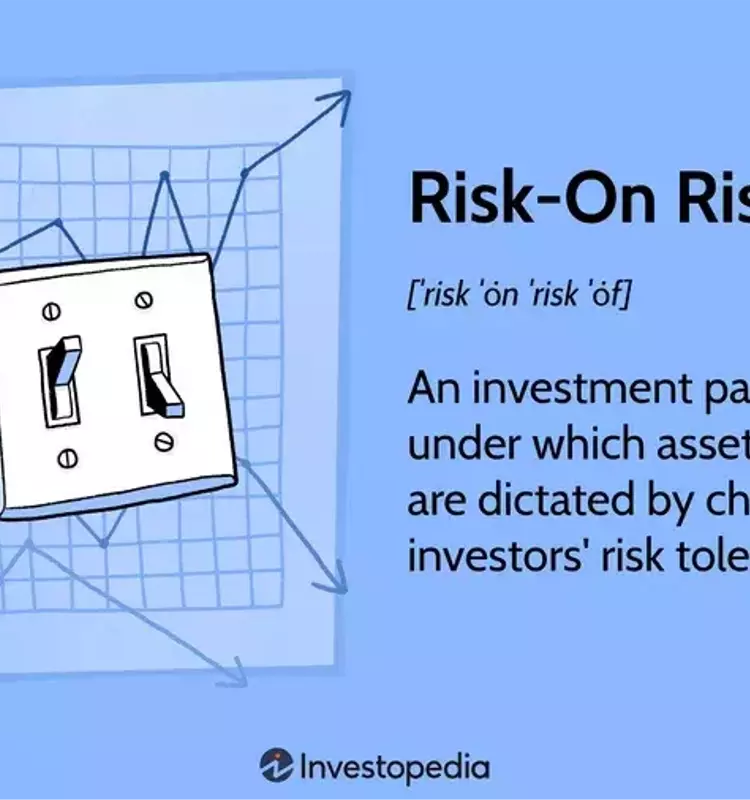
The financial markets are often swayed by prevailing investor sentiment, leading to distinct phases known as 'risk-on' and 'risk-off' environments. These phases significantly influence how investors allocate their capital, moving between assets with varying risk profiles. Understanding these dynamics is crucial for making judicious investment choices and managing portfolio exposure effectively.
Navigating the Currents: Risk-On and Risk-Off Investment Paradigms
The concept of 'risk-on/risk-off' (RORO) delineates how investor attitudes towards risk fluctuate, profoundly impacting asset valuations and trading behaviors. In a risk-on scenario, investors exhibit a greater appetite for ventures that promise higher returns but come with increased volatility, such as equities. This occurs when market indicators are positive, corporate earnings are robust, and there's a general sense of economic optimism, often supported by accommodating central bank policies.
Conversely, a risk-off environment emerges during periods of heightened uncertainty, economic downturns, or geopolitical tensions. During such times, the prevailing sentiment shifts towards caution, prompting investors to divest from volatile assets and seek sanctuary in more stable, lower-risk alternatives. Typical safe-haven assets include government bonds, precious metals like gold, and cash. These shifts can be triggered by a multitude of factors, ranging from unexpected economic reports and interest rate adjustments to global political events.
The distinction between high-risk and low-risk investments is fundamental to the RORO framework. Younger investors, with a longer investment horizon, may tolerate more risk, often allocating a larger portion of their portfolios to growth stocks or aggressive mutual funds. In contrast, those nearing retirement tend to favor conservative investments, prioritizing capital preservation over aggressive growth. Certain financial products, such as RORO exchange-traded funds (ETFs), are specifically designed to adapt to these market conditions, dynamically rebalancing between high-risk equities and low-risk treasuries to align with the current risk sentiment.
By discerning these market patterns and understanding the underlying drivers, investors can strategically adjust their portfolios. This involves not only selecting appropriate asset classes but also being prepared to reallocate funds in response to changing economic landscapes and investor sentiment. This adaptive approach is key to mitigating potential losses during turbulent times and capitalizing on opportunities when the market favors risk-taking.
The 'risk-on/risk-off' dynamic serves as a pivotal framework for comprehending investor behavior and market fluctuations. It underscores the importance of a flexible investment strategy that can adapt to varying levels of market optimism and pessimism. By aligning investment decisions with prevailing risk sentiments, investors can better safeguard their assets and optimize returns across diverse economic cycles. The continuous evaluation of economic indicators, corporate health, and central bank directives remains paramount for successful navigation of these intricate financial tides.
