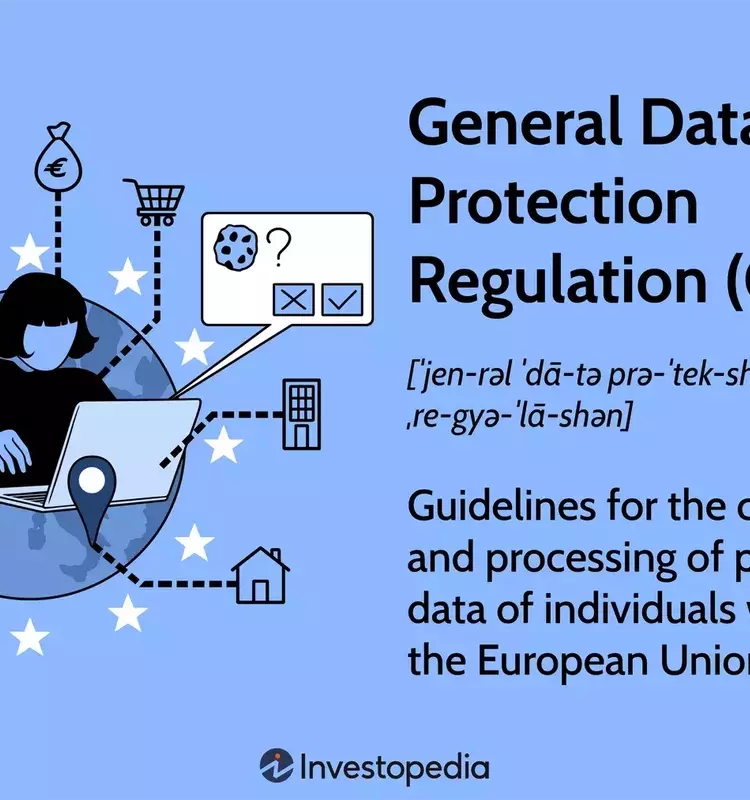
The General Data Protection Regulation (GDPR) is a comprehensive legal framework established in 2018 to safeguard the personal data of individuals within the European Union and globally, significantly influencing international data privacy practices. This regulation demands that businesses be transparent and accountable, clearly outlining their data collection methods to users and granting individuals rights such as accessing and erasing their data. GDPR enforces stringent guidelines for processing personal data, requiring either anonymization or pseudonymization to protect user identities. Companies are also obligated to appoint Data Protection Officers (DPOs) and ensure full compliance, a task that can present challenges due to administrative overheads and increased operational costs. Notably, GDPR's jurisdiction extends beyond the EU, impacting global websites that cater to European visitors, compelling them to adhere to its principles irrespective of their local legal frameworks.
The General Data Protection Regulation (GDPR): A Comprehensive Insight
The General Data Protection Regulation (GDPR), which officially took effect on May 25, 2018, stands as the world's most stringent privacy and security legislation. This landmark European Union (EU) law aims to empower individuals with greater control over their personal data by setting rigorous standards for how personal information is collected and processed. Its influence reaches beyond the EU's borders, obliging any website that attracts European visitors to comply with its directives, thereby ensuring robust data protection and holding companies accountable for their data handling practices. This regulation superseded the previous Data Protection Directive, significantly bolstering consumer privacy rights and harmonizing data protection policies across all EU member states.
Approved in April 2016, the GDPR established a new benchmark for how businesses manage consumer data online. It introduced rules to prevent companies from using ambiguous language on their websites regarding data practices. Key provisions include mandatory notifications to visitors about collected data, requirements for explicit consent through affirmative actions, and prompt reporting of any personal data breaches. Furthermore, the regulation stipulates a mandatory assessment of a website's data security and determines whether a dedicated Data Protection Officer (DPO) is necessary. These mandates often surpass the data protection standards of local laws where a website might be based. To facilitate compliance, information on how to contact the DPO and staff must be readily available, allowing visitors to exercise their EU data rights, including the right to have their data deleted. Companies must also allocate staff and resources to effectively process such requests.
For businesses, GDPR brings additional considerations. It requires that all personally identifiable information (PII) collected be either anonymized—made entirely anonymous—or pseudonymized, where the consumer's identity is replaced with a pseudonym. This allows businesses to conduct broader data analysis, such as evaluating regional debt ratios, without compromising individual privacy. The regulation applies to all 27 EU member states and the European Economic Area (EEA), irrespective of where websites or residents are located. Consequently, any site engaging with European visitors must comply, even if they don't explicitly market goods or services to EU residents. Moreover, GDPR protects EU citizens' data, regardless of its storage location, and extends protection to non-EU citizens residing within the EU.
Despite its broad protections, GDPR has faced criticism. Some argue that the requirement to appoint DPOs, or even to assess this need, places an undue administrative burden on certain companies. Concerns have also been raised about the vagueness of guidelines concerning employee data. Additionally, restrictions on transferring data outside the EU—unless the receiving entity guarantees an equivalent level of protection—have led to complaints about costly disruptions to business operations. There is also a growing apprehension that the costs associated with GDPR will escalate, partly due to the increasing need to educate both customers and employees about data protection threats and compliance solutions. Skepticism persists regarding the consistent enforcement and interpretation of these regulations by EU and global data protection agencies.
What insights can we draw from the GDPR's impact?
The General Data Protection Regulation represents a significant shift towards prioritizing individual data privacy in an increasingly digital world. Its implementation has compelled businesses worldwide to re-evaluate and enhance their data handling practices, fostering a greater sense of responsibility and accountability. From a journalistic perspective, the GDPR underscores the critical importance of transparent and ethical data management, highlighting how legal frameworks can influence technological development and business strategies. It also sparks broader conversations about digital rights, global governance, and the balance between data utility and individual freedom. As technology evolves, the principles embedded in GDPR will likely continue to shape future data protection laws, encouraging a more secure and privacy-aware online environment for everyone.
