Understanding Impulse Wave Patterns in Financial Markets
Finance

Understanding Impulse Wave Patterns in Financial Markets

authorBy Fareed Zakaria
DateMay 24, 2026
Read time2 min

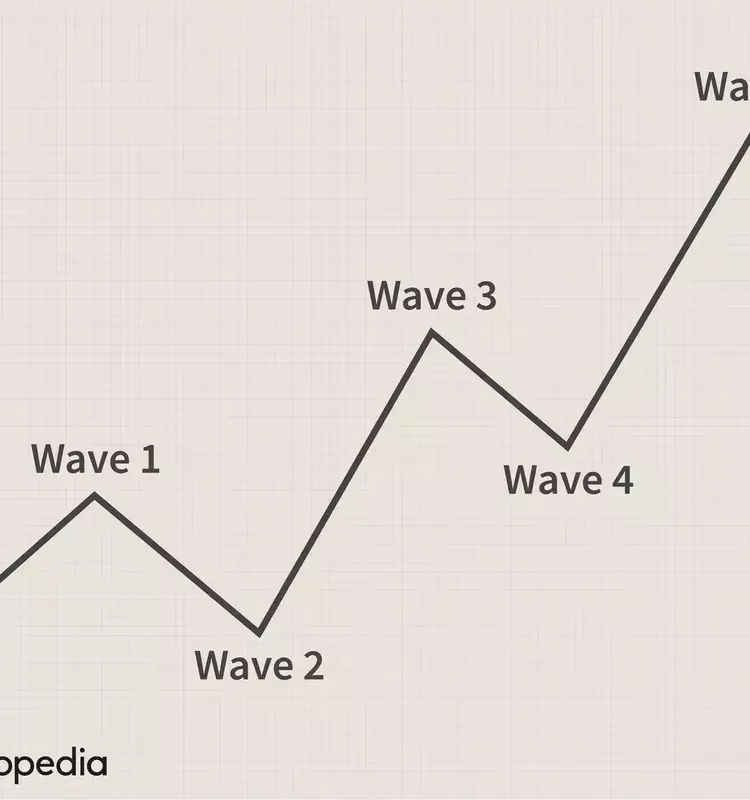
In financial markets, recognizing impulse wave patterns is crucial for understanding asset price movements. These patterns signify robust price action that aligns with the prevailing market trend, whether upward or downward. They are foundational to Elliott Wave Theory, a methodology used by market analysts and traders to forecast market directions. Impulse waves are composed of five distinct sub-waves, three of which are motive (moving with the trend) and two are corrective (moving against the trend). For a pattern to be classified as an impulse wave, it must strictly adhere to three fundamental rules: the second wave cannot retract the first wave entirely, the third wave must not be the shortest compared to the first and fifth waves, and the fourth wave cannot overlap the first wave’s territory.

To effectively utilize impulse wave patterns in trading, market participants often employ specific strategies. Trend-following is a popular approach, where traders aim to enter a position at the onset of the third wave, known for its strong momentum. Risk management is paramount, typically involving placing stop-loss orders below the preceding corrective wave to mitigate potential reversals. Profit targets are frequently set at Fibonacci extension levels, derived from the length of earlier waves. Another strategy involves capitalizing on corrective phases within an impulse wave, entering positions during the second corrective wave in anticipation of a subsequent motive wave. However, the application of impulse wave analysis is not without its challenges. It can be subjective, with different analysts potentially interpreting patterns in varied ways. Furthermore, the tendency to analyze these patterns retrospectively can introduce bias, and the inherent variability in wave lengths and the potential for extensions or truncations can add complexity, especially for novice traders.

The efficacy of impulse wave patterns is also influenced by broader market dynamics and external factors. Market sentiment plays a significant role, as the collective psychology of traders can amplify or dampen the strength and direction of these waves. Economic news, governmental policies, and company-specific events can all materially impact price action, sometimes overriding the predictions based purely on wave patterns. While these patterns offer valuable insights, traders should integrate them with other analytical tools and remain cognizant of real-world market conditions. Diligent adherence to the established rules of impulse wave formation, coupled with a comprehensive understanding of market context, empowers traders to make more informed decisions and to adapt to the dynamic nature of financial markets.

More Articles
Finance
Understanding Sidecar Investments: A Comprehensive Guide
Sidecar investments refer to a strategy where one investor allows another, typically an expert, to manage their capital. This method helps diversify portfolios and leverage specialized knowledge, contrasting with coattail investing where no formal agreement exists. While not usually central to overall portfolio management, sidecar arrangements can enhance investment strategies by providing access to various asset classes and professional risk mitigation.
By Suze OrmanMay 24, 2026
Finance
Understanding Extrinsic Value in Options Trading
Extrinsic value is the part of an option's price that goes beyond its intrinsic worth. It is heavily influenced by how much time is left until the option expires and how much the market expects the underlying asset's price to fluctuate. As an option gets closer to its expiration date, its extrinsic value generally declines because there's less time for significant price movements to occur. Conversely, higher anticipated market volatility typically leads to an increase in an option's extrinsic value.
By Strive MasiyiwaMay 24, 2026
Finance
Understanding Constant Currencies in Financial Reporting
Constant currencies are a reporting method used by multinational companies to present their financial performance as if exchange rates had remained unchanged from one period to another. This approach helps in isolating the impact of currency fluctuations from underlying business operations, offering investors a clearer view of actual growth and performance trends without the distortion caused by volatile currency markets.
By Strive MasiyiwaMay 24, 2026
Finance
Understanding Merkle Trees in Blockchain Technology
Merkle trees are fundamental data structures in blockchain technology, facilitating efficient and secure data verification through cryptographic hashing. They condense numerous transaction records into a single 'Merkle root' hash. This innovative approach significantly enhances data integrity and allows for quick validation of transactions without the need to download the entire blockchain, which is often massive in size. Their use is pivotal in maintaining the immutability and reliability of blockchain networks, such as Bitcoin.
By Nouriel RoubiniMay 24, 2026
Finance
Understanding Index ETFs: A Comprehensive Guide to Passive Investing
Index Exchange-Traded Funds (ETFs) are investment vehicles that mirror the performance of specific market benchmarks. They offer investors a cost-effective and diversified approach to gain exposure to various market segments, trading seamlessly on exchanges throughout the day, much like individual stocks. These funds utilize a passive management strategy, adjusting their holdings only when changes occur in their underlying index.
By Strive MasiyiwaMay 24, 2026