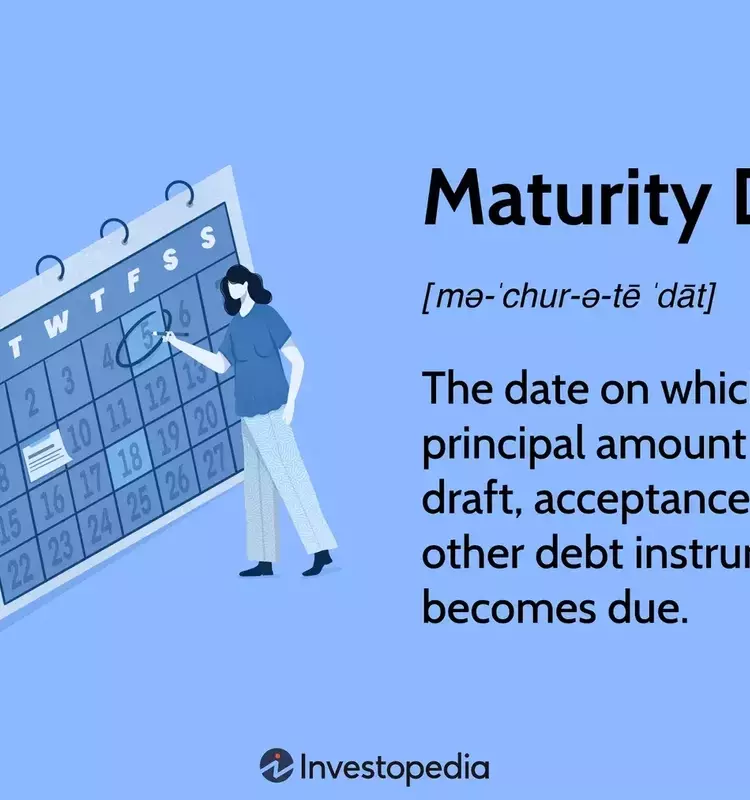
A maturity date is a crucial concept in finance, marking the specified point when the principal and any accumulated interest on a debt instrument become payable. This date officially concludes the agreement between the party that borrowed funds and the party that lent them, or between an investor and the issuer of a debt security. This principle is fundamental across various financial instruments, such as bonds, certificates of deposit (CDs), and loans. A clear understanding of maturity dates is indispensable for effective financial management, enabling individuals and institutions to make sound decisions in their borrowing, lending, and investment activities.
Understanding how maturity dates operate is vital for anyone engaged in financial transactions. These dates dictate the duration of a financial product, clearly indicating when investors or creditors can expect to receive their initial capital back. For example, a certificate of deposit with a two-year term will mature 24 months after its issuance, at which point the principal is returned to the investor. Similarly, a 30-year mortgage concludes its term after three decades, by which time the borrower has fulfilled all repayment obligations. Moreover, maturity dates also determine the period over which interest payments are distributed. For financial derivatives like futures or options, the term often refers to the contract’s expiration date. It's also important to note that certain fixed-income securities might be 'callable,' meaning the issuer retains the right to repay the principal ahead of the official maturity date, which can impact an investor's expected interest earnings.
The Operational Dynamics of Maturity Dates
Maturity dates serve as a fundamental aspect of both lending and investment activities, signaling the precise moment when a financial obligation reaches its conclusion. This date marks the termination of the contractual relationship between the investor and the issuer, or between the borrower and the creditor, ensuring that all parties are aware of when the principal amount will be returned. These dates are integral to understanding the lifespan of various financial products, including certificates of deposit (CDs) and mortgages, thereby guiding participants in their financial planning and decision-making processes.
The function of maturity dates extends to defining the duration for which investors receive periodic interest payments. For example, a two-year CD guarantees the return of the principal after 24 months, with interest disbursed throughout this period. Similarly, a 30-year mortgage mandates full repayment over three decades, influencing both the borrower’s long-term financial commitments and the lender's expected returns. Moreover, for derivatives like futures and options, the maturity date is often synonymous with the expiration date, indicating when the contract ceases to be valid. A critical consideration for investors in fixed-income securities is the possibility of 'callable' features, which allow issuers to repay the principal prematurely. This feature can significantly impact an investor's anticipated interest income, making it essential to ascertain such conditions prior to investment.
Strategic Considerations and Classification of Maturity Periods
When evaluating debt instruments, particularly bonds, the term to maturity is a significant determinant of both the coupon rate and the associated risks. Bonds with longer maturities typically offer higher coupon rates, compensating investors for increased exposure to market volatility, inflation, and default risk over extended periods. These economic factors necessitate a higher return for long-term investments, influencing how fixed-income investors structure their portfolios and assess potential gains.
The financial industry categorizes bonds and other securities based on their maturity dates into distinct groups: short-term, medium-term, and long-term. Short-term instruments generally mature within one to three years, while medium-term bonds have a maturity of up to 10 years. Long-term securities, such as 30-year Treasury bonds, extend beyond this, providing interest payments over many years until their eventual maturity. This classification system is widely adopted across various financial products, including CDs, loans, and mortgages, helping investors and borrowers understand the temporal dynamics and implications of their financial commitments. For instance, a 30-year Treasury bond, issued in 1996 and maturing in 2016, illustrates how long-term investments can be affected by inflation, as evidenced by a substantial increase in the Consumer Price Index over its lifespan.
