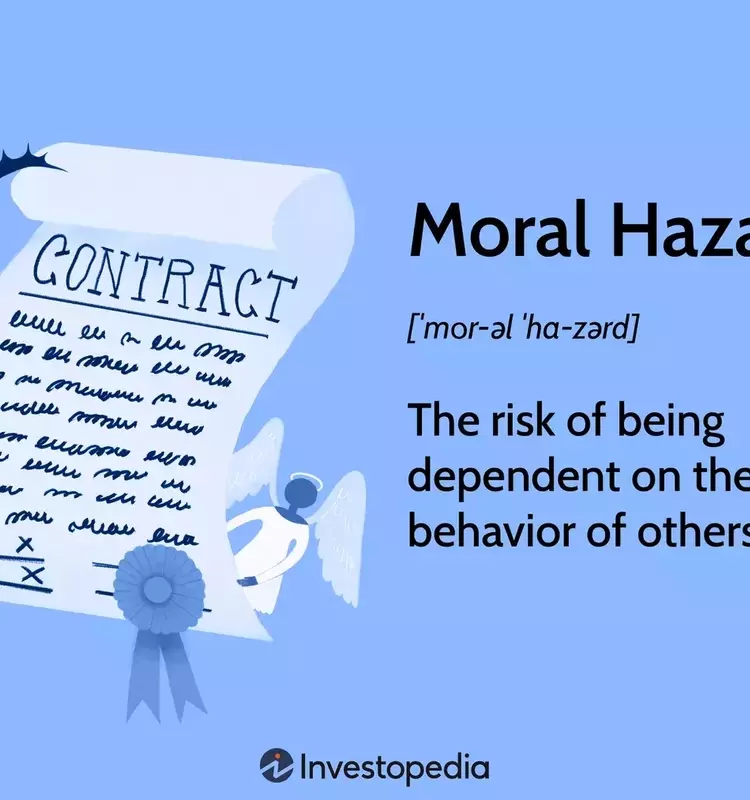
Moral hazard refers to a scenario where one party to an agreement, shielded from the full repercussions of their actions, engages in riskier behavior that could negatively impact another party. This concept is fundamental in economics, particularly in understanding market inefficiencies and regulatory needs across diverse industries.
The essence of moral hazard lies in asymmetrical information and incentives. When individuals or entities are protected from the potential downside of their choices, they may not act with the same level of caution they would if they bore the full risk. This can manifest in various ways, from a borrower providing misleading financial information to a policyholder neglecting insured property, knowing that losses will be covered.
In financial contexts, moral hazard is a significant concern. During the 2008 global financial crisis, for instance, a notable instance of moral hazard involved lenders offering high-risk mortgages. Driven by commission-based incentives, mortgage brokers originated loans to unqualified borrowers. The risk associated with these loans was then transferred to investors through securitization, insulating the original lenders from potential losses. This created an environment where excessive risk-taking was encouraged, ultimately contributing to a systemic financial collapse. Similarly, government bailouts of large financial institutions can create a moral hazard, as firms might become complacent about risk management, anticipating state intervention in times of crisis.
Beyond finance, the insurance industry frequently grapples with moral hazard. An insured individual might be less diligent in protecting their assets if they know insurance will cover damages. For example, someone with comprehensive car insurance might be less cautious about where they park or how they drive. In employer-employee relationships, moral hazard can also emerge; an employee driving a company car with covered maintenance might exercise less care than if they were responsible for repairs. These situations illustrate how the absence of direct consequences can alter behavior.
To counteract moral hazard, several strategies can be employed. Implementing incentives that encourage responsible behavior is one approach. For example, insurance deductibles require policyholders to bear a portion of the loss, aligning their interests more closely with the insurer's. Instituting clear policies and punitive measures for reckless actions can also deter adverse behavior. Furthermore, consistent monitoring allows the party at risk to identify and address opportunistic behavior, thereby safeguarding against potential exploitation.
Moral hazard is distinct from adverse selection, though both involve information asymmetry. Moral hazard occurs post-contract, affecting behavior after an agreement is made. Adverse selection, conversely, exists pre-contract, where one party possesses private information that, if known, would alter the terms of the agreement. For instance, a person with a high-risk lifestyle knowingly purchasing life insurance without disclosing all relevant information would be an example of adverse selection, whereas becoming less health-conscious after obtaining health insurance is a moral hazard.
Addressing moral hazards is crucial for maintaining market integrity and ensuring equitable outcomes in various economic interactions. Businesses and policymakers must design contracts and regulatory frameworks that minimize opportunities for parties to shirk responsibilities or take undue risks, fostering an environment of trust and accountability.
