Understanding Perpetual Futures: A Comprehensive Overview
Finance

Understanding Perpetual Futures: A Comprehensive Overview

authorBy Nouriel Roubini
DateAug 07, 2026
Read time3 min

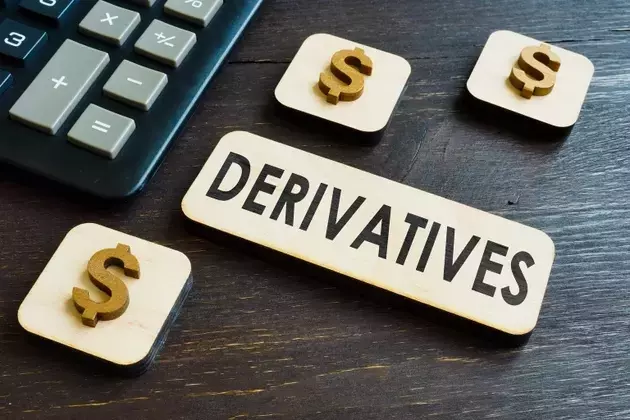
Perpetual futures, a notable innovation in financial derivatives, offer a distinct approach to market speculation by allowing continuous exposure to asset price fluctuations without a predetermined expiry date. This mechanism is primarily sustained by a 'funding rate' system, which ensures the contract's price remains closely tethered to the underlying asset's real-time value. Initially developed within the volatile realm of digital currencies, these contracts are increasingly being recognized for their potential applications in traditional financial markets. Their burgeoning popularity underscores a wider industry movement toward greater leverage and uninterrupted market access, signifying an important shift in how financial instruments are designed and utilized across different asset classes.

Perpetual futures, often referred to as 'perps,' stand apart from conventional futures contracts primarily due to their lack of an expiration date. This unique characteristic eliminates the need for traders to roll over contracts, a common practice in traditional futures markets that can incur additional costs and complexities. Instead, perps rely on a funding rate, a periodic payment exchanged between long and short positions, to keep the contract price in line with the spot price of the underlying asset. If the perpetual futures price is higher than the spot price, long position holders pay short position holders, incentivizing short selling and pushing the futures price down. Conversely, if the futures price is lower, short position holders pay long position holders, encouraging long buying and driving the futures price up.

The genesis of perpetual futures lies within the dynamic digital asset markets, where they have become a cornerstone of trading activity. Their ability to provide continuous exposure and leverage has made them particularly attractive to cryptocurrency traders seeking to capitalize on rapid price movements. This popularity in the crypto space has, in turn, drawn the attention of traditional financial institutions, which are now exploring how these innovative contracts could be adapted for conventional assets. This cross-market influence highlights a growing trend where technological advancements and market structure innovations from the digital asset world are progressively shaping the future of traditional finance.

The increasing adoption and examination of perpetual futures underscore several key trends in modern financial markets. There is a discernible demand for more sophisticated financial tools that offer greater flexibility and leverage. Furthermore, the desire for continuous market access, often driven by a globalized and 24/7 interconnected economy, is pushing the boundaries of traditional trading hours and instrument design. Understanding the mechanics and implications of perpetual futures offers valuable insights into the ongoing evolution of market structures and the fascinating convergence of digital and traditional financial systems, paving the way for new trading strategies and risk management approaches.

In essence, perpetual futures represent a significant evolutionary step in derivative trading. Their design, rooted in a flexible funding rate mechanism rather than a fixed expiry, has allowed them to thrive in high-volatility environments like digital asset markets. As financial landscapes continue to converge, the principles underpinning perpetual futures are likely to find broader application, influencing the development of new instruments and trading paradigms across the entire financial spectrum.

More Articles
Finance
Doximity Inc. Sees Significant Market Surge Post-Earnings, Analysts Question Sustainability
Doximity, Inc. experienced a dramatic pre-market stock increase of over 180% following its Q1 FY27 earnings report. This surge occurred despite the company only slightly exceeding revenue expectations and missing on earnings per share. The strong reaction is largely attributed to Doximity's Q3 revenue guidance, which is approximately 13% above consensus, suggesting a renewed growth trajectory after a recent slowdown. However, some analysts recommend caution, advising current shareholders to consider selling due to concerns about the disconnect between the stock's performance and underlying business fundamentals.
By Morgan HouselAug 07, 2026
Finance
July Jobs Report: A Shifting Labor Market Landscape
The July jobs report indicated the first drop in nonfarm payrolls since early last year, coupled with substantial downward revisions for previous months, challenging initial perceptions of robust hiring. Labor force participation rates continue to decline, intensifying labor supply constraints and complicating the analysis of decelerating job growth and falling unemployment. Wage growth moderated to 3.15% year-over-year, showing varied sectoral performance and hints of disinflation. Market reactions were initially dovish but soon stabilized as investors debated whether labor market weakness reflected demand or supply issues, leaving future Federal Reserve rate decisions uncertain.
By Morgan HouselAug 07, 2026
Finance
Extreme Networks' Post-Earnings Decline: An Investment Opportunity?
Extreme Networks (EXTR) recently reported strong fiscal year 2026 results, boasting a 12.6% revenue increase and significant product momentum. However, shares plummeted over 25% following the announcement. Despite investor disappointment and a slowdown in growth, the company's future guidance aligns with or exceeds analyst expectations, suggesting the sharp sell-off might be an overreaction. The ongoing shift to the Platform ONE subscription model, evidenced by a 17.7% rise in SaaS Annual Recurring Revenue (ARR), is expected to drive long-term margin expansion. I maintain a 'Hold' rating, eyeing an entry point below $20, as the current valuation, post-pullback, approaches its fair value based on conservative discounted cash flow (DCF) projections.
By Lisa JingAug 07, 2026
Finance
Fluor Corporation: A 'Hold' Amidst Volatility and Subdued Growth Prospects
Despite bullish analyst sentiment following Q2 2026 results, Fluor Corporation (FLR) receives a 'Hold' rating due to persistent market volatility, weak growth indicators, and the absence of dividend support. The company's backlog and shift to reimbursable contracts do not guarantee stable earnings, given its history of underperformance and inherent project risks. The investment thesis questions the feasibility of projected earnings per share growth and a premium valuation for FLR, with an $86/share scenario deemed unlikely. A price target of $34/share is set, favoring Vinci as a more stable and dividend-yielding alternative in the sector.
By Suze OrmanAug 07, 2026
Finance
American Healthcare REIT: Promising Growth, Yet a 'Hold' for Now
American Healthcare REIT (AHR) is a significant player in the senior housing market, with a strong market capitalization. It benefits from robust sector fundamentals and a growing elderly population. AHR shows strong net operating income growth, sound financial management, and an active acquisition strategy targeting distressed properties. Despite these positives and favorable macro trends, the stock is currently rated as a 'Hold' due to intense market competition, aging assets, and a somewhat conservative acquisition approach. While offering potential low double-digit returns, more attractive investment prospects may exist elsewhere in the senior housing REIT sector.
By Michele FerreroAug 07, 2026