Understanding Prepaid Expenses in Business Accounting
Finance

Understanding Prepaid Expenses in Business Accounting

authorBy Robert Kiyosaki
DateAug 26, 2026
Read time2 min

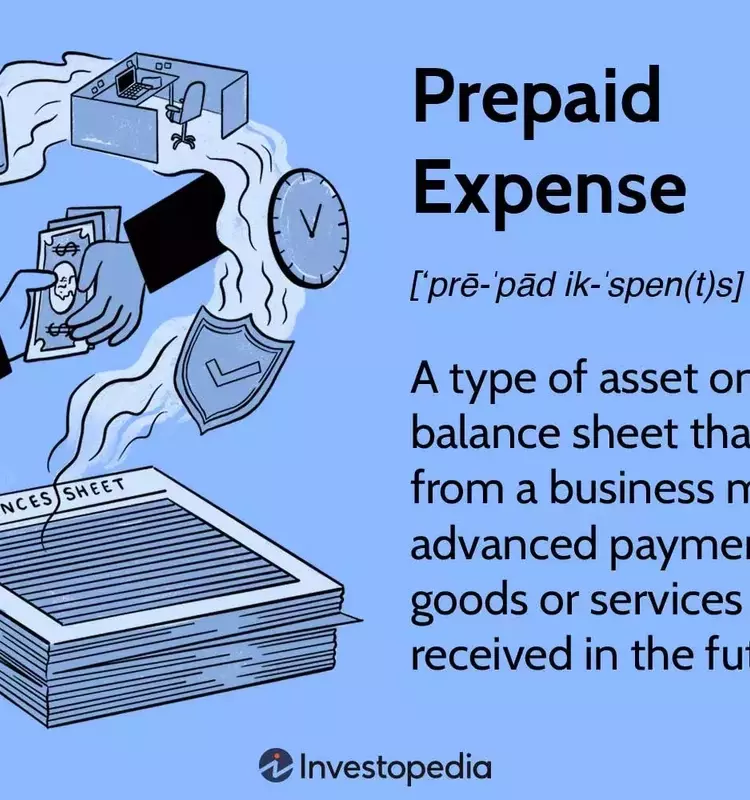
In the world of business finance, a "prepaid expense" refers to payments made ahead of time for goods or services that will be consumed or received later. These advance payments are initially logged as assets on a company’s financial statement because they represent future economic benefits. Over time, as these goods or services are utilized, the prepaid amount gradually transitions from an asset to an expense. This accounting method is not just a technicality; it provides a transparent view of a company’s financial commitments and its consumption of resources.

Effectively managing prepaid expenses is a cornerstone of sound financial practice. For instance, a company might pay a year's insurance premium in one lump sum to secure a better rate or because a landlord requires advance rent. Such strategic payments can optimize costs and ensure continuity of essential services. However, a significant accumulation of prepaid expenses could tie up valuable cash, highlighting the need for a balanced approach. Adhering to generally accepted accounting principles (GAAP) is vital, ensuring that expenses are recognized in the same period as their corresponding benefits. This methodical approach to recording and adjusting prepaid expenses is crucial for maintaining accurate financial records, which in turn influences investment decisions and regulatory compliance.

Consider a hypothetical scenario where a technology startup commits to an annual office lease for $24,000, paid entirely upfront. Initially, this $24,000 is classified as a prepaid asset on the company’s books. As each month passes, $2,000 of this prepaid amount is reclassified as a rent expense, accurately reflecting the portion of the office space used. This systematic reduction of the prepaid asset and corresponding increase in expense continues until the full year's lease has been expensed. Such diligent tracking is essential, allowing businesses to gauge their real-time financial standing and enabling external stakeholders, like investors and auditors, to assess the company’s fiscal health and operational efficiency.

The meticulous management of prepaid expenses is fundamental to maintaining financial integrity and transparency. Whether you are at the helm of a budding enterprise or evaluating potential investment ventures, a thorough grasp of how prepaid expenses are recognized and accounted for is indispensable. This knowledge illuminates a company's financial liquidity, operational efficiency, and adherence to accounting standards, ultimately fostering informed decision-making and sustainable growth. Embracing this disciplined approach allows for a clearer, more accurate depiction of financial performance and stability.

More Articles
Finance
Understanding Gross Sales: Definition, Calculation, and Significance
Gross sales represent a company's total revenue from goods or services sold before any deductions like returns, discounts, or allowances. While it provides an initial look at a company's sales volume, it doesn't offer a complete financial picture, as it doesn't account for these reductions. This metric is primarily used internally and can be an indicator of potential product quality issues if the gap between gross and net sales widens.
By Michele FerreroAug 26, 2026
Finance
Understanding Option Greeks: Key Metrics for Risk Assessment in Trading
Option Greeks are vital risk management tools for traders, each representing how different factors affect an option's price. Delta measures price sensitivity to the underlying asset, theta quantifies time decay, gamma assesses delta's stability, vega indicates volatility sensitivity, and rho gauges interest rate impact. These metrics enable traders to estimate potential payouts and manage their portfolios effectively in the dynamic options market.
By Michele FerreroAug 26, 2026
Finance
Understanding Month-to-Month Tenancy: Flexibility in Rental Agreements
A month-to-month tenancy is a rental agreement that renews automatically each month, offering both tenants and landlords greater flexibility compared to a fixed-term lease. This arrangement allows either party to terminate the agreement with appropriate notice, typically 30 days. While providing adaptability, it may also lead to less stability, higher rents, and potential for frequent changes in living or rental situations. This article explores the mechanics, advantages, disadvantages, and different types of tenancy agreements.
By David RubensteinAug 26, 2026
Finance
Mastering the Supertrend Indicator for Enhanced Trading
The Supertrend indicator is a valuable technical analysis tool for identifying market trends and generating trading signals. By combining Average True Range (ATR) with a multiplier, it provides dynamic support and resistance levels. While effective in trending markets, its limitations in sideways markets highlight the importance of integrating it with other technical indicators for comprehensive trading strategies.
By Strive MasiyiwaAug 26, 2026
Finance
David Tepper's Appaloosa Management Q2 2026 Portfolio Analysis
This analysis details the significant changes within David Tepper's Appaloosa Management's Q2 2026 portfolio, which expanded to approximately $7.73 billion. The portfolio's core consists of 27 holdings, with a strong concentration in its top five: Amazon, Micron Technology, Taiwan Semiconductor Manufacturing, Alphabet, and Uber. Key movements include substantial new investments in Apple, Boeing, American Airlines, and CrowdStrike, indicating fresh strategic convictions. Conversely, the firm fully divested from SanDisk, Microsoft, PDD Holdings, and KraneShares CSI China Internet ETF. Furthermore, significant increases were observed in holdings like Amazon, Taiwan Semiconductor Manufacturing, Alphabet, Uber, Meta Platforms, and the iShares MSCI South Korea ETF, highlighting a pronounced focus on technology and growth sectors. In contrast, positions in Micron Technology and Alibaba Group Holding were aggressively reduced, showcasing a dynamic and opportunistic approach to managing investment risks and opportunities.
By Michele FerreroAug 26, 2026