The Engine of Economic Growth: Exploring the Private Sector
Defining the Private Sector: Independent Economic Activity
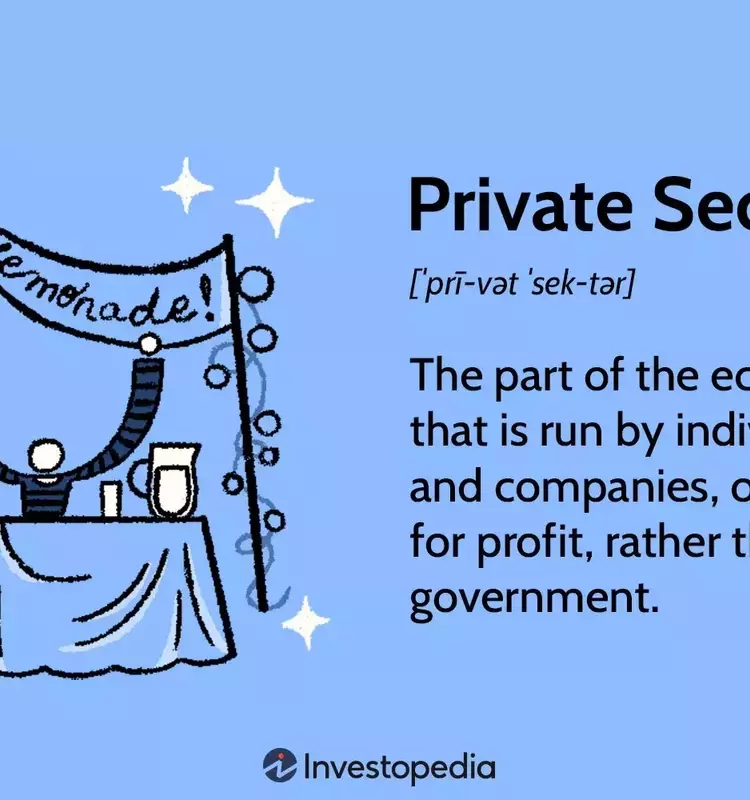
The private sector refers to the portion of an economy that is managed by individuals and businesses with the aim of generating profit, rather than being under state control. It includes all for-profit businesses not owned or operated by the government, spanning from individual entrepreneurs to large international corporations. This sector thrives particularly in capitalist and free-market systems, where government oversight and intervention are less extensive compared to other economic models.
How the Private Sector Functions: Driving Force of Profit and Competition
The private sector is characterized by ownership and management by private individuals or entities. Its fundamental objective is financial gain, and it typically employs a larger workforce than the public sector. Businesses in the private sector can be established as new ventures or created through the privatization of public enterprises. These companies engage in competition for customers, often by offering competitive pricing, as consumers generally favor more affordable options.
In economies with minimal government intervention, such as that of the United States, the private sector is typically substantial. In contrast, countries with greater state control, like China, tend to have a larger public sector due to government ownership of numerous corporations.
Diverse Structures within the Private Sector: From Startups to Multinationals
The private sector is remarkably diverse and constitutes a significant component of many economies, built upon various individuals, partnerships, and groups. This sector includes, but is not limited to: individual entrepreneurs, collaborative ventures, small and medium-sized enterprises, large corporations, international conglomerates, professional organizations, and labor unions.
While not directly under government control, private sector entities are subject to legal regulation. All businesses and corporate bodies must adhere to the laws of the country in which they operate.
Private vs. Public Sector: A Comparative Overview of Employment and Goals
The private sector offers employment through private business owners, corporations, and other non-governmental organizations. Positions can be found in manufacturing, financial services, various professions, hospitality, and other non-governmental fields. Employees' salaries are derived from the company's earnings. Private sector employees generally experience greater potential for salary increases, broader career options, and more opportunities for advancement, though often with less job security and less comprehensive benefits compared to public sector counterparts. The competitive nature of this market often entails longer hours and a more demanding work environment than government employment.
Conversely, the public sector employs individuals through federal, state, or local government bodies. Common civil service roles include those in healthcare, education, emergency services, military, and various regulatory and administrative departments. Public sector employees are compensated through government tax revenues and typically enjoy superior benefits and job security. Many government positions become permanent after an initial probationary period. It is usually straightforward to transfer between public sector roles while retaining similar benefits, vacation allowances, and sick leave. However, pay raises and promotions can be more challenging to achieve. Working within a public agency generally offers a more stable environment, free from the market pressures faced by the private sector. The Bureau of Labor Statistics compiles and reports employment data for both private and public sectors in the United States.
Synergies: Public-Private Collaborations for Shared Progress
The private and public sectors occasionally collaborate to advance common objectives. Private sector businesses utilize governmental assets and resources to develop, fund, own, and manage public facilities or services. For example, a private enterprise might pay a one-time fee to a state for the right to operate a specific segment of a freeway for a defined period, in exchange for collecting toll revenues.
The private sector serves multiple critical functions beyond profit generation, including creating employment opportunities, delivering essential goods and services, fostering industrial and technological advancement, supporting a wide array of businesses, and contributing to national income.
The private sector comprises diverse entities such as sole proprietorships, partnerships, and privately owned corporations.
The public sector encompasses all government-owned or affiliated companies and agencies. Examples include federal bodies like the Internal Revenue Service (IRS) and the U.S. Department of Labor, state services such as police and fire departments, and various other organizations that provide public services.
The Private Sector's Core Role: Fueling Economic Vitality
The private sector represents the segment of an economy independent of government control, consisting of businesses and enterprises managed by private individuals and groups with the aim of generating revenue and profit. It is the primary creator of job opportunities and a significant driver of economic growth, often collaborating with the public sector to achieve these goal
