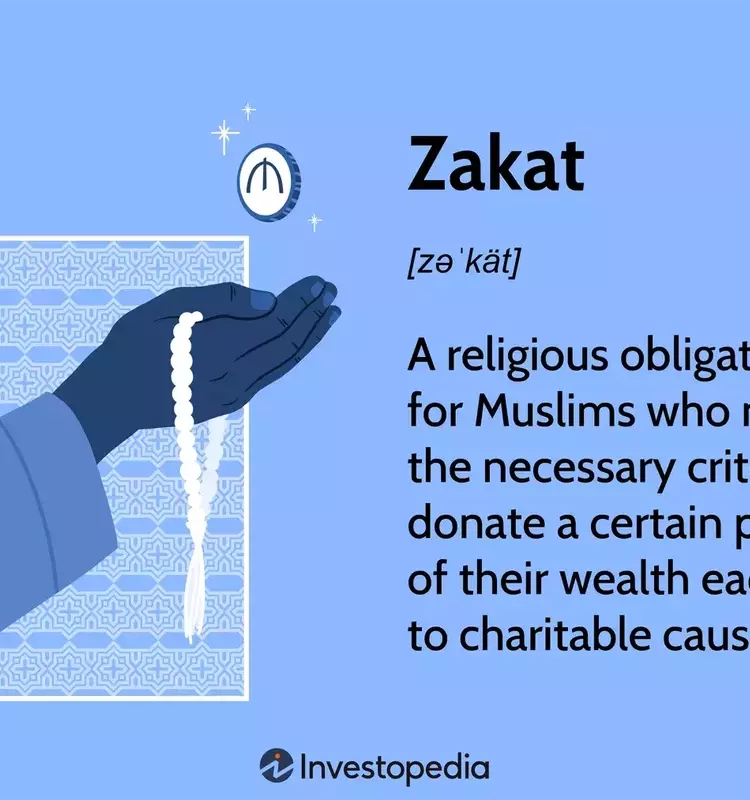
Zakat, a fundamental pillar of Islam, is a mandatory annual donation that requires financially capable Muslims to contribute a portion of their accumulated wealth to specific charitable causes. This religious obligation serves to purify one's earnings beyond essential needs and aims to support individuals and communities facing economic hardship. While often compared to voluntary giving, Zakat holds a distinct and compulsory status for those who meet its specific wealth criteria, making it a pivotal practice within Islamic finance.
The five core tenets of Islam include the affirmation of faith, daily prayers, fasting during Ramadan, the pilgrimage to Mecca, and the payment of Zakat. This spiritual duty is incumbent upon Muslims whose financial holdings surpass a predefined minimum threshold, known as nisab. Unlike optional acts of charity (sadaqah), Zakat is a requisite financial contribution. The precise amount of Zakat varies based on the nature of one's assets, encompassing agricultural yields, livestock, business profits, paper currency, and precious metals like gold and silver. For most eligible individuals, the standard contribution is 2.5%, or one-fortieth, of their total savings and wealth.
Zakat is distributed among several categories of recipients, including the impoverished, those in need, new converts to Islam who are struggling, individuals burdened by debt, soldiers defending the Muslim community, and travelers facing financial difficulties. Furthermore, those involved in the collection and administration of Zakat funds also receive compensation for their efforts. Annually, the global Muslim community collectively allocates between $200 billion and $1 trillion towards both mandatory Zakat and voluntary charitable endeavors.
The historical significance of Zakat is profound, having been a source of contention during early Islamic periods, such as the Ridda wars. While Zakat is considered a compulsory tax in several Muslim-majority nations, including Libya, Malaysia, Pakistan, Saudi Arabia, Sudan, and Yemen, its enforcement varies across countries. In regions where it is mandated, failure to pay Zakat can result in legal repercussions akin to tax evasion. Despite its religious importance, Zakat has faced critiques concerning its efficacy in alleviating poverty, with some scholars and development professionals pointing to issues in fund management and suggesting that resources may be misallocated.
The concept of nisab is central to understanding Zakat. Nisab defines the minimum level of wealth an individual must possess before they become obligated to pay Zakat. If a Muslim's wealth falls below this threshold for an entire lunar year, they are exempt from paying Zakat for that period. The value of nisab is historically set at the equivalent of 87.48 grams of gold or 612.36 grams of silver. The obligation to pay Zakat arises once an individual's wealth reaches or exceeds the nisab and remains at that level for a full lunar year. Consequently, the timing of Zakat payments can differ among individuals.
Although there isn't a fixed date for Zakat payments, many Muslims choose to fulfill this obligation at the end of the lunar year, after assessing their remaining wealth. Some also prefer to pay during the holy month of Ramadan, believing it brings additional blessings. To ensure compliance, Muslims are encouraged to regularly monitor their assets, either weekly or monthly, and can utilize various online Zakat calculators to accurately determine their contributions. Personal residences, unlike income-generating properties such as rental homes, are typically excluded when calculating Zakat eligibility.
Zakat stands as a cornerstone of Islamic economic principles, compelling financially able Muslims to annually contribute a specified percentage of their wealth to support the less fortunate. This practice underscores the purification of earnings and aims to foster social welfare, distinguishing itself from discretionary charitable acts. While some nations enforce Zakat as a legal tax, others leave it to individual discretion, leading to ongoing discussions about its effectiveness and administration. Understanding Zakat's guidelines, particularly the nisab threshold and the calculation methods, is essential for Muslims worldwide, especially where its payment is legally enforced.
