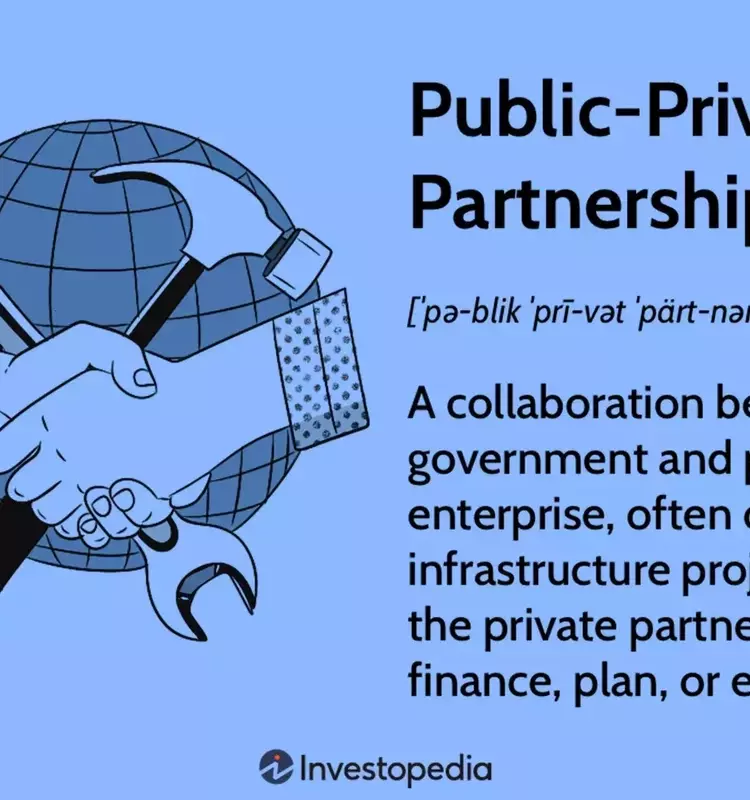
Public-Private Partnerships (PPPs) represent a collaborative framework where governmental entities and private enterprises combine resources and expertise to undertake large-scale projects. These ventures typically aim to develop crucial public infrastructure and services that might otherwise be unfeasible due to financial constraints or lack of specialized skills within the public sector. While offering significant advantages in terms of efficiency and innovation, PPPs also introduce complexities related to risk allocation and public accountability, necessitating careful consideration of their structure and oversight.
Details on Public-Private Partnerships
Public-Private Partnerships (PPPs) are collaborative agreements between government agencies and private-sector companies. These partnerships are primarily utilized for financing, constructing, and managing large-scale projects, encompassing diverse areas such as public transportation systems, parks, convention centers, and environmental infrastructure. They are also common in the development of essential municipal services like water and wastewater treatment facilities, as well as social infrastructure like school buildings and prisons.
A core characteristic of PPPs is the distribution of risks and responsibilities. Typically, the public sector retains regulatory oversight, managing risks related to policy changes and public interest. Conversely, the private sector often assumes the construction and operational risks, ensuring projects are delivered on time, within budget, and to specified performance standards. Contract durations for PPPs are often extensive, spanning 20 to 30 years or more, reflecting the long-term nature of these projects and the significant private investment involved.
Financing for PPPs is sourced partly from the private sector, often complemented by payments from the public sector or direct user fees. For instance, in projects like toll highways, the private partner may collect revenue directly from users. In other cases, such as the 407 Express Toll Route in Ontario, Canada, a private consortium was responsible for the design, construction, financing, and maintenance of a 67-mile highway stretch for a 99-year lease term, with the right to collect tolls. This arrangement demonstrates how demand risk (lower-than-expected traffic and toll revenues) can be borne by the private partner, or potentially shifted to the public sector through minimum fee agreements.
Various models of PPPs exist, each defining different levels of private-sector involvement and ownership:
- Build Operate Transfer (BOT): The private entity designs, builds, finances, and operates the project for a specified period, after which ownership is transferred to the government.
- Build Operate Own (BOO): Similar to BOT, but the private entity retains ownership indefinitely, without transferring it back to the government.
- Design-Build (DB): The private partner is contracted to design and construct a project for a fee, with the government retaining ownership and operating it or contracting out its operation.
- Buy Build Operate (BBO): A pre-existing, government-owned project is sold to a private entity, which then invests in its rehabilitation or expansion and takes over full operation.
These models illustrate the flexibility of PPPs in addressing diverse public needs by leveraging private capital, innovation, and operational efficiency, while simultaneously addressing the complex allocation of risks and rewards between public and private entities.
Public-Private Partnerships (PPPs) are powerful mechanisms for advancing critical infrastructure and public services. From a policy perspective, they offer an avenue for governments to undertake ambitious projects that might otherwise be constrained by budgetary limitations or a lack of specialized expertise. The successful Canadian 407 ETR project highlights how private investment can catalyze large-scale infrastructure development, providing a valuable service while generating returns for the private sector.
However, PPPs also present a complex ethical landscape. The blurring of lines between public and private interests can lead to concerns about accountability, transparency, and potential exploitation of public resources. There's a delicate balance to strike: leveraging private sector efficiency without compromising public good or allowing for undue profit extraction at the expense of taxpayers or service users. The potential for 'rent-seeking' activities and principal-agent problems underscores the need for robust regulatory frameworks and rigorous oversight to ensure that PPPs truly serve the public interest. As such, the evolution of PPPs will likely hinge on developing innovative contractual structures that ensure fair risk-sharing, safeguard public accountability, and prevent unethical practices, ultimately building trust and delivering sustainable benefits for all stakeholders.
