Understanding Real Interest Rates: Impact on Investments and Purchasing Power
Finance

Understanding Real Interest Rates: Impact on Investments and Purchasing Power

authorBy Fareed Zakaria
DateMay 14, 2026
Read time2 min

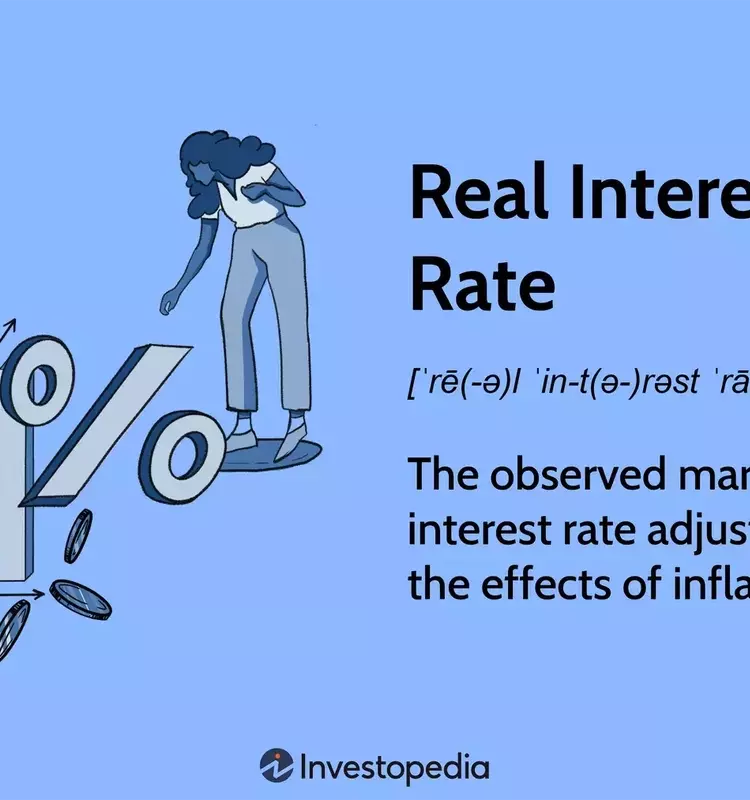
Understanding real interest rates is crucial for consumers and investors alike, as these rates reveal the true cost of borrowing and the actual return on investments after accounting for the erosive effects of inflation. This metric significantly influences economic behavior, guiding individuals toward higher-risk ventures when rates are low and more secure options when rates are high. By considering real interest rates, one gains a clearer picture of financial gains and losses, protecting the purchasing power of their capital over time.

The Mechanics of Real Interest Rates: Inflation's Influence on Investment Returns

The real interest rate is essentially the nominal interest rate, which is the advertised rate on loans or investments, adjusted to remove the impact of inflation. This adjustment is vital because inflation diminishes the purchasing power of money over time. The Federal Reserve, among other institutions, plays a role in estimating future inflation rates, providing a range of expected figures over typically a three-year period. However, the precise inflation rate often remains unknown until an investment matures, meaning real interest rates are largely anticipatory.

A simple formula illustrates this concept: Real interest rate = Nominal interest rate - Rate of inflation. For instance, if an investment yields a 4% nominal interest rate annually, but inflation during the same period is 3%, the real interest rate is only 1%. This means the actual growth in the purchasing power of the invested funds is just 1%, not the stated 4%. Conversely, if a savings account offers a 1% interest rate with a 3% inflation rate, the real interest rate becomes -2%, indicating a decline in the funds' purchasing power.

The time-preference theory of interest explains how real interest rates reflect an individual's preference for current versus future goods. Borrowers with a strong preference for immediate access to funds are willing to pay higher interest rates, whereas lenders willing to defer consumption will accept lower rates. This interplay, when adjusted for inflation, highlights the underlying time preferences within the market.

For investors, understanding and anticipating inflation is paramount. High inflation rates can lead to negative real returns, making investments that offer low nominal yields particularly unattractive. Therefore, to safeguard the real value of their wealth, investors must consider current and projected inflation when making financial decisions.

This insight into real interest rates helps individuals make more informed financial decisions, ensuring their investments not only grow in nominal terms but also preserve and enhance their true economic value over time, despite inflationary pressures.

More Articles
Finance
Xponential Fitness: A Deep Dive into Undervaluation and Catalysts
Xponential Fitness is currently trading at a low 6.5x forward EV/EBITDA, facing pressure from high debt and legal settlements. Despite these challenges, the company's strong Club Pilates assets and ongoing strategic review, coupled with activist investor involvement, suggest a potential sale or asset monetization within the next year. A discounted cash flow analysis indicates a significant undervaluation, with a conservative intrinsic value of $8.00 per share, offering a substantial margin of safety.
By Strive MasiyiwaMay 14, 2026
Finance
Virtus AlphaSimplex Managed Futures Strategy Fund: Q1 2026 Performance and Outlook
The Virtus AlphaSimplex Managed Futures Strategy Fund's Class I shares achieved a 6.72% return in Q1 2026. International equity markets outperformed U.S. equities, while the U.S. dollar remained weak due to policy uncertainties. The fund's performance highlights the dynamic shifts within global financial landscapes and the complex interplay of various market drivers during this period. Equity markets experienced brief pullbacks, influenced by geopolitical tensions, though these were not severe enough to constitute a sustained bear market.
By Robert KiyosakiMay 14, 2026
Finance
Understanding Whipsaw Patterns in Financial Markets
Whipsaw refers to a market condition where a security's price rapidly shifts direction, often resulting in losses for short-term traders. This phenomenon is common in volatile markets and can be triggered by economic uncertainties or unexpected news. Long-term investors are generally better equipped to withstand these fluctuations, while short-term traders may find them challenging. Various technical indicators can help identify and navigate these patterns, but a solid understanding of market dynamics and a disciplined investment strategy are crucial for mitigating risks.
By David RubensteinMay 14, 2026
Finance
Navigating Inflation: High-Yield Strategies for Investor Portfolios
Persistent inflation continues to erode the real returns of investment portfolios, posing a significant challenge for investors seeking sustainable income. Since 2021, inflation has cumulatively impacted portfolios by approximately 27%. To counteract this, investors must consider high-yielding assets that can not only preserve but also enhance their purchasing power. This article explores two such investment avenues, offering monthly yields exceeding 11%, specifically designed to perform well in an inflationary economic climate.
By Mariana MazzucatoMay 14, 2026
Finance
Pfizer's Post-COVID Revival: A Detailed Analysis
Pfizer's recent financial results indicate a promising turnaround following the post-COVID era. The company reported first-quarter revenue of $14.5 billion, surpassing expectations. This growth was largely driven by newly acquired products and strong performance in oncology, specialty care, and hospital portfolios. Despite a significant debt load and declining COVID-related revenues, strategic cost reductions and patent extensions are positioning Pfizer for future stability and earnings recovery.
By Robert KiyosakiMay 14, 2026