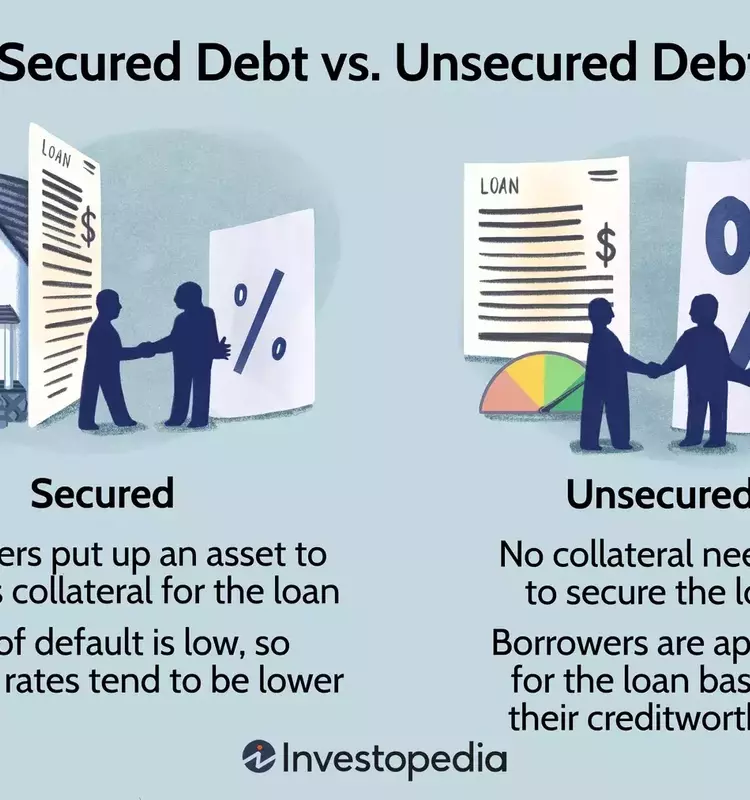
When seeking financial assistance, consumers typically encounter two primary categories of financing: secured debt and unsecured debt. The defining characteristic between these two types of obligations lies in the presence or absence of collateral, which serves as a safeguard for lenders against potential default. Collateral not only provides security for creditors but also significantly influences the interest rates offered to borrowers.
Both secured and unsecured financing options present distinct advantages and disadvantages concerning borrowing costs and qualification criteria. A thorough understanding of these differences is paramount for individuals and businesses to make prudent financial choices. For instance, common examples of secured debt include home mortgages and automobile loans, where the acquired asset itself acts as collateral. Conversely, unsecured obligations often encompass credit card balances and medical expenses, which are not tied to specific assets.
Secured debt involves a borrower pledging an asset as security for a loan. This arrangement allows the lender to claim the pledged asset in the event of default, thereby mitigating their risk. Consequently, secured loans typically feature more favorable terms, such as lower interest rates, due to the reduced risk exposure for the lender. Examples include mortgages and auto loans, where the purchased property or vehicle serves as collateral. Similarly, businesses can obtain secured loans by offering real estate, equipment, inventory, or cash as collateral. Due to this asset-backed structure, secured loans generally have less stringent credit requirements, making them more accessible to individuals with lower credit scores. However, a stronger credit profile can still lead to even better interest rates and higher borrowing limits.
Unsecured debt, conversely, lacks any underlying collateral. Lenders extend these loans based solely on the borrower's creditworthiness and their commitment to repayment. This absence of security elevates the risk for lenders, which is typically reflected in higher interest rates. Moreover, unsecured loans usually come with stricter credit score and debt-to-income ratio requirements, making them primarily available to borrowers with strong financial histories. While this type of debt offers flexibility and rapid approval processes, it also means borrowers do not risk losing specific assets in case of default. Examples beyond personal loans include medical bills and credit card balances. Government-issued unsecured debt, like U.S. Treasury bills, can be an exception, offering low interest rates due to the government's ability to print money or levy taxes, thus minimizing default risk.
In the realm of investment, the distinction between secured and unsecured debt is equally pertinent. Investors holding both types of debt within their portfolios can achieve risk diversification. While secured debt, being collateral-backed, offers lower default risk and consequently lower potential returns, unsecured debt presents higher risk and potentially higher returns. Investors must also consider the varying terms of these debts; secured debt often has longer payment terms, exposing investors to greater interest rate fluctuations over time compared to shorter-term unsecured debt. Understanding these dynamics empowers both borrowers to manage their financial obligations effectively and investors to make strategic decisions that align with their risk tolerance and return expectations.
