Understanding Series I Bonds: A Guide to Inflation-Protected Investments
Finance

Understanding Series I Bonds: A Guide to Inflation-Protected Investments

authorBy Suze Orman
DateAug 17, 2026
Read time2 min

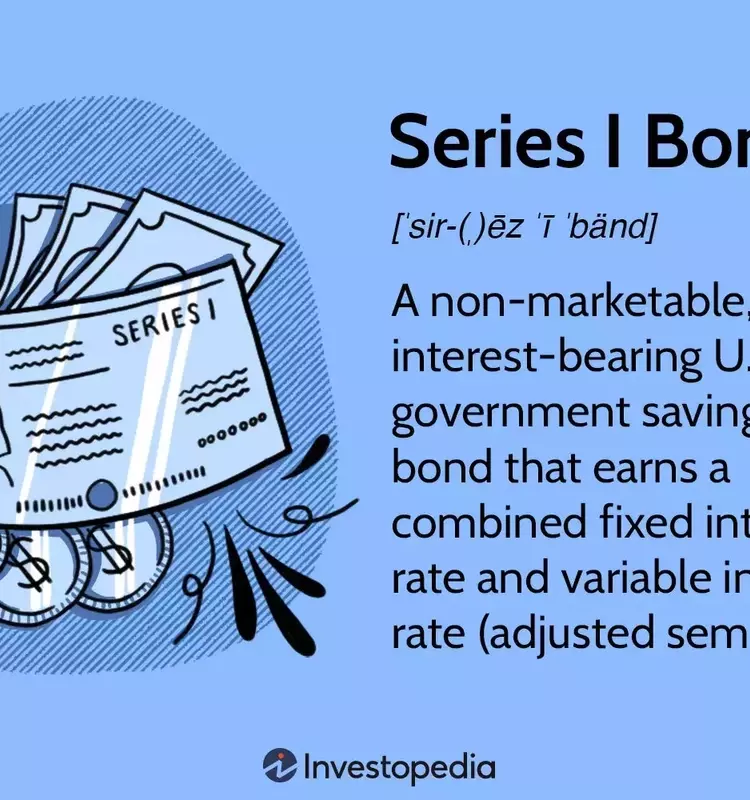
Series I Bonds, or I Bonds, represent a distinctive investment instrument issued by the United States Treasury, offering a blend of security and protection against inflation. These bonds are recognized as one of the safest investment options, backed by the full financial credibility of the U.S. government.

Unlike conventional savings bonds or accounts, I Bonds generate returns through a combination of a constant fixed interest rate and a fluctuating inflation rate. The latter adjusts biannually in response to changes in the Consumer Price Index (CPI), making them an effective hedge against inflation. These bonds are issued electronically, with paper certificates being phased out as of January 1, 2025.

A crucial aspect of I Bonds is their non-marketable nature, meaning they cannot be traded in secondary markets. The fixed interest rate, determined by the Secretary of the Treasury, is announced semi-annually in May and November and remains constant throughout the bond's life, compounding bi-annually. The variable inflation rate, also announced at the same intervals, is based on the CPI, ensuring that the bond's value keeps pace with economic changes. The composite rate, a combination of both fixed and inflation rates, determines the bond's actual return, with a guaranteed minimum of zero percent, even in deflationary periods.

Series I Bonds offer numerous benefits, including minimal risk due to government backing and effective inflation protection, which helps preserve purchasing power. They also provide tax advantages, with interest typically exempt from state and local taxes, and potentially federal taxes if used for higher education expenses. However, these bonds also have drawbacks, such as lower returns compared to riskier investments, restricted liquidity (a minimum one-year holding period and a three-month interest forfeiture for early redemption within five years), and an annual purchase limit of $10,000 per Social Security Number. Investors should weigh these factors carefully, considering their financial objectives and risk tolerance.

Series I Bonds stand out as a secure and inflation-protected investment choice, appealing especially to those prioritizing capital preservation. While they may not offer the aggressive growth potential of other assets, their unique structure provides a stable foundation for a diversified portfolio. Understanding their mechanics, benefits, and limitations is key to integrating them effectively into a personal financial strategy.

More Articles
Finance
Pershing Square's Q2 2026 Portfolio Evolution: Strategic Shifts and High-Conviction Bets
Pershing Square's Q2 2026 13F portfolio saw significant growth, reaching $19.47 billion, with an expansion from 10 to 14 positions. Key holdings include Uber, Brookfield, and Microsoft. New stakes were initiated in Visa, Mastercard, S&P Global, and Netflix, while Alphabet was exited. The firm increased positions in several core holdings and maintains a strong focus on event-driven opportunities like Fannie/Freddie.
By Michele FerreroAug 17, 2026
Finance
S&P 500's Unexpected Surge and Future Market Dynamics
The S&P 500 has demonstrated exceptional earnings growth in Q2 2026, primarily fueled by non-operating investment gains and AI-related capital expenditures. Despite a reasonable forward P/E ratio, the market faces potential vulnerability if EPS growth decelerates significantly. This analysis suggests a shift towards an ultra-bullish stance, anticipating further gains by year-end, provided key technical support levels hold. Risk management remains paramount in this volatile environment.
By Mariana MazzucatoAug 16, 2026
Finance
Touchstone Mid Cap Value Fund: Q2 2026 Underperformance Amid Growth-Oriented Market
The Touchstone Mid Cap Value Fund (Class A Shares, Load Waived) trailed its benchmark, the Russell Midcap® Value Index, in Q2 2026. This underperformance was attributed to a market environment favoring high-growth companies, despite the continued appeal of value-oriented valuations. The fund initiated new positions in the Energy, Real Estate, and Information Technology sectors, reflecting its disciplined, value-driven investment strategy.
By Suze OrmanAug 16, 2026
Finance
Impax Core Bond Fund's Q2 Outperformance Driven by Strategic Allocations
The Impax Core Bond Fund surpassed its benchmark in the second quarter, largely due to astute allocation decisions. The fund benefited from an underweight position in U.S. Treasuries as the yield curve flattened, and also made strategic moves in securitized products, telecoms, and corporate bonds. This performance highlights the fund's dynamic approach to navigating volatile market conditions and seeking robust risk-adjusted returns.
By Robert KiyosakiAug 16, 2026
Finance
Streamlined Airport Security: Understanding TSA PreCheck
TSA PreCheck is a U.S. government initiative designed to accelerate airport security for pre-approved, low-risk travelers. This program allows participants to bypass certain common screening procedures, such as removing shoes, laptops, and liquids from their bags. It significantly reduces wait times, with 99% of members clearing security in under 10 minutes. The application involves an online form and a brief in-person interview, granting successful applicants a Known Traveler Number (KTN) for expedited travel benefits.
By Lisa JingAug 16, 2026