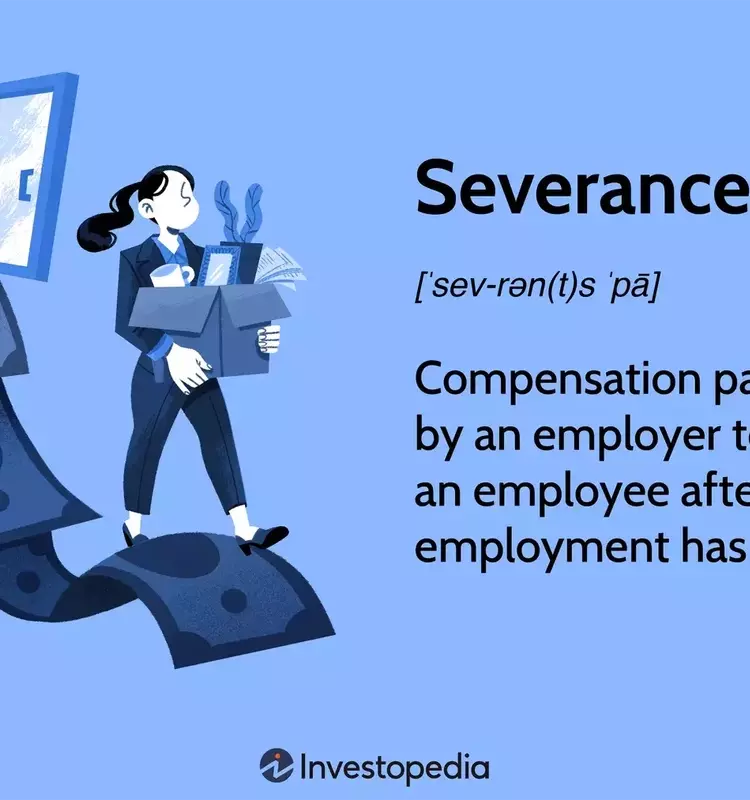
Severance pay acts as a crucial financial safety net for individuals whose employment is involuntarily terminated, providing a bridge to new opportunities. While not always legally mandated, many companies opt to provide these packages to ease the transition for departing employees and mitigate potential legal challenges. These packages typically encompass various forms of compensation, extending beyond base salary to include benefits and sometimes even outplacement services. Understanding the nuances of severance, including its tax implications and how it interacts with unemployment benefits, is essential for both employers and employees navigating such transitions.
Severance pay is a form of remuneration given to employees when their position is eliminated or they are laid off. This financial assistance helps individuals maintain stability as they seek new employment. Often, these packages go beyond just salary, incorporating benefits like health insurance or job search assistance to further support the transition. Companies are not legally obliged to provide severance, but many do to soften the blow of job loss and prevent potential legal disputes. The specifics of each severance package, including its terms and value, are generally determined by factors such as the employee’s tenure and the company’s internal policies, which are typically outlined in employee handbooks or individual contracts. This makes a clear understanding of these agreements vital for managing personal finances and understanding eligibility for other benefits like unemployment.
The monetary value of severance packages often fluctuates based on an employee's duration of service. Most companies detail their severance policies within their employee handbooks. These packages are usually disbursed as a single, taxable sum and typically include an employee's regular earnings along with additional items such as extra payments based on months or years of employment, compensation for unused vacation days, sick leave, or holiday pay, and continued medical, dental, and life insurance benefits. Some packages may also include provisions for retirement accounts and stock options, further enhancing the financial support for transitioning employees.
Severance pay can influence an individual's eligibility for unemployment benefits in several ways. If the severance is provided as a lump sum, the former employee can usually apply for unemployment insurance immediately. However, if the severance is distributed over an extended period, the employee might remain on the company's payroll for that duration, even without active work, which could delay their eligibility for unemployment benefits. Similarly, if an employee is compensated for unused vacation time, they are considered to be on the payroll while utilizing those days.
It is important to remember that laws regarding unemployment and severance pay differ by state. Individuals should consult their local employment office to understand how their specific situation might affect their eligibility for unemployment benefits. In some instances, accepting a severance package may require employees to sign agreements that state they voluntarily resigned, which can impact their ability to claim unemployment insurance, as these benefits are typically intended for involuntary dismissals. Therefore, a thorough review of all documents and, if necessary, seeking legal advice, can help ensure the best possible outcome.
Severance pay provides a critical financial buffer for employees facing job loss due to corporate restructuring or role redundancy. Although employers are not universally required by law to provide it, offering severance is a common practice aimed at easing employees' transition and reducing legal liabilities. The specifics of these packages—including their monetary value and benefits—are typically determined by an employee's length of service and company policy. It's also important to note that severance payments are subject to taxation and can affect unemployment benefit eligibility, depending on the payment structure and relevant state laws. Consequently, employees should meticulously review all terms and conditions, consulting legal or financial advisors if necessary, to fully understand the implications of their severance agreement.
