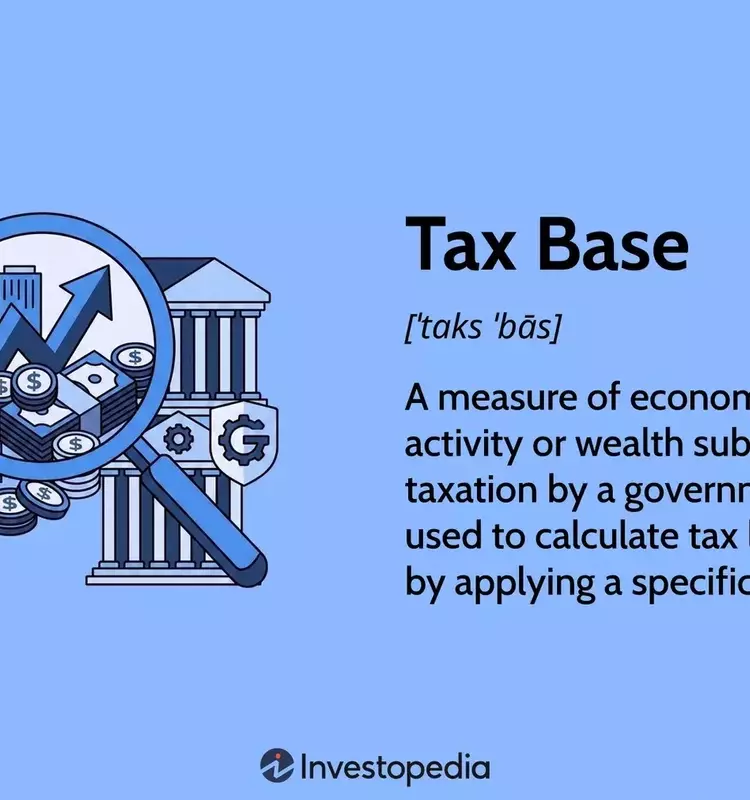
The concept of a tax base is central to public finance, representing the aggregate sum of wealth, earnings, and transactions within an economy that are subject to governmental levies. This foundational element, when combined with a defined tax rate, establishes the financial obligations that individuals and entities must meet. Tax systems, at various administrative tiers, utilize diverse tax bases to fund public services and programs.
Dissecting the Fundamentals of a Tax Base
A tax base denotes the entire scope of financial resources, encompassing individual and corporate earnings, real estate values, and overall economic transactions, from which a governing body can exact taxes. The formula for determining one's tax burden is straightforward: the tax base multiplied by the tax rate. This calculation applies across various forms of taxation, such as income tax, gift tax, and estate tax, each possessing its own distinct rate schedule.
Income as a Cornerstone of the Tax Base
When considering personal or corporate income, the tax base refers to the segment of annual earnings that is designated as taxable. For instance, in the United States, the Internal Revenue Service (IRS) imposes income tax on both individual salaries and the net profits of businesses. To illustrate, if an individual named Preetha earned $10,000 in a year, and the minimum taxable income threshold was $5,000 with a 10% tax rate, her tax obligation would be $500. This is derived by applying the 10% rate to her taxable income of $5,000.
Personal income tax obligations are typically determined through forms like the IRS Form 1040. This process involves starting with total earnings, then subtracting allowable deductions and expenses to arrive at adjusted gross income (AGI). Further itemized deductions refine the AGI to establish the final tax base, upon which progressive tax rates are applied. It is also noteworthy that the alternative minimum tax (AMT) can influence an individual's tax base, potentially increasing tax liabilities by including certain items that are otherwise exempt.
The Role of Capital Gains in the Tax Base
Capital gains, derived from the sale of appreciating assets like real estate or stock investments, also form part of the tax base. When an asset is sold for profit, it constitutes a realized capital gain, which is subject to taxation. Conversely, an unrealized capital gain, where an asset's value has increased but not yet been sold, does not trigger a taxable event. For example, if an investor sells stock held for over a year, realizing a $20,000 profit, this long-term gain is taxable. After accounting for any capital losses, the net capital gain serves as the tax base, to which specific capital gain tax rates are applied.
Understanding Diverse Tax Jurisdictions
Beyond federal taxes, individuals and businesses are often subject to various forms of taxation at state and local levels. Most states levy income tax, while homeowners face property taxes, where the property's assessed value forms the tax base. Additionally, almost all states impose sales tax on consumer purchases, with the retail price of goods serving as the tax base. Tax systems can be categorized into progressive, proportional, and regressive based on how they impact different income groups. The U.S. federal income tax is progressive, while Social Security, property, and sales taxes tend to be regressive, as they disproportionately affect lower-income earners.
Ultimately, a tax base can be either broad or narrow. A broad tax base encompasses a wide range of taxable activities or assets, whereas a narrow tax base targets specific items or segments of the population. For instance, a luxury tax on high-value goods like yachts represents a narrow tax base. Governments may seek to broaden the tax base to increase revenue without necessarily raising tax rates, by expanding the scope of what is taxable or reducing deductions and exemptions.
The intricate web of tax bases at local, state, and federal levels means that individuals often interact with multiple tax systems simultaneously. A working individual contributes to the income tax base, a homeowner to the property tax base, and a consumer to the sales tax base. Even specialized levies, such as "sin taxes" on alcoholic beverages, contribute to distinct tax bases. Navigating this multifaceted tax landscape requires a clear understanding of these fundamental concepts to effectively manage financial responsibilities.
